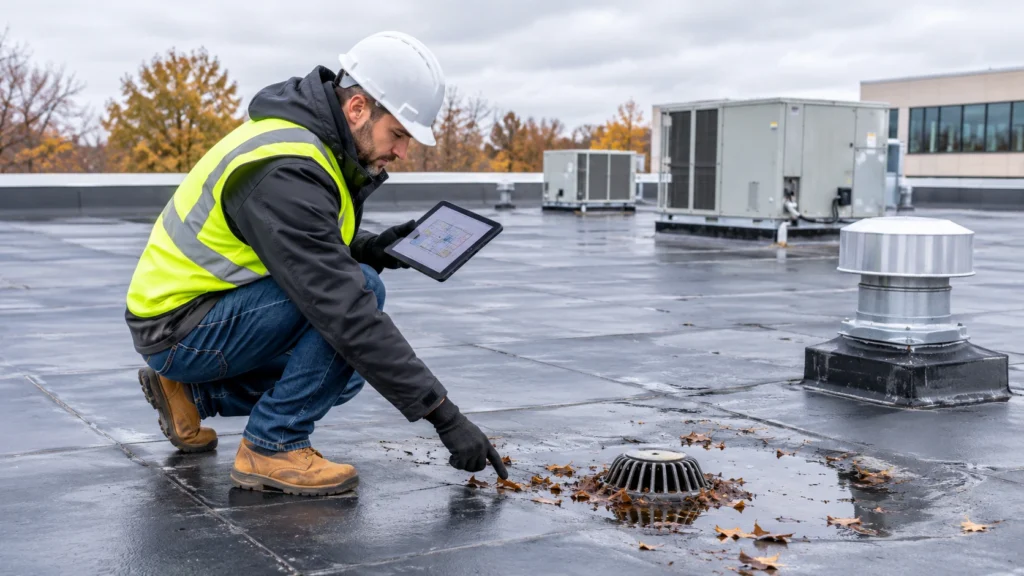
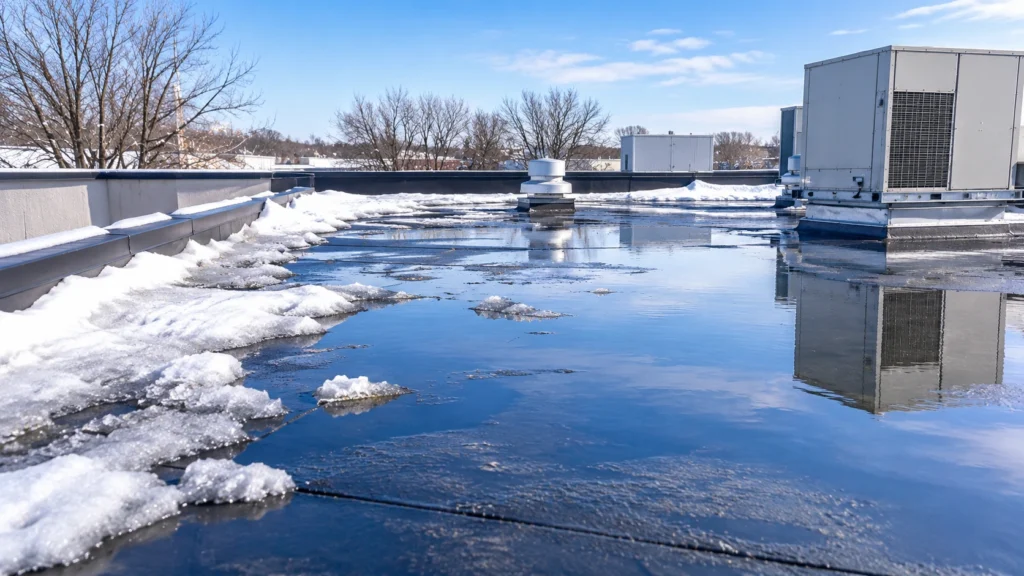
If Your Commercial Roof Holds Water After Snowmelt, Here’s What to Do Next

Melting snow should drain off a commercial roof within a day or two. When it doesn’t, the water left behind adds weight, works into seams and can find its way inside before anyone notices. The first steps are to check the interior for leaks, record where the water sits, have the drains cleared and book

If Your Commercial Roof Holds Water After Snowmelt, Here’s What to Do Next Read More »
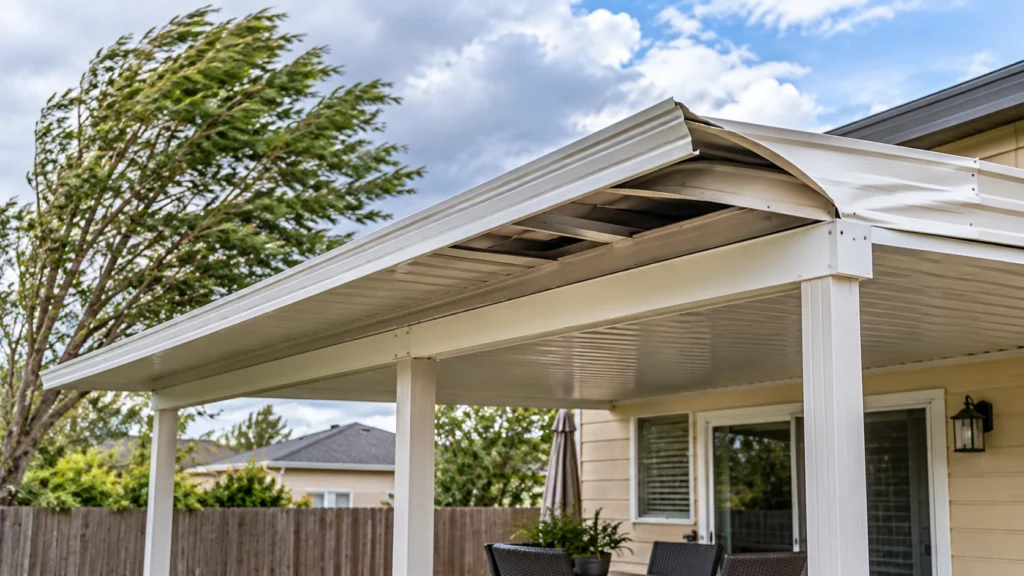
Five Signs of Wind Damage to a Patio Cover After a Tri-Cities Storm

The five main signs of wind damage to a patio cover are loose or missing roof panels, bent metal supports or beams, lifted or damaged flashing, loose fasteners and connections and cracks around posts and anchors. Any of these signs may indicate that the structure has shifted or weakened, even if the cover still appears

Five Signs of Wind Damage to a Patio Cover After a Tri-Cities Storm Read More »

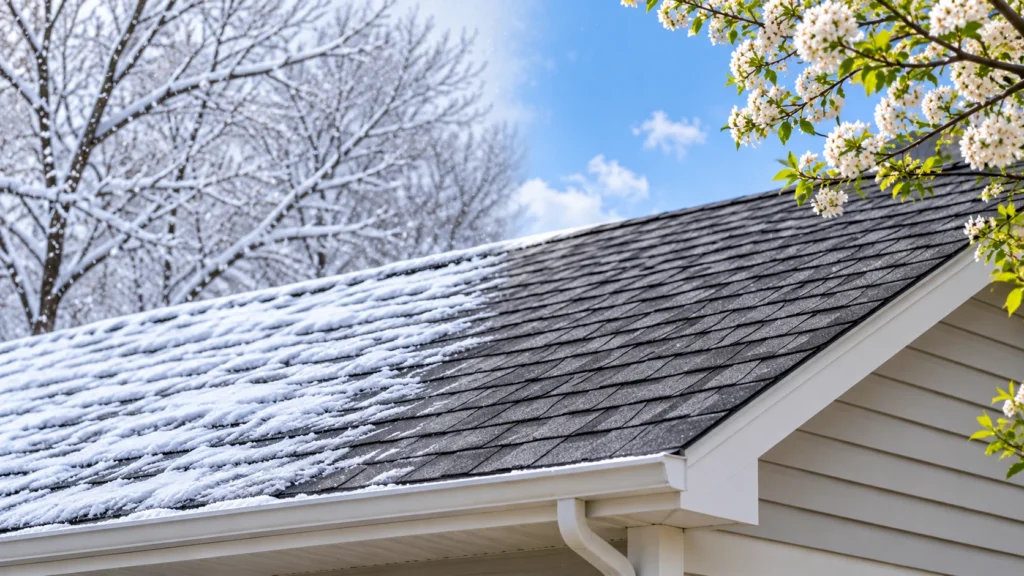
Winter Roof Restoration vs. Waiting Until Spring: What Changes for Shingle Roofs

If your shingle roof looks rough and winter is creeping in, you have probably asked whether it is worth fixing now or riding it out until spring. Fair question. The truth is, winter shingle repair is absolutely doable, and sometimes it is the smarter move. But the season you pick does change a few things

Winter Roof Restoration vs. Waiting Until Spring: What Changes for Shingle Roofs Read More »

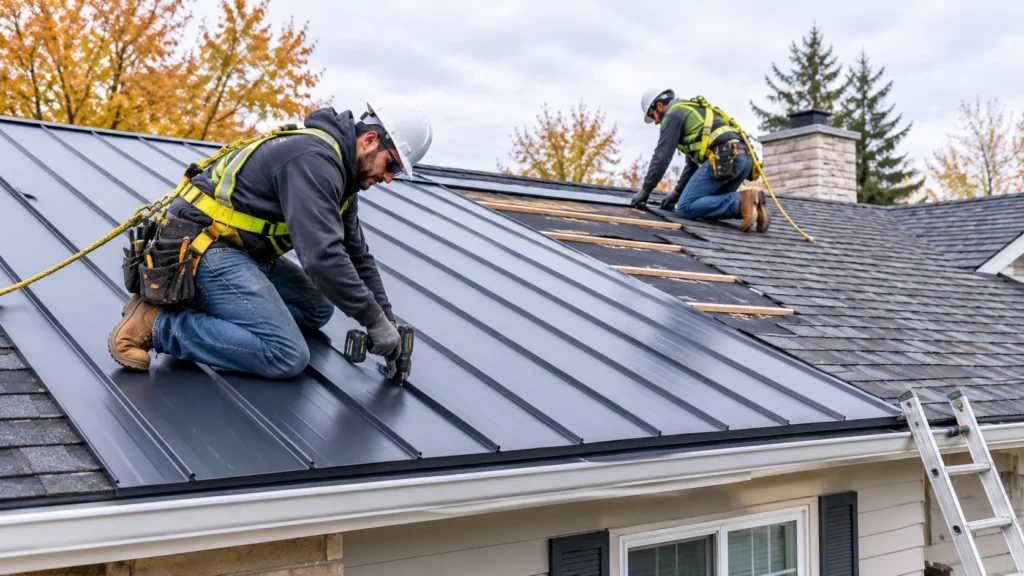
Metal Roof Installation Over an Existing Shingle Roof: When Tear Off Isn’t Necessary

You do not always have to rip off your old shingles before putting on a metal roof over shingles. In plenty of situations, a qualified roofer can install metal panels right on top of your existing asphalt roof, saving you thousands in labor and disposal costs. But it is not a blank check. The condition

Metal Roof Installation Over an Existing Shingle Roof: When Tear Off Isn’t Necessary Read More »

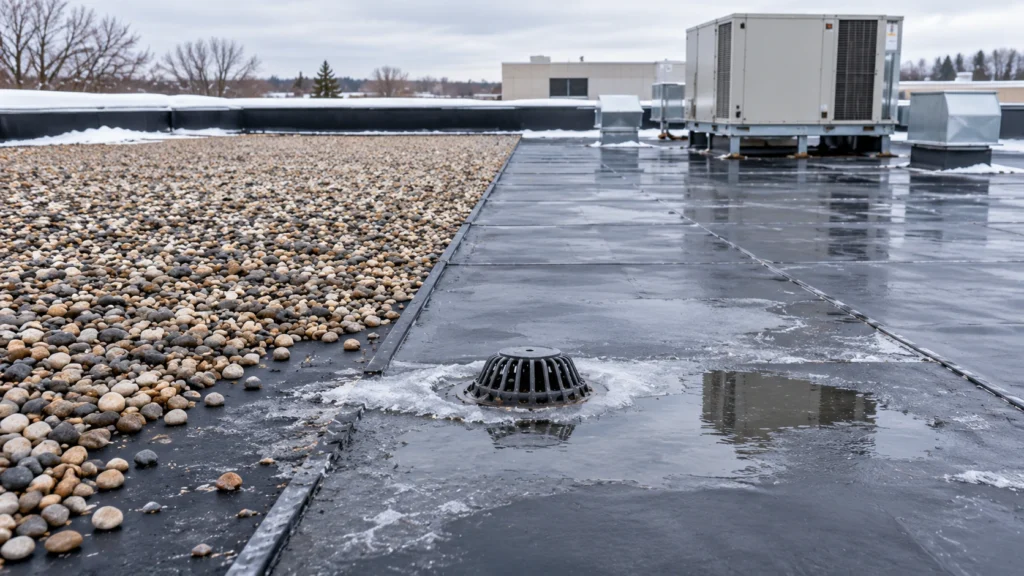
Ballasted EPDM vs. Fully Adhered EPDM: Which Holds Up Better Under Winter Ponding?

Standing water on a flat roof is bad enough in summer. In winter it freezes, thaws and refreezes, working at seams and flashing for weeks. For roofs that experience winter ponding, fully adhered EPDM offers advantages in inspection access and limiting membrane movement. However, both systems can withstand standing water when properly designed and installed. 

Ballasted EPDM vs. Fully Adhered EPDM: Which Holds Up Better Under Winter Ponding? Read More »

Commercial Roof Maintenance Contracts: What a Year-End Walkthrough Should Document

A year-end roof visit often ends with a short “roof looks fine” note. That note doesn’t help much when a leak appears in February or the budget meeting asks for numbers. A useful walkthrough leaves a written record of the roof’s condition, every defect with its location and photo, any repairs made that day and

Commercial Roof Maintenance Contracts: What a Year-End Walkthrough Should Document Read More »

Winter Roof Leak Troubleshooting What to Do When Water Shows Up After a Freeze

Winter Roof Leak Troubleshooting: What to Do When Water Shows Up After a Freeze

The first winter leak usually shows up at the worst possible moment. A drip hitting the kitchen counter during Sunday breakfast. A brown ring on the bedroom ceiling that wasn’t there yesterday. A puddle on the hardwood below a window with no obvious source. If you need help troubleshooting a winter roof leak after a

Winter Roof Leak Troubleshooting: What to Do When Water Shows Up After a Freeze Read More »

Metal Roof Winter Inspection Loose Panels, Fasteners and Sealant Checks

Metal Roof Winter Inspection: Loose Panels, Fasteners and Sealant Checks

To complete a winter inspection of a metal roof, check six key areas. First, inspect standing seams or panel overlaps for gaps. Next, tighten or replace loose neoprene fasteners. You also need to check sealant around flashings and vent boots, look for missing snow guards, check for surface rust, and clear out gutters so melting

Metal Roof Winter Inspection: Loose Panels, Fasteners and Sealant Checks Read More »