
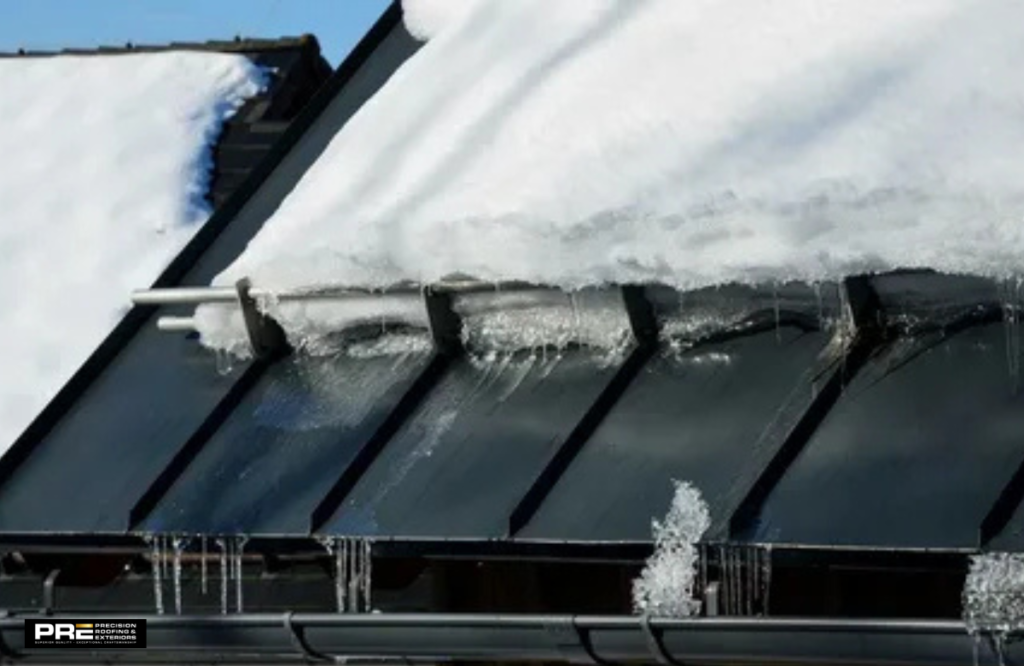
To complete a winter inspection of a metal roof, check six key areas. First, inspect standing seams or panel overlaps for gaps. Next, tighten or replace loose neoprene fasteners. You also need to check sealant around flashings and vent boots, look for missing snow guards, check for surface rust, and clear out gutters so melting snow can drain freely. Cold nights and heavy snowfall in the TriCities put a ton of strain on metal roofs. When temperatures bounce above and below freezing, metal sheets stretch and shrink. That shifting pops screws loose, splits old caulk, and opens up tiny gaps between panels. Spending an afternoon checking your roof now saves you from waking up to a soaking wet ceiling in the middle of a winter storm.
Key Takeaways
- Running through a thorough metal roof winter inspection helps you catch backed out screws, cracked sealants, and loose seam panels before winter weather arrives.
- Checking the rubber washers under your roof screws stops melting snow from leaking into your attic space.
- Inspecting sealant around chimneys and pipe vents keeps water from sneaking in during heavy ice buildups.
- Securing your snow guards keeps massive sheets of ice from sliding off your roof and crushing your gutters below.
6 Steps for a Metal Roof Winter Inspection
Getting a metal roof ready for winter comes down to checking a few key spots. Here are six simple steps you can follow to keep your home totally dry when the snow starts falling.
1. Check for Loose or Lifted Metal Panels
Grab a pair of binoculars and scan your roof line from the ground. Strong wind gusts can catch panel edges and pull them apart. If a seam opens up even a fraction of an inch, wind driven rain and melting ice will crawl right under the metal. That trapped water rots your wooden roof deck fast. Catching a loose seam early stops a small fix from turning into a massive, expensive repair job down the road.
2. Inspect Metal Screws and Rubber Fastener Washers
Metal roof panels are held down by specialized screws that feature tiny rubber washers underneath their heads. Those washers form a watertight seal against the metal surface. Over time, summer heat bakes the rubber until it cracks, dries out or splits wide open. On top of that, normal thermal movement works those screws loose over the years. Swapping out damaged washers and snugging up loose screws stops annoying leaks cold.
3. Examine Joint Sealant Around Vents and Pipe Boots
Where metal sheets meet chimneys, skylights, and plumbing pipes, heavy duty caulk keeps the water out. Harsh sunlight destroys sealant over time. It gets brittle and snaps when the cold weather rolls in. Walk your roof line or look closely at these joint zones. Applying a fresh coat of cold weather sealant before the first snowfall keeps melting slush from trickling down your interior walls.
4. Check Snow Guards and Ice Stop Brackets
Snow guards are those small metal brackets sitting near the bottom edge of your roof. Their whole job is breaking up huge slabs of snow into tiny, harmless piles as they slide down. If those brackets get loose, a heavy snow thaw will tear them right off the deck. Making sure every bracket is tight keeps your gutters, porch roof, and family safe from falling ice sheets.
5. Look for Surface Scratching and Early Rust Spots
Tree branches, flying debris, and foot traffic easily scratch through the protective paint layer on metal panels. Once bare steel meets cold rainwater, rust sets in quickly. Rust eats straight through metal if you leave it alone. Touch up those small scratches with outdoor rust sealing paint right now so your roof stays strong all winter long.
6. Clear Out Gutters and Downspout Channels
Metal roofs shed water much faster than traditional shingle roofs. That means your gutters take on a huge wall of water during a heavy thaw. When leaves and twigs clog your downspouts, that water has nowhere to go. It sits in the trough, freezes solid, and forms heavy ice blocks that bend your gutters out of shape. Cleaning out the gunk lets melting snow flow away without any trouble.
Critical Areas to Check Around Metal Roof Flashing
Flashing zones cause most winter roof leaks. You want to pay extra close attention to these spots during your fall checks.
- Chimney Base Flashing Joints
Metal trim wrapping your chimney can pull away from the brick as temperatures drop. Check these seams to ensure the metal sits tight against the masonry. - Valley Gutters and Metal Seam Junctions
Leaves love to collect in the low V shaped channels where two roof angles meet. Clear those channels so water glides straight toward the eaves. - Pipe Vent Rubber Collars
Plumbing stacks poking through your roof use flexible rubber boots to block rain. Inspect the rubber for tiny hairline cracks that could let water seep inside. - Eave and Gutter Edge Strips
Look along the bottom edge of your roofline. Make sure the metal drip edge overhangs your gutter properly so melting ice drops directly into the trough.
Conclusion
Taking a little time to check your metal roof before freezing weather hits is the smartest way to avoid sudden ceiling leaks and costly emergency repairs. Tightening loose screws, touching up cracked sealant, and clearing out your gutters ensures your home stays warm, cozy, and completely dry through the worst winter weather. Doing a quick metal roof winter inspection gives you total control over your home maintenance and adds years of life to your roof deck. When you want complete peace of mind before the snow starts piling up, get in touch with us at Precision Roofing Exterior to book a thorough inspection with our local team.
Frequently Asked Questions
Why do screws come loose on a metal roof before winter?
Metal panels expand when it is hot and shrink when it is cold. That constant shifting pushes and pulls on the screws, slowly backing them out of the wood framing over time.
Can you apply roof sealant on a metal roof in freezing weather?
Standard sealants do not stick well once temperatures drop below freezing. It is much better to seal your roof in mid autumn or use a specialized cold weather caulk made for winter fixes.
Are ice dams a problem on metal roofs?
Slick metal panels shed snow much faster than asphalt shingles. However, if your gutters are blocked or warm air escapes your attic, ice dams can still form along the bottom edges.