
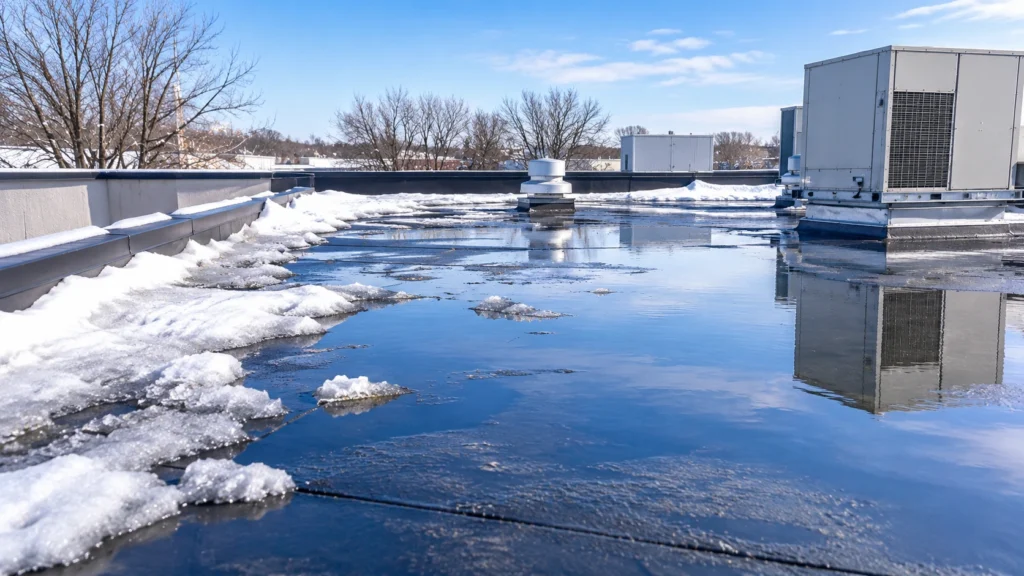
Melting snow should drain off a commercial roof within a day or two. When it doesn’t, the water left behind adds weight, works into seams and can find its way inside before anyone notices. The first steps are to check the interior for leaks, record where the water sits, have the drains cleared and book a professional inspection.
From there, a contractor can repair damage and correct the slope or drainage causing the problem. Acting quickly keeps commercial roof ponding from turning into a much larger repair bill.
Key Takeaways
- Water that stays on a roof more than 48 hours after melting or rain counts as ponding and should be inspected and documented with photos.
- Start by checking for interior leaks, documenting standing water, clearing drains and scheduling a professional roof inspection before the next freeze.
- Ponding can weaken seams, soak insulation, overload the roof deck and cause interior water damage or mold. The longer it sits, the more these problems build on each other.
- Contractors fix recurring ponding with drain repairs, added drains, tapered insulation, crickets or deck repairs. Wet insulation and widespread membrane damage can point toward restoration or full replacement.
What to Do When Your Commercial Roof Holds Water After Snowmelt
Standing water after a thaw is a warning sign, not an emergency in every case. These five steps help you judge how serious it is and what needs to happen next.
Check for Interior Leaks and Signs of Structural Stress
Start inside the building. Stained ceiling tiles, drips around light fixtures, damp insulation above a drop ceiling and musty smells all point to water getting past the membrane. Look for structural warning signs as well.
Sagging ceilings, new cracks in walls, doors that suddenly stick or bowing roof joists can mean the deck is carrying more weight than it should. Any of those signs calls for a structural review before anyone walks the roof.
Document Standing Water and Identify Recurring Areas
Photos and measurements create a record that helps a contractor find the cause. Note where water collects, how deep it is and how long it takes to disappear. The National Roofing Contractors Association (NRCA) defines ponding as water that remains more than 48 hours after precipitation under conditions that allow drying.
Areas that pond after every thaw usually signal a slope or drainage problem rather than a one-time event.
Have Roof Drains, Scuppers, and Gutters Inspected
Blocked drainage is the most common reason water stays on a flat roof after snowmelt. Leaves, sediment and ice can clog drain strainers, scuppers and downspouts, while frozen gutters hold back water at the roof edge.
A trained crew should clear these openings safely. They can also check whether drains sit at the true low points of the roof, since a drain set too high will leave water around it no matter how clean it is.
Schedule a Professional Commercial Roof Inspection
A full inspection shows what the water has already done. Roofers check seams, flashings and penetrations near ponded areas and look for soft spots that suggest wet insulation.
An infrared scan or core samples can confirm how far moisture has spread below the membrane. The inspection report should map every ponding area, list the damage found and recommend repairs in order of priority.
Address Membrane Damage, Leaks, and Drainage Issues
Repairs should follow the inspection quickly, especially before the next freeze. Open seams, punctures and loose flashing need patching with materials approved by the membrane manufacturer which helps keep any warranty valid.
Wet insulation under active leaks should be cut out and replaced. Drainage fixes, such as resetting a drain or adding a new one, may take longer to schedule but solve the underlying cause.
What Damage Can Prolonged Ponding Water Cause to Commercial Roofs?
Water that sits for days at a time affects more than the membrane surface. These four types of damage tend to build on each other the longer ponding continues.
Roof Membrane Deterioration and Seam Damage
Standing water keeps seams and laps wet far longer than they were designed to handle. Over time, that moisture can weaken seam adhesives and tapes, especially on older roofs.
Ponded areas also collect dirt and debris that hold moisture against the surface. On some membranes, the edges of a pond show faster wear because they go through constant wet and dry cycles. Repeated freezing in those spots adds more strain each winter.
Water-Saturated Insulation and Reduced Energy Efficiency
Once water gets below the membrane, rigid insulation can absorb it like a sponge. Wet insulation loses much of its ability to slow heat flow which raises heating costs during the months when the building needs heat the most.
It also adds weight and can damage the cover board and deck below. Saturated boards rarely dry out on their own and usually need to be replaced.
Increased Structural Load and Roof Deck Stress
Water is heavy. Each inch of depth adds about 5.2 pounds per square foot (psf). A 3-inch pond across a 20-by-20-foot area adds roughly 6,000 pounds to that section of the roof.
As the deck bends under the weight, the low spot deepens and holds even more water. Engineers call this progressive ponding. Steel decks and older structures with limited reserve capacity are the most at risk.
Interior Water Damage, Mold, and Business Disruptions
Leaks from ponded areas often show up inside far from where they started, because water travels along the deck before dripping through. Ceiling tiles, inventory, electronics and flooring can all be damaged.
The U.S. Environmental Protection Agency (EPA) advises drying water-damaged areas and items within 24 to 48 hours to prevent mold growth. Cleanup may mean closing rooms or entire areas while repairs are made.
How Do Roofing Contractors Fix Recurring Ponding Water Problems?
The fix depends on why water collects in the first place. Contractors often reset or lower drains that sit above the surrounding roof and add new drains or scuppers in areas that never drained well.
Tapered insulation adds slope under the membrane to move water toward the drains. Crickets which are small sloped sections built between drains or behind curbs, steer water around obstacles.
When the deck itself has sagged, the damaged section may need structural repair before any roofing work begins. Overflow drains or scuppers can also be added so water has a backup exit when primary drains clog.
When Does Your Commercial Roof Need Repair, Restoration, or Replacement?
Small, isolated ponding areas with sound insulation usually need only repair, such as a drain adjustment and a few patches. Restoration fits roofs where the membrane is aging but most of the insulation below is still dry.
A coating or new membrane layer can extend its life. Tapered insulation can be added in problem areas at the same time. Replacement becomes the better choice when moisture surveys show widespread wet insulation, the membrane has failed in many spots or the deck has sagged enough to need repair.
A roofer can compare the costs of each option using the inspection and moisture survey results.
How to Prevent Commercial Roof Ponding After Future Snowmelt
Most ponding problems can be reduced with steady maintenance and a few targeted upgrades. Since snowmelt problems tend to repeat each year, these habits belong on the maintenance schedule for every commercial property:
- Clear drains, scuppers and gutters in late fall and again during long thaws.
- Remove heavy snow before it piles up near drains or low spots, using plastic tools that won’t cut the membrane.
- Schedule inspections twice a year, in spring and fall, plus after major storms.
- Fix small seam and flashing issues before winter.
- Plan slope corrections, such as tapered insulation, for areas that pond every year.
- Keep dated photos of each thaw to see whether ponding is getting better or worse.
Conclusion
Water that sits on a commercial roof after snowmelt needs attention within days, not months. Checking for leaks, documenting the ponded areas, clearing drains and booking an inspection give you a clear picture of the damage.
Repairs to seams and insulation handle the immediate risk, while drain changes and tapered insulation stop the water from coming back. Regular maintenance keeps the problem from repeating after every thaw. Dated photos from each thaw show whether the fixes are working.
Precision Roofing can inspect your roof after the next thaw and map out a plan to get the water moving again. Contact us now!