
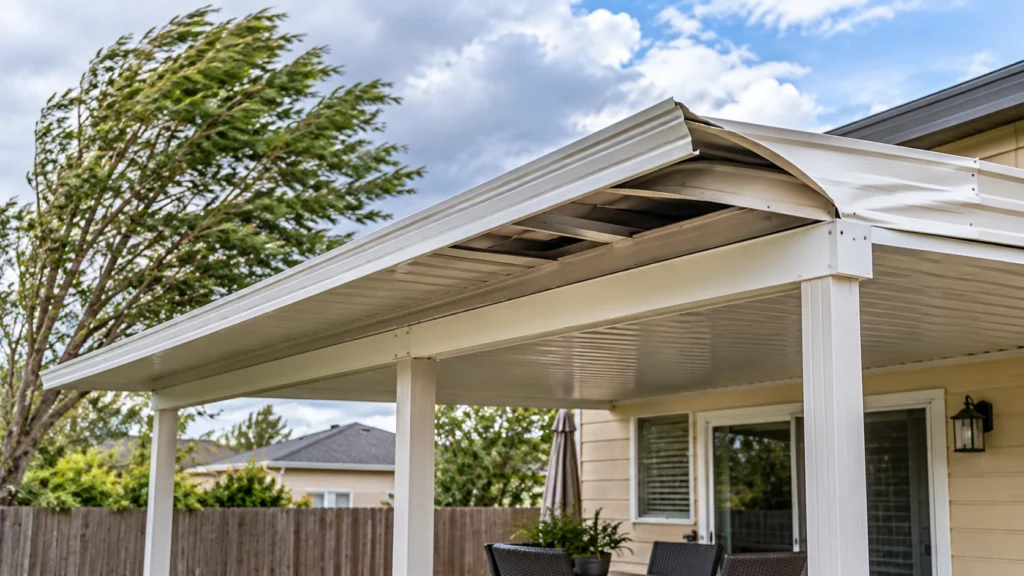
The five main signs of wind damage to a patio cover are loose or missing roof panels, bent metal supports or beams, lifted or damaged flashing, loose fasteners and connections and cracks around posts and anchors. Any of these signs may indicate that the structure has shifted or weakened, even if the cover still appears upright. A careful look from the ground after a storm can catch most problems early.
Quick Answer
Patio cover wind damage in the Tri-Cities usually shows up as loose or missing roof panels, bent supports or beams, lifted flashing, loose fasteners and cracks around posts and anchors. After a storm, inspect the cover from the ground, photograph visible damage and keep people away if the structure leans or moves. Do not attempt structural repairs yourself. Schedule a professional inspection to confirm whether the cover is safe to use.
What Are the 5 Signs of Wind Damage to a Patio Cover?
Wind rarely destroys a patio cover all at once. More often, it loosens parts and weakens connections. The damage becomes obvious later. Knowing the early signs helps you act before a small problem becomes a failure.
Loose or Missing Roof Panels
Roof panels are directly exposed to wind and can become loose or displaced during a storm. Look for panels that have lifted at the edges, shifted out of position or blown off entirely. A missing or displaced panel exposes the structure to rain and allows more wind to get underneath, which can cause further damage in the next storm.
Bent Metal Supports or Beams
Bent or twisted supports are a serious sign. Check beams for sagging, kinks or visible curves. A beam that bends under wind pressure may no longer support the structure as intended. This can leave the cover more vulnerable to additional wind pressure or snow loads.
Lifted or Damaged Flashing
Flashing is the metal or sealed trim that keeps water out where the cover meets the house. Strong wind can lift or peel it back. Look for gaps along the wall, bent edges and sealant that has cracked or pulled away. Water that gets behind damaged flashing can reach the framing of the house.
Loose Fasteners and Connections
Screws, bolts and brackets hold the cover together. Wind movement can back them out or enlarge the holes they sit in. Look for visible gaps at joints, screws that sit raised and brackets that have shifted.
Cracks Around Posts and Anchors
The base of each post is where the structure meets the ground or slab. Look for cracks in the concrete, chips around anchor bolts, posts that have moved or a footing that looks uneven. New or widening cracks may indicate movement or stress around the post base and should be inspected.
How Can You Check a Patio Cover After a Storm?
A quick inspection after severe wind is important. Wait until the wind has calmed and the area is clear of hazards such as downed power lines before inspecting the cover.
Inspect Roof Panels From the Ground
Walk around the cover and look up at the roof from several angles. Compare it with how it looked before the storm. Check for panels, uneven seams and dents. Binoculars help you see the edges without climbing. Do not get on the roof or use a ladder to inspect a damaged structure.
Look for Shifting or Leaning Supports
Stand back and look at the structure from a distance. Check whether the posts and beams appear straight and properly aligned. Look for leaning posts or sagging beams. Also check whether the supports appear to have shifted from their original positions, as this may indicate movement in the base or footing.
Check for Debris and Impact Damage
Wind carries branches, furniture and other objects. Look for dents, punctures and scrapes on the roof and supports. Check the ground for broken pieces or hardware. Do not remove heavy debris from a structure that appears unstable.
Watch for New Gaps or Unusual Movement
Pay attention to what the cover does in a light breeze. New creaking, shifting or flexing can mean connections have loosened. Look for fresh gaps at joints and along the wall. Check whether bolts, brackets or other fasteners appear loose or out of position. If you notice unusual movement, avoid using the cover until a professional has inspected it.
Why Do Tri-Cities Winds Damage Patio Covers?
The Tri-Cities area, including Kennewick, Pasco and Richland, experiences strong winds and seasonal storms that can put patio covers under repeated stress. Gusts can loosen connections, lift roof panels and carry debris into outdoor structures.
Strong Wind Gusts and Uplift Pressure
A patio cover acts like a large flat surface. When wind blows across and under it, air pressure can push upward on the roof. This uplift tries to pull panels, beams and anchors away from the structure.
Flying Debris and Falling Branches
Wind turns ordinary objects into projectiles. The storm can topple trees across the area and send trampolines and trailers moving. Branches, loose patio furniture and fencing pieces can strike a cover or land on it. Impact can dent panels, crack connections and bend supports. Securing outdoor items reduces the risk.
Weak Fasteners and Aging Materials
Covers that have stood for many years may have fasteners that have loosened or corroded. A cover in this condition may handle normal weather but fail in a strong storm. Regular checks and maintenance extend the life of the structure.
Poor Anchoring or Installation
A cover is only as strong as its connection to the house and the ground. Anchors that are too few, undersized or poorly set may not resist uplift. Shortcuts during installation can leave weak points that only appear under heavy load.
What Should You Do if Your Patio Cover Has Wind Damage?
Safety comes first, followed by a clear record of the damage and a professional assessment.
Keep People Away From Unstable Structures
If the cover leans, sags or moves, keep family members and pets out from under it. Block the area if needed. A damaged structure can fail without warning, especially in another gust or under snow.
Document Visible Damage
Take clear photographs and short videos from several angles before anything is moved. Capture panels, supports, flashing, anchors and any debris on or near the cover. Write down the date and time of the storm. Good records help with an insurance claim and give a contractor a clear picture of the damage. Contact your insurance provider to ask how to file a claim and what your policy covers.
Avoid DIY Structural Repairs
Reattaching panels or straightening a beam may look simple. It can be unsafe. Working on a damaged structure from a ladder or the roof carries real risk. Limit your work to safe tasks such as removing small debris from the ground.
Schedule a Professional Inspection
A qualified contractor can check the framing, anchors, fasteners and roofing connections and tell you what needs repair or replacement. Ask what the inspection covers and request a written estimate. Check whether your city or county requires a permit for structural repairs. Confirm any requirements with your local building department.
Conclusion
Wind damage to a patio cover often starts small. Loose panels, bent supports, lifted flashing, loose fasteners and cracks near the anchors are signs to watch for after a storm. Inspect the cover from the ground, keep people away from anything unstable and document what you see. Leave structural repairs to a professional. Recognizing patio cover wind damage in the Tri-Cities early can help you address problems before they lead to more serious structural damage.
Worried about storm damage to your patio cover? Contact Precision Roofing today. Our team can inspect your patio cover, repair wind damage and restore its structural integrity so you can enjoy your outdoor space with confidence.