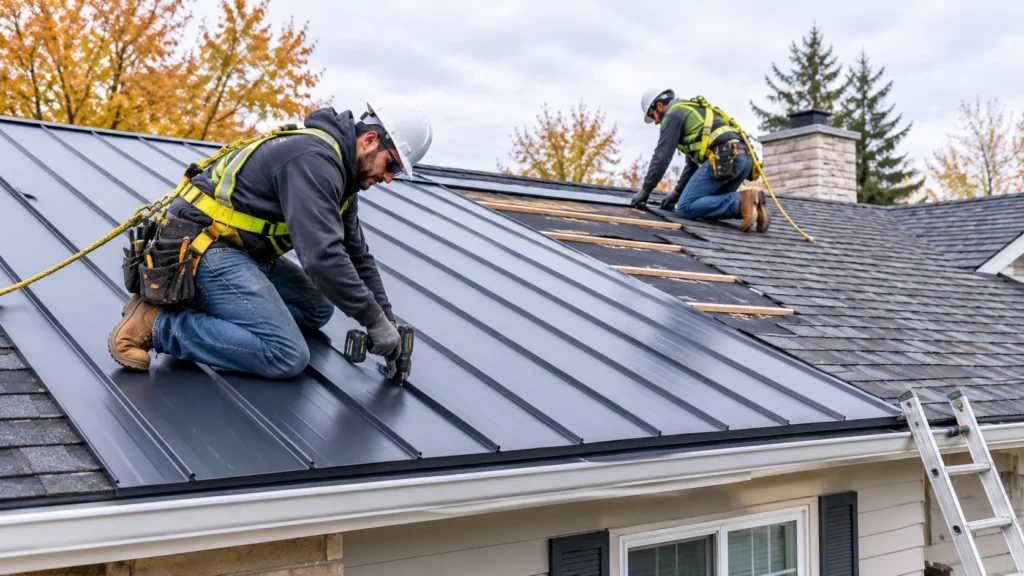
You do not always have to rip off your old shingles before putting on a metal roof over shingles. In plenty of situations, a qualified roofer can install metal panels right on top of your existing asphalt roof, saving you thousands in labor and disposal costs. But it is not a blank check. The condition of your current roof, your local building codes, and how many layers are already up there all determine whether a tear off is truly necessary or whether you can skip it entirely.
Quick Answer
Yes, you can install a metal roof over existing shingles in most cases, as long as there is only one layer of shingles, the roof deck is structurally sound, and your local building codes allow it. A proper inspection before installation is the only way to know for sure.
Can You Install a Metal Roof Over an Existing Shingle Roof?
Yes, you can. And a lot of homeowners do. Metal roofing is lightweight compared to most people’s assumptions. A standing seam steel panel weighs roughly 1 to 1.5 pounds per square foot. Compare that to asphalt shingles, which run about 2 to 4 pounds per square foot. Adding metal on top of a single layer of shingles rarely creates a weight problem for a standard residential roof structure. That said, “usually fine” is not the same as “always fine.” A few key factors determine whether your specific roof is a good candidate for an overlay.
Here is what matters:
- Only one existing layer of shingles: Most building codes allow a maximum of two roofing layers total. If you already have two layers of shingles stacked up, a tear off is required. No exceptions. Adding a third layer exceeds the structural load limits that codes are designed to protect.
- The shingles underneath are in decent shape: They do not need to be perfect. But they cannot be severely curled, buckled, or falling apart. If the existing shingles are badly deteriorated, they will create an uneven surface that causes the metal panels to warp, rattle in wind, and eventually leak.
- The roof deck is solid: This is the big unknown. Rotted plywood or damaged rafters hiding under those shingles can turn a roof overlay into a disaster. If there is any history of leaks, water stains on the ceiling, or soft spots when you walk the roof, inspect the deck before anything goes on top of it.
- Your local building codes permit it: Most jurisdictions follow the International Residential Code, which generally allows metal roofing over one existing layer of asphalt shingles. But some municipalities have stricter rules. Always check with your local building department or pull a permit before starting work.
- The metal roofing manufacturer allows it: Some manufacturers void their warranty if their product is installed over existing roofing materials. Others permit it under specific conditions, sometimes requiring a written inspection report. Read the warranty terms before committing.
When a Tear Off Is NOT Necessary
Not every reroof needs a demolition crew. Here are the situations where skipping the tear off makes perfect sense.
You Have a Single Layer of Shingles in Good Condition
This is the most common green light scenario. One layer. No major damage. Shingles are lying reasonably flat. The granules are still intact even if the roof is aging. In this situation, there is nothing structurally wrong with laying metal directly over the top. The existing shingles can even function as an additional moisture barrier beneath the new metal panels, which some building officials accept as meeting underlayment requirements.
Your Roof Deck Shows No Signs of Damage
No leaks. No water stains on interior ceilings. No sagging between rafters when viewed from the attic. No soft or spongy spots. If the decking is solid and dry, there is no reason to tear everything apart just to look at plywood that is perfectly fine. A qualified roofer can often assess deck condition by inspecting the attic from below and checking for visible moisture damage, mold, or structural flex without pulling a single shingle.
Your Local Code Allows Overlay Installation
Most areas following the International Residential Code permit one additional roofing layer as long as the structure can handle it. If your municipality is one of them, and your roof meets the weight and condition requirements, you are good to go. Your roofer should pull the permit and confirm this before starting, not after.
You Want to Save on Labor and Disposal Costs
A full tear off on an average sized home can run $1,500 to $4,500 just for the removal, dumpster rental, and landfill fees. That does not include the new roof itself. Skipping the tear off eliminates all of that. The crew shows up, installs underlayment or furring strips over the existing shingles, and lays the metal. Faster job. Less mess. Lower bill.
The Roof Pitch Is Standard and Accessible
Steep, complex roofs with multiple valleys, dormers, and transitions are harder to overlay cleanly. But a straightforward gable or hip roof with a standard pitch? That is an ideal candidate. The simpler the roof geometry, the easier it is to install metal over the existing surface without running into fitment issues around edges and flashings.
You Want to Keep Shingles Out of the Landfill
This one matters more than people give it credit for. Asphalt shingles are not biodegradable. Millions of tons of them end up in landfills every year. Installing metal over the top keeps all of that waste out of the dump. It is one of the more genuinely eco friendly choices you can make during a reroof, and you get the cost savings as a bonus.
Best Practices for a Roof Over Installation
If you and your roofer decide that a tear off is not necessary, the overlay still needs to be done right. Cutting corners here defeats the purpose of upgrading to metal in the first place. Here is what separates a solid roof over job from one that causes problems down the road.
- Always install a proper underlayment between the shingles and the metal: Even if your existing shingles are in good shape, a synthetic underlayment or minimum 30 pound roofing felt should go down on top of them before the metal panels are attached. This layer acts as a moisture barrier, prevents chemical reactions between the asphalt and the metal, and stops the old shingle texture from telegraphing through the new panels. Some building codes require it regardless of condition, and most metal roofing manufacturers demand it for warranty coverage.
- Use furring strips or battens to create an air gap: Laying metal panels flat against shingles traps heat and moisture between the two layers. That trapped moisture leads to mold, rot, and premature failure of both the shingles and the deck underneath. Installing 1×4 furring strips or purlins across the roof creates a ventilation channel that lets air circulate and moisture escape. This single step dramatically extends the life of the entire roof assembly.
- Make sure your roof ventilation is balanced: Adding a layer on top of your existing roof can disrupt the airflow pattern between your soffit vents and ridge vent. Balanced ventilation (air coming in at the eaves and exiting at the ridge) is critical for preventing condensation buildup under the metal. If your current ventilation is marginal, the overlay might push it into problem territory. Have your roofer evaluate the ventilation ratio before installation and add vents if needed.
- Nail down any loose or lifted shingles before the overlay: Loose shingles under a metal roof create air pockets. Air pockets cause noise in the wind and can allow moisture to pool. Walk the roof or have your crew walk it and secure anything that is lifting, curling at the edges, or not fully fastened. This takes minimal time and prevents real headaches later.
- Do not skip the permit and inspection: Even if your roofer says the overlay is standard practice, pulling a permit protects you. It ensures the work gets inspected by your local building department, which means someone other than the crew doing the work confirms it was done to code. If you ever sell the house, permitted work is dramatically easier to deal with than unpermitted modifications.
- Check your homeowner’s insurance before you start: Some insurers want documentation that a roof overlay meets local codes and manufacturer specs. A few may adjust your premium or require an inspection report. It is better to find that out before the crew is on the roof than after the job is done and your claim gets questioned.
Conclusion
A metal roof over shingles is a perfectly valid approach when the conditions are right. One layer of shingles in decent shape, a solid deck underneath, local codes that allow it, and a crew that follows best practices with underlayment, ventilation, and furring strips. You save money, keep waste out of the landfill, and still end up with a roof that can last decades.
At Precision Roofing, we handle metal roof installations, and we always start with an inspection so you know exactly whether a tear off is necessary or whether your home is a perfect candidate for a clean, cost effective overlay.