
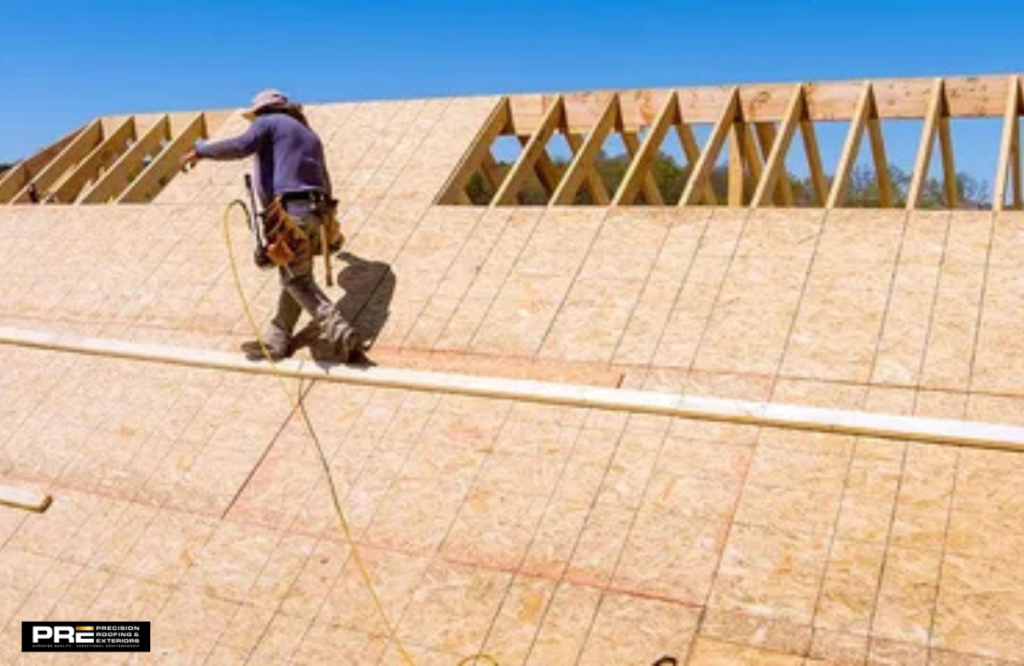
A solid roof depends on several layers working together perfectly every day. Shingles get all the attention but the real work happens below them. The hidden foundation connects everything and adds strength against local storms. You benefit from its quiet performance without even realizing it. Have you ever wondered what roof sheathing actually is?
Quick Answer
|
Understanding Roof Sheathing
Roof sheathing creates the firm base your entire roof system needs to perform well. It attaches directly to the rafters below, turning separate pieces into a unified platform. You benefit from its strength every season when harsh weather hits hard. Panels hold nails tightly so shingles stay secure through storms and temperature drops.
This layer also helps block moisture before it reaches your framing. Builders choose materials that resist swelling and add real structural value. You enjoy better stability and fewer headaches when this foundation stays solid. It works hard behind the scenes so you stay dry and comfortable inside.
Why Every Roof Needs Proper Sheathing
You might wonder why builders spend so much time on a layer you barely see. The truth is, proper sheathing quietly does four huge jobs that keep your home safe and dry.
Provides Structural Support
Sheathing creates a firm base that spreads weight evenly across every rafter. You get solid support for shingles, tiles or metal panels without any weak spots. In our area, heavy snow loads demand this extra strength so your roof never bows under pressure.
Improves Roof Stability
Proper panels lock the entire roof frame together against high winds. They resist uplift forces that try to peel your roofing away during gusts up to 110 miles per hour. You feel safer knowing your home stays steady through storms.
Adds Moisture Protection
Sheathing blocks water from reaching your attic and framing. It works with underlayment to keep everything dry inside. Good panels also resist swelling so you avoid costly rot down the road.
Helps with Energy Efficiency
Solid sheathing reduces air leaks and helps your attic stay properly ventilated. You save money on heating and cooling bills every month. In our temperature swings, this makes a real difference in comfort and costs.
Common Types of Roof Sheathing
Not every sheet of wood works the same up on your roof. You have three main choices and each brings different strengths depending on your home’s age, roof pitch and local weather.
Plywood Roof Sheathing
Plywood comes from thin layers of real wood veneer glued at right angles. You get excellent strength and moisture resistance, especially with CDX grade. It costs a bit more, yet many homeowners choose it for long-term durability in windy spots.
OSB (Oriented Strand Board)
OSB uses compressed wood strands and resin for a uniform, strong panel. You save money compared to plywood and it installs fast on most roofs. Just keep it dry during construction, as it swells more when it gets soaked.
Plank or Board Sheathing
Older homes often feature actual wood planks, such as 1×6 or 1×8 boards. You see gaps between them, which some roofs still handle fine. Modern upgrades usually switch to sheets for better stiffness and fewer leaks.
What Is the Recommended Roof Sheathing Thickness?
Experts generally recommend a ½-inch or ⅝-inch thickness when replacing roof sheathing on your home. You safely use ½-inch sheets with standard 16-inch rafter spacing. Yet you benefit more from ⅝-inch panels if your rafters sit 24 inches apart.
This extra thickness adds real strength against winds and occasional heavy snow. It reduces flexing and improves overall roof stability. You notice the difference through fewer future problems and lower repair bills. Choosing the right thickness keeps your entire roof system solid season after season.
Signs Your Roof Sheathing May Need Replacement
You cannot see sheathing from the street, but your house drops clear hints when it starts to fail. Catch these early and you save yourself a much bigger headache down the road.
Water Damage or Rot
Dark stains or soft spots on your attic rafters signal that water has reached the sheathing. You must notice musty smells or peeling paint inside too. Act fast because rot spreads quickly in our damp seasons.
Sagging Roof Areas
Visible dips along your roofline mean the panels have lost strength. You see the problem from the ground on a sunny day. This often indicates long-term moisture damage that requires immediate attention.
Higher Energy Bills
Sudden spikes in your heating or cooling costs point to air leaks through damaged sheathing. You feel drafts near the ceiling even with windows closed. Better sheathing seals everything tight again.
Visible Light in the Attic
Sunlight shining through gaps in your attic ceiling reveals holes or cracks in the sheathing. You spot this easily on a bright afternoon with the lights off. It means water and pests can enter easily.
How Much Does Roof Sheathing Replacement Cost?
Roof sheathing replacement usually runs between $2 and $5 per square foot installed right now. For a typical 2,000-square-foot roof, you might pay $4,000 to $10,000 total, depending on access pitch and disposal fees.
Factors like removing old layers or adding thicker panels push the price higher yet you save big by doing it during a full re-roof. Local labor and material costs in 2026 stay competitive so get multiple quotes. Investing in quality work now prevents much larger bills later from water damage or structural issues.
Tips to Extend the Life of Roof Sheathing
You do not have to wait for problems. A few smart habits keep your hidden sheathing strong for decades and protect the big investment you already made in your roof.
- Keep gutters clean so water never backs up under the edges.
- Trim overhanging tree branches before they rub or drop heavy debris.
- Ensure great attic ventilation to stop condensation from forming inside.
- Schedule annual professional inspections to catch small issues early.
- Remove moss or algae promptly because they trap moisture against the panels.
- Address ice dams quickly in winter to avoid water seepage.
- Fix any leaks immediately so minor problems never reach the sheathing.
Conclusion
Every successful roof depends on a properly installed layer of sheathing beneath the surface. This vital component adds strength, improves stability, and helps control moisture in challenging weather conditions.
People living in our area see the benefits when sheathing receives the attention it deserves. Correct thickness and quality materials make a noticeable difference over time. Learning what roof sheathing is empowers you to spot problems early and make informed choices.
If you spot any of these signs or just want peace of mind about your roof, the team at Precision Roofing stands ready with free inspections, honest advice and expert sheathing work that lasts. Give us a call and we’ll make the process simple and stress-free.
FAQs
What type of roof sheathing is best?
Plywood offers top moisture resistance while OSB saves you money on most homes. Choose based on your rafter spacing and local wind loads for the longest life.
How long does roof sheathing last?
Well-installed sheathing lasts 20 to 40 years or more. Proper ventilation and quick leak repairs help it reach the upper end of that range easily.
Can roof sheathing get wet?
It tolerates brief exposure during installation yet prolonged wetness causes swelling or rot. Always cover it fast and fix any leaks right away.
Is roof sheathing the same as plywood?
No. Plywood is one common type made from veneer layers while OSB uses compressed strands. Both work well but they differ in cost and performance.