
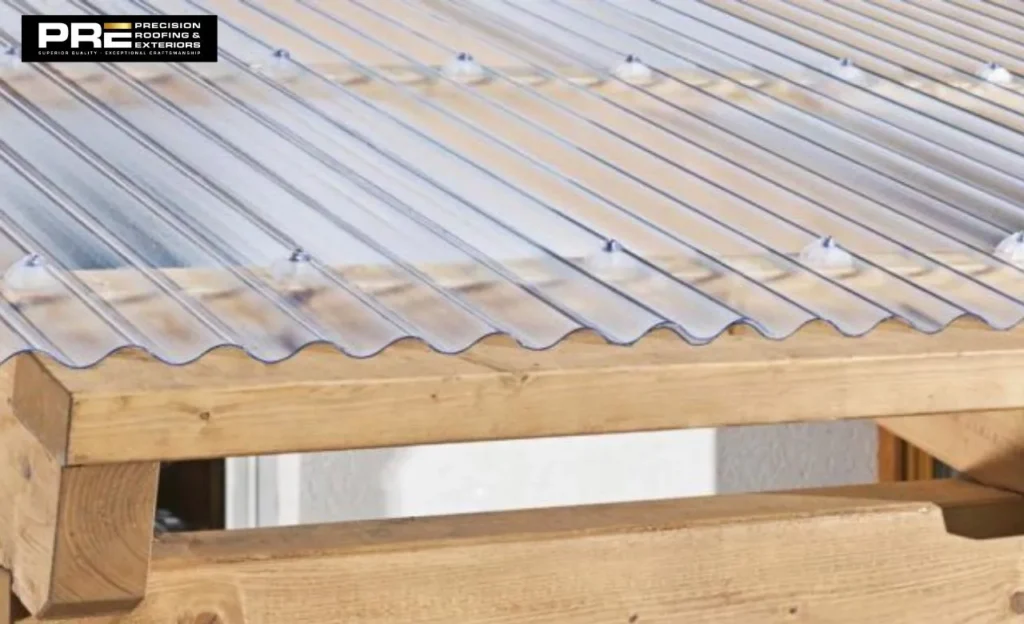
SunTuf roof panels are durable and lightweight, perfect for patios, carports and covered walkways. They are polycarbonate sheets that let light pass and protect from harmful UV rays. Proper installation of SunTuf roof panels helps extend service life and reduce the risk of leaks.
Installing them comes down to a few key steps: build a frame with the right pitch and purlin spacing, add closure strips, then fasten each panel UV side up through predrilled holes on the corrugation crowns. Overlaps should face away from the main direction of wind and rain. Get those details right and the roof stays watertight for years.
Key Takeaways
|
What Are SunTuf Roof Panels?
SunTuf roof panels are corrugated polycarbonate panels for outdoor use. They have high impact resistance and are easy to handle. One side is treated with a special UV-protective layer to prevent sun damage and yellowing. These panels will allow natural light to pass through and help to reduce the heat buildup in covered areas.
They can be used in a variety of applications for home and light commercial use where weather protection is desired but excessive weight is not required. If they are installed correctly, they can perform at their best and last the longest.
What Are SunTuf Polycarbonate Panels Made Of?
High-quality polycarbonate resin is made into a corrugated panel. The outer surface has a co-extruded UV layer that provides a long-lasting shield. This construction gives high impact strength far above glass or acrylic. The sheets resist cracking under hail or falling branches in normal conditions.
Where Are SunTuf Roof Panels Commonly Used?
Owners use them in their patio covers, carports, greenhouses and outdoor walkways. They can be used for lighting in garden structures and pool enclosures. They are convenient to use and many homeowners prefer them for do-it-yourself projects. The panels are also used on commercial sites for light-duty canopy roofs.
Benefits of Using SunTuf Roof Panels
Here’s what SunTuf panels offer:
- High light transmission: up to 90% for clear panels
- UV protection: blocks virtually 100% of harmful UV rays and the panels are made to resist yellowing and fading
- Impact strength: highly resistant to hail and described as virtually unbreakable
- Lightweight: easy to carry and reduces the load on the supporting frame
- Flame retardant material
- Shade options: tinted panels are available if you want less glare and heat
- Warranty: backed by a limited lifetime warranty when installed correctly, UV side up
Easy cutting and fastening speed up installation for most users.
What Should You Know Before Installing SunTuf Roof Panels?
Planning ahead prevents problems during and after installation. Roof structure details and local weather loads guide every decision. Correct pitch, support spacing and expansion room help keep the panels stable. Checking these points first leads to a watertight and durable finished roof.
- Check the Recommended Roof Pitch: The minimum recommended slope is 1.5 inches of rise in every 12 inches of run. Lower pitches require additional sealing to prevent water entry. Steeper slopes improve drainage and reduce debris buildup on the surface.
- Plan the Rafter and Purlin Spacing: Purlins must sit no more than 36 inches apart for proper support. Most projects use 24-inch spacing for better strength and economy. Rafters follow local code, often at 16 to 24 inches on center.
- Determine the Correct Panel Direction: Install panels with the UV-protected side facing upward toward the sun. The protective film usually marks the correct outer face. Wrong orientation voids the warranty and shortens panel life.
- Consider Wind, Snow and Rain Loads: Local wind and snow loads affect support spacing and fastener density. High-load areas need closer purlins and more fasteners. Always check building codes before final frame design.
- Allow For Expansion and Contraction: Polycarbonate expands and contracts with temperature changes. Oversized predrilled holes and proper fastener placement allow free movement. Failure to allow expansion causes buckling or stress cracks later.
- Plan the Layout Around Prevailing Wind and Rain: Side laps should face away from the main direction of wind-driven rain so decide your starting edge before you buy materials.
- Protect Wood Purlins Under Clear Panels: Manufacturer guidance recommends painting wooden purlins white or covering their tops with aluminum tape under clear panels. This keeps the wood from heating up and stressing the polycarbonate where they touch.
- Plan Safe Roof Access: Polycarbonate panels aren’t built to be walked on. Plan to work from ladders or crawl boards that span the purlins, never by stepping directly on a panel.
What Tools and Materials Do You Need to Install Suntuf Roof Panels?
Gather all tools and materials before starting work on the roof. Ready supplies keep the job moving smoothly and safely. Correct accessories protect the panels and create tight weather seals.
- Required Tools: A measuring tape, chalk line, straightedge and a circular saw with a fine-tooth blade form the core set. Add a drill with a 1/4-inch bit for predrilling, a 1/4-inch nut driver for the fasteners, tin snips or a utility knife and a sturdy ladder. Safety gear, including gloves and eye protection, remains essential.
- Required Materials and Accessories: SunTuf roof panels of the proper length, plus matching horizontal and vertical closure strips, are required. You’ll also need EPDM-washered fasteners made for polycarbonate, wall flashing if the roof meets a building and a silicone sealant confirmed as compatible with polycarbonate.
- Framing Extras: Blocking for the outside rafters, plus white exterior paint or aluminum tape for the tops of wooden purlins under clear panels.
Easy Steps to Install Suntuf Roof Panels
Follow each step in order for a secure, watertight installation. Accurate measuring, cutting and fastening produce professional results. Attention to overlaps, expansion gaps and edge details prevents future leaks on the finished roof.
1: Measure the Roof Area and Plan the Panel Layout
Measure the full length and width of the roof area carefully. Calculate the number of panels needed, including side and end overlaps. Plan overhangs of one to three inches at the eaves. Layout ensures efficient use of material and proper coverage.
2: Prepare the Roof Frame
Install rafters at the required spacing according to local code. Add purlins no more than 36 inches apart across the rafters. Install blocking between the purlins on both outside rafters so the vertical closure strips have solid support along their full length. A square and level frame supports the panels evenly. If the panels are clear and the purlins are wood, paint the purlin tops white or cover them with aluminum tape now, before any panels go on.
3: Install the Closure Strips
Position horizontal closure strips along the eaves and ridge lines. Start at one end and attach the horizontal closures that will support the first panel, then cut vertical closure strips to fit between them on the two outside rafters only. These foam or rubber strips fill the corrugations and block insects or debris. Secure them firmly before panels go into place.
4: Measure and Cut the SunTuf Panels
Mark cut lines on the panels while the protective film stays in place. Use a fine-tooth circular saw or handsaw for clean edges. Support the panel fully during cutting to avoid vibration cracks. Keep the film on until the final cleanup after installation.
5: Position and Install the First SunTuf Panel
Place the first panel with the UV side up and the correct slope direction. Start from the side opposite the prevailing wind for better sealing. Predrill a 1/4-inch hole for each fastener, then attach the panel through the top (crown) of every other corrugation. Fastening on the crown keeps the screw above the water channels. Drive each screw straight in, perpendicular to the panel. Tighten until the EPDM washer sits snug against the panel. If the corrugation starts to dent downward, the screw is too tight and should be backed off slightly.
6: Install and Overlap the Remaining Panels
Before setting each new panel, run a bead of polycarbonate-compatible silicone along the corrugation where the next panel will overlap. Position each next panel with the required side overlap of one or two corrugations. Create end overlaps according to the manufacturer’s requirements and position the overlap over a supporting purlin where required. Predrill and fasten in the same pattern as the first panel. Let each panel sit naturally without pulling, stretching or forcing it into position. Work across the roof until full coverage is complete.
7: Finish and Seal the Roof Edges
Install remaining closure strips, ridge caps or wall flashings as needed. Apply compatible sealant only at required joints and penetrations. Keep all drainage paths clear of excess material. Edge details complete the weather barrier around the full perimeter.
Step 8: Perform a Final Inspection and Clean Up
Check every fastener for correct tightness and washer seal. Inspect all overlaps and edges for gaps or potential leak points. Peel off the protective film right after installation. Film left baking in the sun can become very hard to remove. Clear installation debris from the roof and surrounding area.
Common Mistakes to Avoid When Installing SunTuf Roof Panels
Simple errors can shorten panel life or create leaks. Awareness of these problems helps installers avoid costly rework. Careful attention to orientation and support details produces lasting results.
- Installing Panels With the Wrong Side Facing Up: The UV-protected side must face the sun at all times. Improper orientation leads to rapid yellowing and material breakdown. Always check the film marking before placing each panel.
- Using Incorrect Fasteners: Only use approved EPDM washered fasteners made for polycarbonate. Wrong washers or screws can crack the panels or void the warranty. Compatible fasteners seal properly and allow thermal movement.
- Overtightening Screws: Tightening fasteners restricts expansion and can cause buckling or stress cracks. Stop when the washer sits snug against the panel surface. Proper tension keeps the seal without damaging the sheet.
- Failing to Predrill Holes: Drilling full-size holes without clearance stops free expansion. Always predrill 1/4-inch holes centered on the fastener location. This step prevents buckling during temperature changes.
- Fastening in the Valleys: Screws placed in the low channels sit right where water runs off the roof. Fasten through the crowns instead, unless your panel profile’s guide specifically says otherwise.
- Using Incompatible Sealants: Some sealants attack polycarbonate and cause clouding or failure. Choose only products listed as safe for polycarbonate use. The correct sealant maintains clarity and long-term strength.
- Incorrect Panel Overlap: Too little overlap allows water to enter under the panels. Follow the manufacturer’s minimums for side and end laps. Adequate overlap over supports creates a reliable weather seal.
- Ignoring Expansion and Contraction: Fixed panels without room for movement buckle or pull at fasteners. Oversized holes and proper fastening solve this issue. Allowance for movement keeps the roof stable year-round.
- Installing Panels on Improperly Spaced Supports: Wide purlin spacing lets panels sag under load or impact. Stay within the 36-inch maximum and prefer 24-inch centers. Correct support maintains strength and appearance.
- Walking on the Panels: Stepping directly on polycarbonate can crack or dent it. Use crawl boards that span the purlins or work from a ladder.
- Leaving the Protective Film On: Film left in the sun for weeks can bond to the surface and become very hard to peel off.
How Much Should Suntuf Roof Panels Overlap?
Correct overlap creates a watertight joint that handles rain and wind. Side and end laps follow specific minimums for reliable performance. Local conditions can require slight increases for extra protection.
- Side Overlap Requirements: Side overlaps usually cover one or two full corrugations. Manufacturer guidance recommends a two-corrugation side lap on low slopes and in high-wind areas. Lay each lap so it faces away from the main direction of wind-driven rain and seal it with polycarbonate-compatible silicone.
- End Overlap Requirements: End overlaps should follow the manufacturer’s recommendations for the specific panel profile and roof pitch. Position end laps over supporting purlins where required. Install lower panels first so water flows over the joints.
- Factors That Can Affect Panel Overlap: Steeper pitches allow for minimum overlap values. Low pitches or high wind areas benefit from greater overlap. Always follow the specific profile guidelines for the panels in use.
How to Clean and Maintain SunTuf Roof Panels
A little routine care keeps the panels clear and the roof watertight. Plan a quick check a couple of times a year, especially after storms.
- Rinse and wash gently: hose off dust and pollen, then wash with mild soap, lukewarm water and a soft cloth or sponge.
- Skip harsh cleaners: avoid abrasive pads, scrapers and strong solvents which can scratch or cloud polycarbonate.
- Clear debris: remove leaves and branches, especially from the upper edge and gutters so water can drain freely.
- Check the fasteners: look for loose screws or worn washers and replace any that no longer seal tightly.
- Inspect overlaps and flashing: reseal any gaps with a polycarbonate-compatible sealant.
- Stay off the roof: clean from a ladder or with an extension pole rather than standing on the panels.
Conclusion
Correct installation of SunTuf roof panels creates a light-filled, durable outdoor cover. Careful planning, proper supports and exact fastening deliver long-lasting weather protection. The details that matter most are a proper slope, solid purlins, UV side up, predrilled holes, crown fastening with snug washers and sealed overlaps facing away from the weather. Gentle cleaning and a quick fastener check each year help the panels last.
Planning a patio cover, carport or walkway roof? Contact Precision Roofing to have our crew frame and install your SunTuf panels the right way the first time.
FAQs
How far apart should purlins be for SunTuf panels?
Purlin spacing should follow the manufacturer’s recommendations for the specific panel profile and expected wind or snow loads. Closer spacing may be necessary in areas with higher loads.
Do you need to predrill SunTuf roof panels?
Yes. Predrilling is recommended before driving fasteners. Use hole sizes specified by the manufacturer to allow the panels to expand and contract freely. Skipping this step can increase the risk of buckling or stress damage.
How much should SunTuf roof panels overlap?
Side overlaps cover one or two corrugations depending on the profile. End overlaps should follow the manufacturer’s recommendations, with the overlap positioned over a supporting purlin where required. Adequate overlap creates a reliable seal against rain.
Do you screw SunTuf panels on the crown or in the valley?
On the crown. The manufacturer’s instructions call for fastening through the top of every other corrugation so the screws sit above the channels where water drains.
Can you walk on SunTuf roof panels?
No. Stepping directly on the panels can crack or dent them. Use crawl boards that rest on the purlins or work from a ladder.