
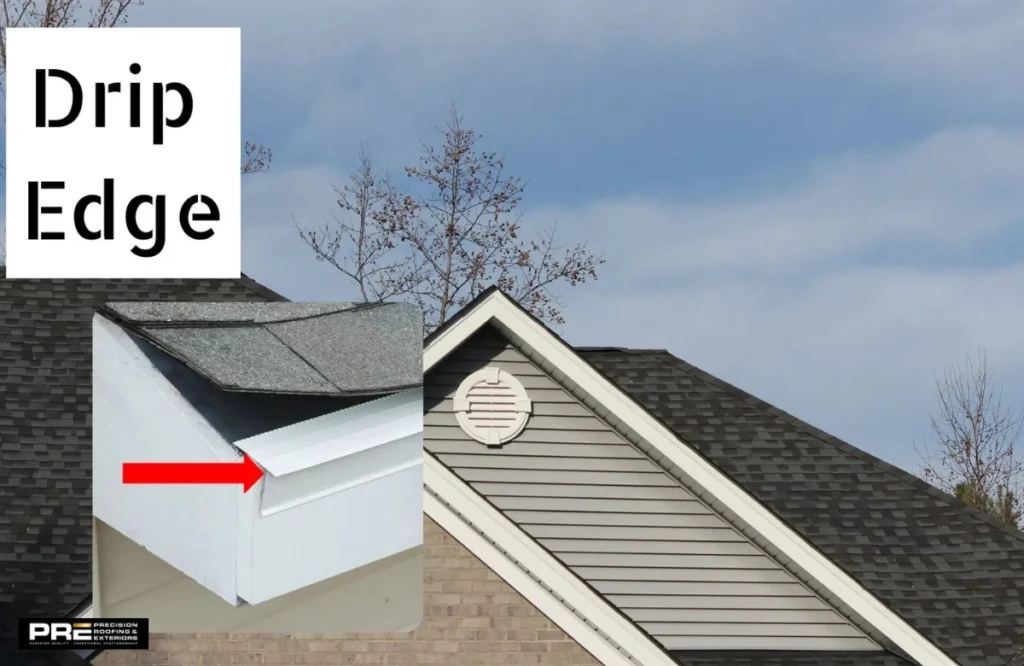
Look closely at the edge of any roof and you’ll spot a thin strip of metal running along it. That’s drip edge. Most people don’t notice it until a roofer mentions it during an estimate or until water shows up somewhere it really shouldn’t be. It’s small but it does a lot of work protecting the parts of your roof that take the most beating. This guide walks through what it does, why it’s there and what you should know before your next roofing job.
Core Takeaways
- So what is a roof drip edge? It’s a strip of metal that runs along the edges of your roof, directing water into the gutters instead of letting it sneak behind the fascia.
- Water can damage the fascia and cause rot over time if the drip edge is absent.
- Drip edge comes in different shapes and sizes like C- Style, D-style and more.
- Drip edges are made from aluminum, steel or copper but the right choice depends on your roof.
- The installation of the drip edge matters a lot. At the bottom of the roof (eaves) and it is installed under the underlayment. Along the sides (rakes), they get installed on top.
- Roof type, local weather and building codes will help you decide which drip edge works best for you.
What Is a Drip Edge?
A drip edge is basically a thin piece of metal that is placed along the edge of the roof, mainly at the bottom or on the sides. It sticks out a little so water flows into the gutters instead of going behind the fascia or down the walls. It’s small and affordable but it also helps protect the most vulnerable parts of your roof.
Why Every Roof Needs a Drip Edge
A roof without a drip edge may be more vulnerable to water-related damage.
Stops Water Damage to the Fascia
Water from the roof can easily run behind the fascia instead of going into the gutter if a drip edge is not installed. The wood will trap that water and start to rot slowly. You won’t be able to notice the damage from the ground until years later.
Keeps Wind From Lifting Shingles
Strong winds can easily hit the edges of the roof. A drip edge also helps hold the shingles in place and makes it harder for the wind to lift them. If a single shingle loosens the nearby shingles can also start to fail.
Sends Water Where It Belongs
How water flows off your roof is controlled by the drip edge. It guides the water into the gutters instead of letting it run down the fascia or onto the siding. This helps keep water moving away from your home the way it should.
Types of Drip Edge Profiles
Drip edge isn’t one size fits all. Different profiles work better depending on your roof and what you’re trying to accomplish.
C-Style
C-style is the simplest and most common profile out there. It’s basically a C-shaped bend that hangs over the fascia. Most standard residential roofs use this one because it’s affordable and gets the job done without any extra fuss.
D-Style
D-style has a deeper lip than C-style, which pushes water further away from the fascia before it drips off. If you’re somewhere that gets a lot of rain, this extra reach can make a real difference over time.
F-Style
F-style sits taller and has a vertical face that lines up flush against the fascia board. This works well when the fascia sits back further from the roof deck than usual, and it tends to give a cleaner look along the edge.
Materials Used for Drip Edge
The shape is one thing, but what it’s made of determines how long it actually lasts on your roof.
Aluminum
Aluminum is what most homes end up with. It doesn’t rust, it’s light to work with and costs less than the other options out there. The trade-off is that it dents a bit more easily than steel if something hits it, such as a ladder or a branch coming down.
Galvanized Steel
If maintained properly, steel handles bumps and rough use better than aluminum. It feels stronger and less likely to bend. But over time, the zinc coating that protects it begins to fade. If you live near the coast, salty air can speed up and rust may appear earlier than expected.
Copper
Copper is considered a premium roofing material. It slowly changes color over time and forms a patina that many homeowners actually like. It can last for decades without much trouble. It also works well with slate or cedar roofs but copper is much more expensive than other options.
Vinyl
Vinyl is not as common but it can be used on lower-budget projects. It will not rust, which is helpful but still it has its limits. Cold weather can make it crack and long exposure to sunlight tends to wear it out faster than metal.
Where and How Drip Edge Gets Installed
Getting the drip edge in the right spot and in the right order makes the difference between it working and not working.
Eaves vs Rakes Placement
At the eaves, which is the horizontal bottom edge of the roof, drip edge goes down first and the underlayment goes on top of it. At the rakes, which are the sloped edges running up the sides, the order flips and the underlayment goes down first with the drip edge on top of that.
Where Underlayment Fits In
This is the part that trips people up, and yeah, sometimes roofers get it wrong too. Depending on which edge of the roof you’re working on, the underlayment and drip edge have to overlap in a certain order. Mess that up and water can get underneath instead of flowing over the top where it belongs.
Getting the Overlap Right
Each section of drip edge should overlap the next piece by a few inches, then get secured tightly so no spaces remain. At first glance, everything may seem fine, though even a small gap can let water slip through once heavy rain starts.
How to Choose the Right Drip Edge for Your Roof
Once you know what to look for, this part goes pretty quick.
- Think about your roofing material first. Asphalt shingles do fine with C-style or D-style, but tile and metal roofs usually need their own specific profiles.
- Your climate matters when choosing materials. Aluminum works for most houses, steel is better if you get heavy snow, and copper is the move for higher-end roofs.
- Don’t skip checking your local building codes. Some places have rules about drip edge that affect what you’re even allowed to install.
Is drip edge required by code?
In most places, yes. Building codes usually call for drip edge on residential roofs, but the exact rules change depending on where you live. Your local building department or roofer can tell you what applies to you.
Can a drip edge be added to an existing roof?
It can. You can add it during a re-roof or as its own repair job, though it’s simpler and cheaper to handle it when you’re already doing a full roof replacement.
How often does the drip edge need to be replaced?
Usually it lasts about as long as the roof does, somewhere around 20 to 30 years. That can change if it takes physical damage or starts corroding sooner depending on what it’s made of.
Conclusion
So what is a roof drip edge anyway? Basically, it’s a thin strip of metal that handles a big job, keeping water off your fascia and roof deck, and stopping wind from tearing up your shingle edges. What profile and material you go with depends on your roof, where you live and the codes in your area. Not sure what’s currently on your roof or what it actually needs? Precision Roofing can take a look and figure out what’s right for your home.