
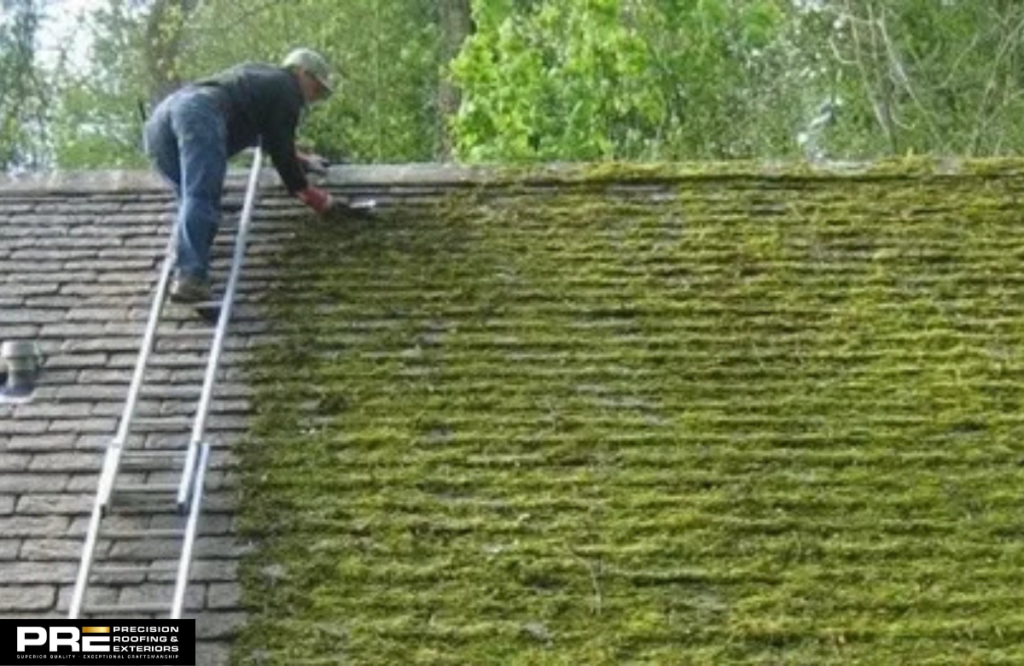
You can remove roof moss by brushing off loose growth, applying a moss control solution, and rinsing from the ridge down. Most jobs take two to four hours depending on roof size and moss coverage. A garden hose works for rinsing, but a pressure washer should not be used on asphalt shingles. Heavier moss, steep pitches, or a roof with visible damage usually call for a professional instead.
Key Takeaways
- Loose moss comes off with a soft brush or leaf blower; no scraping required. Aggressive tools damage the shingle surface underneath.
- A commercial moss treatment should be left on the roof for the time specified by the manufacturer.
- Avoid pressure washing asphalt shingles because high pressure can damage the surface and remove protective granules. A standard garden hose handles the rinse safely.
- Trim branches and clear gutters after, since regular roof moss removal keeps it from becoming a yearly chore.
- Steep roofs, multiple stories, or any sign of existing damage are reasons to call a professional rather than do it yourself.
Why Does Moss Grow on Roofs?
Mosses grow in shady, wet sites that are moist for long periods. North-facing roof slopes may receive less direct sunlight, and overhanging branches can increase shading and trap moisture. Leaves and debris can trap moisture against the shingles as well. Moss can more easily establish itself on older roofs with worn surfaces.
How Do You Remove Moss From a Roof?
Removing roof moss involves several steps. Use the product as directed and do not use methods that may damage the shingles.
Step 1: Protect Plants and Property Around the Roof
Throw plastic sheeting over any shrubs or flower beds near the roofline. Moss solution runoff isn’t kind to grass or delicate plants. If covering everything isn’t realistic, at least soak the plants down first with water.
Step 2: Remove Loose Moss From the Shingles
A soft bristle brush or leaf blower dislodges most of the loose clumps. Use light strokes in the direction of the shingles. Do not lift or damage the edges of the shingles. Don’t scrub. You’re not trying to remove everything here, just the stuff that’s already halfway off. Remaining growth can be treated with an appropriate moss-control product.
Step 3: Apply a Moss Removal Solution
Follow label directions for treatment with a commercial moss treatment. If the manufacturer recommends a bleach-based solution for your roofing material type, follow the dilution and safety instructions given by the manufacturer.
Step 4: Let the Solution Break Down the Moss
Let the treatment sit on the roof as long as indicated on the product label. You’ll see the moss start to darken and loosen itself up. Rushing this part only means that you are rinsing moss that is still stuck tight. A little patience now beats another round of treatment later.
Step 5: Rinse the Roof From the Ridge Downward
Don’t use a pressure washer on asphalt shingles; rinse gently with a garden hose. Flush from the top and let gravity take its course. Shingles are overlapped top to bottom so that water can’t sneak underneath. Go easy on the heavier bits; they’ll need a bit more rinse.
Step 6: Remove Remaining Moss and Roof Debris
Some clumps just don’t move with the water. If the moss does not come out after treatment, follow the product instructions for further treatment instead of scraping the shingles vigorously. And while you’re up there, clean out the gutters and valleys too. Any remaining gunk just provides something for next season’s moss to cling to.
Step 7: Inspect the Roof for Damage
Check the roof from a safe position, either using binoculars or from an appropriate access point. Look for cracked, curled or missing shingles (moss can hide these).
What Should You Avoid When Removing Roof Moss?
A handful of mistakes turn a weekend job into a real headache.
Using a Pressure Washer
High-pressure water can damage asphalt shingles and remove protective granules. A garden hose handles this job fine, with no risk attached.
Scraping Shingles Aggressively
Aggressive scraping can damage shingle surfaces, remove protective granules, and disturb the shingles. You might get the moss off faster, sure, but you’re trading it for actual structural damage. Gentle wins here, even if it’s slower.
Using Harsh Cleaning Chemicals
Undiluted bleach can damage roofing materials and nearby landscaping. Use only products and concentrations appropriate for the roofing material. Your gutters and landscaping will hold up better too.
Walking Directly on Fragile Shingles
Never walk on damaged or broken shingles. Steep roofs and roofs that need heavy foot traffic are best left to trained professionals who have the right fall-protection equipment.
How Can You Prevent Moss From Growing Back?
Once the moss is removed, a few simple maintenance steps can help reduce the conditions that allow it to grow back.
Trim Overhanging Tree Branches
Cutting back branches lets sun and air hit the roof again. Less shade, less moisture trapped, less moss. A few feet of clearance does wonders.
Keep Gutters and Roof Valleys Clear
Blocked gutters keep water pressed up against your roof’s edge. Just clean them out twice a year, especially if you’ve got trees nearby throwing leaves everywhere. Really, a quick check and cleaning in the fall and spring usually does the trick.
Improve Sunlight and Airflow
Now, moss hates sunshine and dry air. If you can get more light and better airflow around your roof, you’re making life a lot harder for moss.
Install Zinc or Copper Strips
Zinc or copper strips work like a charm. Every time it rains, they release tiny particles that moss just can’t handle. Just install them up near the ridge, and they quietly defend everything below. They do a pretty good job, but it all depends on how you put them in, what sort of roof you have, and whether the rain actually hits those strips.
When Should You Hire a Professional to Remove Roof Moss?
A steep roof, multiple stories, heavy moss coverage, or visible roof damage can make professional service the safer option. Heavy moss coverage across the whole surface is another good reason to skip the DIY route. Spotted damaged shingles, soft spots, or anything hinting at a leak? Stop and bring in a pro. They have real safety gear for roofs that feel unstable underfoot.
Conclusion
Getting rid of roof moss requires gentle cleaning and the right treatment. You should not scrape or pressure-wash vigorously, as this can damage asphalt shingles and remove the surface granules. Pruning the trees and cleaning the gutters also help cut back on the damp, cool, shaded environment that encourages moss growth.
If the roof is steep, damaged, has difficult access or is heavily covered with moss, it is safer to use a professional service. For more than the standard, call Precision Roofing, your professionals in roof inspection and roof moss removal services.
Frequently Asked Questions
Can I remove moss from my roof myself?
Mostly yeah. Most roofs are totally manageable as a DIY project with basic tools and a little bit of care. Steep roofs or multi-story homes are best left to a professional, though.
Can you pressure wash moss from a roof?
No, forget it. Pressure washing removes shingle granules and shortens the life of your roof. A garden hose and a gentle rinse do the trick just fine.
How can I keep moss from growing back on my roof?
Trim branches, clean your gutters regularly and consider zinc or copper strips near the ridge. All three cut back the shade and moisture needed by moss to grow.