
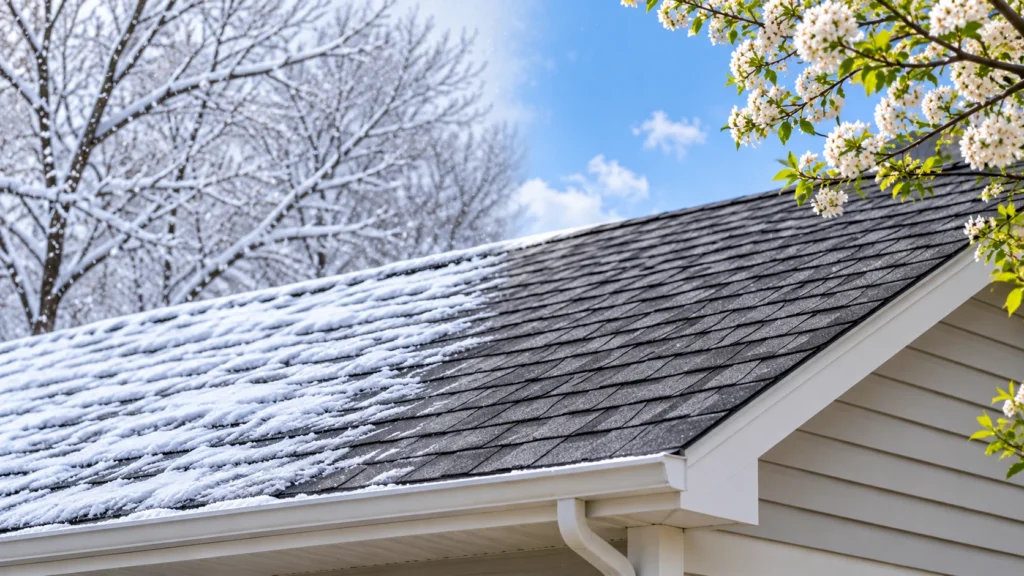
If your shingle roof looks rough and winter is creeping in, you have probably asked whether it is worth fixing now or riding it out until spring. Fair question. The truth is, winter shingle repair is absolutely doable, and sometimes it is the smarter move. But the season you pick does change a few things about how the job goes, what your roof deals with in the meantime, and what you end up paying.
Quick Answer
You can restore a shingle roof in winter without any issues in most cases. What changes is how the materials behave in the cold, how long the job takes, and what happens to your roof if you decide to wait. Spring gives you easier working conditions but your roof keeps aging through the winter while you hold off.
What Changes When You Restore Your Shingle Roof in Winter
Here is what is actually different about getting your roof fixed during the colder months. Some of these matter more than others depending on where you live and how bad your roof situation is.
Your Shingles Get Stiffer in the Cold
Asphalt shingles are flexible in warm weather. You can bend them, position them, nail them down without much fuss. When it gets cold, they stiffen up. Think of it like trying to fold a piece of plastic that has been sitting in your freezer. It is not impossible, but you have to be more careful or they can crack. Most manufacturers say installation works best above 40 or 45 degrees. Experienced crews know how to work around this. They store shingles somewhere warm before bringing them up and handle them gently. But it does take more attention than a summer install.
The Sticky Strips Take Longer to Kick In
Each shingle has a sticky strip on the back that bonds it to the shingle below. In the summer, the sun heats everything up and those strips seal within a few days. In winter, there is just not enough heat for that to happen quickly. It can take weeks or sometimes longer for the strips to fully activate. Your shingles are still nailed down and functional in the meantime. They are just slightly more likely to catch wind until everything seals up. Not a crisis, but something your roofer should account for.
The Crew Has Fewer Daylight Hours
This one is pretty straightforward. Days are shorter in winter. A crew that could work ten hours in June might only get six or seven usable hours in December. Add in the occasional snow day or morning frost that delays the start, and a two day job might stretch to three. It does not change the quality of the work. It just changes the timeline.
Some Products Need to Be Swapped Out
Certain sealants and adhesives that work great in warm weather do not cure properly when it is cold. A good roofer will switch to products that are rated for lower temperatures. Same goes for underlayment. If there is any moisture or frost on the roof deck, it needs to be dealt with before anything goes on top of it. This is all standard stuff for a crew that does winter work regularly. It just means the material list looks a little different than it would in July.
Emergency Situations Do Not Care About the Calendar
If your roof is leaking right now, or you lost shingles in a storm, or there is water staining spreading across your ceiling, the whole winter vs. spring conversation goes out the window. Water damage does not slow down because you are waiting for better weather. A few months of unchecked leaking can turn what would have been a straightforward shingle job into a much bigger project involving the wood underneath, insulation, even mold. When there is active damage, winter restoration is not just fine. It is the only move that makes sense.
What Changes When You Wait Until Spring
Holding off sounds appealing. Better weather, easier conditions, less to worry about. But waiting changes things for your roof too, and not all of it is good.
You Get the Easiest Working Conditions
Spring and early summer are genuinely the sweet spot for shingle work. Everything is warm enough that materials behave exactly how they are supposed to. Those adhesive strips seal up fast. Shingles bend without any risk of cracking. Crews can work full days without weather interruptions. If your roof can wait, these conditions do make for a smoother installation.
Your Roof Keeps Taking Hits All Winter
This is the part people underestimate. Winter is not gentle on a roof that is already struggling. Water gets into small cracks, freezes, expands, and makes those cracks bigger. Ice can build up along the edges and push water underneath shingles that were barely holding on. Snow piles up and adds weight to areas that are already weakened. A roof that looks “not great but manageable” in November can look significantly worse by March. You might save on installation ease by waiting, but you might also be looking at a bigger bill when spring finally comes.
Every Other Homeowner Has the Same Idea
Here is a practical problem. Spring is when everyone who put off their roof all winter finally picks up the phone. Roofing companies get slammed. A contractor who could start your project within a week or two in January might be booked out a month or more by April. If you are on a timeline or just do not want to deal with the waiting game, winter actually gives you more flexibility.
Your Insurance Might Have an Opinion
If your roof damage came from a storm or some other covered event, most insurance policies expect you to take reasonable steps to prevent further damage. Sitting on a damaged roof for months without at least doing temporary repairs could complicate things when you file a claim. This varies by policy, but it is worth a phone call to your insurer before you commit to waiting.
Quick Comparison: Winter vs. Spring Shingle Restoration
| What Changes | Winter | Spring |
|---|---|---|
| Shingle handling | Stiffer, needs careful handling | Flexible, easy to work with |
| Adhesive sealing | Takes weeks to fully bond | Bonds within days |
| Scheduling | Easier to book a crew | Peak season, longer waits |
| Daily work hours | Shorter, weather delays possible | Longer days, fewer interruptions |
| Risk while waiting | N/A, damage stops immediately | Roof keeps deteriorating |
| Material needs | Cold rated products recommended | Standard products work fine |
| Cost | Labor may be slightly higher | Conditions are more predictable |
So Which One Is Actually Better?
Honestly, it depends on what your roof looks like right now. There is no blanket answer.
Getting it done in winter makes more sense if:
- You have leaks, missing shingles, or visible damage happening right now
- Water stains are showing up on your ceilings or walls
- Your area gets a lot of freezing and thawing that will make existing problems worse
- You want to beat the spring rush and get on a contractor’s schedule faster
- Your insurance expects you to act on storm damage promptly
Waiting for spring is reasonable if:
- Your roof is older and worn but not actively leaking or failing
- There are no exposed spots or areas where water could get in
- You are planning a full replacement rather than a repair
- Your roofer has looked at it and said it can safely make it through winter
- You want the most predictable conditions for a big job
When you are not sure which camp you fall into, the smartest thing is to get someone up there to take a look. A quick inspection now tells you whether waiting is a safe bet or a risk you do not want to take.
Conclusion
What changes for shingle roofs between winter shingle repair and a spring project really comes down to how your materials behave, how your roof holds up in the meantime, and how easy it is to get on a contractor’s calendar. Winter work takes a bit more care but stops damage immediately. Waiting gives you better conditions but your roof does not pause its aging just because you did.
If you are anywhere in the Tri Cities area and want a straight answer on where your roof stands heading into winter, Precision Roofing can take a look and help you figure out the right timing for your situation.