
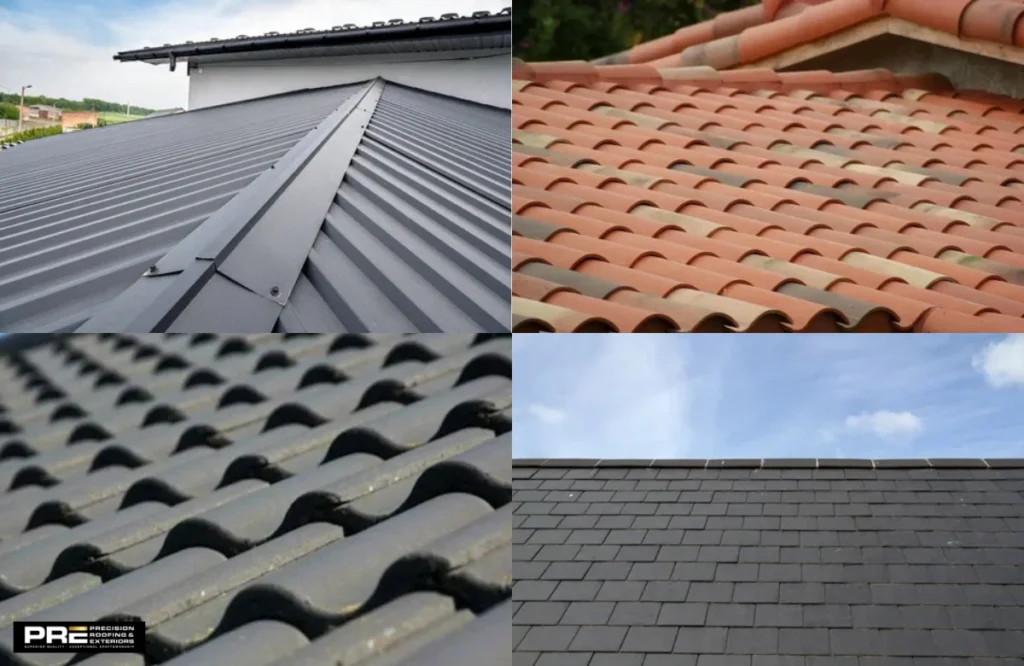
The best roofing materials for hot climates are clay tile, concrete tile and coated metal. They handle the sun better than other common roofing options. They reflect heat away from your home quickly. They cool down fast once the sun sets. You need a roof that defends against UV damage every day. Weak materials crack and they fade too quickly. Strong surfaces reduce future repair costs. Let’s look at which roofing material works best in hot climates to protect your home.
Key Takeaways
|
What Are the Best Roofing Materials for Hot Climates?
Your roof faces the sun every single day. The right material bounces heat away and keeps your attic cool. Weak surfaces trap warmth and drive up bills. Let us explore five strong options that handle hot weather well.
Metal Roofing
Metal roofing handles intense summer heat very well. Coated steel and aluminum panels reflect sunlight strongly. They cool down quickly once the sun dips. That means less heat transfers into your attic. Homeowners enjoy the low maintenance and long lifespan. One secondary consideration is that rain sounds much louder during heavy summer storms. Upfront costs usually run higher than basic shingles. The energy savings often pay back over time. Choose a factory-coated finish for the best reflectance. Unpainted metal simply does not perform as well. Always check CRRC ratings before you buy anything.
Clay Tile Roofing
Clay tiles have protected homes in hot regions for centuries. Their natural shape creates small air gaps underneath. Those gaps help improve airflow and reduce heat transfer into your house. Light-colored terracotta or glazed finishes reflect even more sunlight. Clay resists UV damage and barely fades. It lasts for decades with minimal upkeep. The weight demands strong roof framing though. Installation costs more than shingles. Many homeowners love its classic look.
Concrete Tile Roofing
Concrete tile offers cooling benefits similar to clay’s at a lower price. Manufacturers can shape and color it to mimic clay or slate. The dense material stores heat during the day. It releases that heat slowly after sunset. Reflective coatings boost performance even more. Concrete resists fire and strong winds. It can last forty years or more with care. Like clay, it needs solid structural support. Budget-conscious buyers often prefer this route.
Slate Roofing
Slate is a natural stone that handles heat with quiet strength. Its high thermal mass keeps temperatures stable. It does not absorb the sun’s energy as darker asphalt does. Slate can last a century if installed well. It resists UV rays and holds its color. The downside is weight. It is heavy and expensive. You need skilled installers for proper placement. For homeowners who want timeless elegance, slate delivers unmatched durability.
Cool Roof Asphalt Shingles
Cool asphalt shingles use special granules that reflect more sunlight than standard shingles. They look familiar and install quickly. Many brands carry ENERGY STAR labels. The solar reflectance stays lower than top tile or metal products though. Granules can loosen after years of harsh sun. Lifespan in extreme heat often runs shorter than tile. They work best for tight budgets. Pair them with good attic ventilation for better results.
What Makes a Roofing Material Better for Hot Climates?
Four traits separate great hot-climate roofs from average ones. Heat reflection, heat release, UV strength and energy savings all matter. Understanding each one helps you shop smarter.
Heat Reflection (Solar Reflectance)
Solar reflectance measures how much sunlight bounces off your roof. A high number means less heat enters your home. Light colors and factory coatings push that number up. The Department of Energy notes that reflective roofs can stay over fifty degrees cooler than dark roofs. That gap matters in attic comfort. Check product sheets for aged reflectance ratings. Look for CRRC or ENERGY STAR labels. Those marks mean real testing backed the claims.
Heat Release
Thermal emissivity shows how fast a roof releases absorbed heat. A roof with high emissivity cools off quickly after sunset. The Cool Roof Rating Council explains that the best products combine high reflectance with high emissivity. That pairing gives you a strong Solar Reflectance Index. Tile and coated metal often score well here. Dark, uncoated materials trap heat longer. Nighttime temperatures stay high. That forces your AC to work harder after dark.
Durability Against UV Exposure
UV rays break down roofing materials slowly but surely. They cause brittleness, cracks and faded colors. Factory-coated metal, clay and slate resist this damage better than standard asphalt. Their surfaces do not degrade as fast under daily sunlight. That means fewer repairs and longer warranty life. Homeowners in sunny states should ask about UV stability. Read the fine print on manufacturer warranties. A longer warranty often signals stronger UV protection. Pay attention to three-year weathered ratings too.
Energy Efficiency
A reflective roof lowers your cooling costs directly. Less heat enters the attic. Your air conditioner runs less. The Department of Energy says cool roofs can cut air conditioning needs noticeably. Savings depend on insulation, ventilation and local climate. A roof alone cannot fix poor attic airflow. Combine reflective materials with sealed gaps and thick insulation. That full system keeps indoor temperatures stable. You feel the difference during heat waves.
Which Roofing Material Stays the Coolest in Hot Weather?
Clay and concrete tile with reflective coatings usually stay the coolest. Coated metal roofs also rank high. Their surfaces reflect sunlight and release heat quickly. The Cool Roof Rating Council shows that top tile and metal products reach aged SRI values near ninety. That performance beats standard asphalt by a wide margin. Check product ratings rather than just material names.
Cool asphalt shingles help but rarely top the charts. Their aged SRI values stay much lower. A multicolor cool shingle might show an aged SRI near twenty-nine. That is decent for a budget choice. It simply cannot match the best tile or metal options. If you want maximum cooling, invest in higher-rated products for your home.
Does Roof Color Affect Heat Absorption?
Yes, color matters. Light roofs reflect more sunlight. Dark roofs soak it in. A clean white roof can reflect eighty percent of sunlight. A gray roof might reflect only twenty percent. That gap creates a huge temperature difference. Modern cool pigments now help darker shingles perform better than old dark roofs though.
Still, you should not pick a color alone. Product testing matters more. Two gray roofs from different brands can perform very differently. One might carry a cool coating. The other might not. Always check the rated solar reflectance and emissivity numbers. Those figures tell you the real story about heat absorption under the sun.
Which Roofing Material Lasts the Longest in Hot Climates?
Slate and clay tile often win the longevity race. Slate can last a century. Clay tile frequently reaches fifty to one hundred years. Both resist UV rays and thermal cycling. Their natural makeup stays stable under harsh sun. Strong framing and proper underlayment help them reach that full lifespan without trouble. That is a solid return.
Coated metal also lasts a long time with basic care. It resists rust and corrosion. Asphalt shingles typically age faster in extreme heat. Granules wear off and cracks form. The lifespan is shorter than that of tile or slate. You can extend any roof with regular inspections. Just know that material choice sets the ceiling on durability.
How to Choose the Best Roofing Material for Your Home
Smart homeowners weigh several factors before making their final roofing decision.
- Measure your region’s heat and sun intensity. Desert climates need maximum reflectance and thermal release. Humid hot zones need mold resistance too.
- Test your roof frame for weight limits. Heavy concrete or clay tiles demand extra support. Metal and asphalt suit standard framing easily.
- Plan your budget with installation included. Labor costs differ between complex and simple roofs. Factor in the removal of old materials too.
- Verify product performance with independent ratings. Look for aged reflectance scores on CRRC listings. High emissivity numbers mean better heat release.
- Build a complete cooling system. Combine reflective roofing with attic insulation tightly. Add ridge vents and soffit vents for airflow.
What Roofing Materials Should You Avoid in Extremely Hot Climates?
Stay away from low-reflectance dark roofs. They absorb heat all day. That raises indoor temperatures and speeds up material aging. Unprotected black membrane roofs or basic dark shingles trap warmth. They force your AC to run longer. Your energy bills climb and comfort drops. These choices cost more over time.
Avoid cheap, uncoated materials that lack UV protection. They crack and fade quickly. They need repairs sooner. Do not assume a low price saves money. Replacement costs add up fast. If your budget is tight, choose the best-rated product you can afford. Even a modest cool shingle beats a heat-trapping dark roof.
Conclusion
Clay tiles, concrete tiles, and coated metal roofing are the best materials for hot climates. They reflect sunlight. They shed heat fast. They resist UV damage. Product ratings matter more than material labels alone. Check for CRRC or ENERGY STAR listings. Check the aged reflectance and emissivity before you buy.
Pair your roof with good attic insulation and ventilation. That keeps your home cooler and your bills lower. Durability follows when you choose the right surface. Color helps but tested performance counts more. Slate offers timeless life if your structure supports it. Balance your budget, your framing and your climate.
If you want a roof that stays cool and lasts, reach out to roofing experts like Precision Roofing and Exteriors. Our experts can review your home and recommend a material that fits. Contact us now!