
Stepping upstairs into your home during July can feel like walking into an oven. Intense heat presses down from your ceiling, forcing your air conditioner to run nonstop. Property owners often blame their old cooling units for high electric bills but the true problem is usually a lack of proper protection right under your shingles. Knowing what roof insulation is is the first major step toward addressing your home’s fluctuating indoor temperatures.
Key Takeaways
- Proper roof insulation keeps indoor living spaces warm during freezing winters & cool during blistering summers.
- Adding high-quality materials to your attic floor stops utility costs from constantly climbing out of control.
- Different climates require specific thickness ratings to block outdoor heat transfer effectively.
- Upgrading your insulation system prevents ice dams from destroying your shingles & gutters during heavy snowstorms.
Understanding Roof Insulation
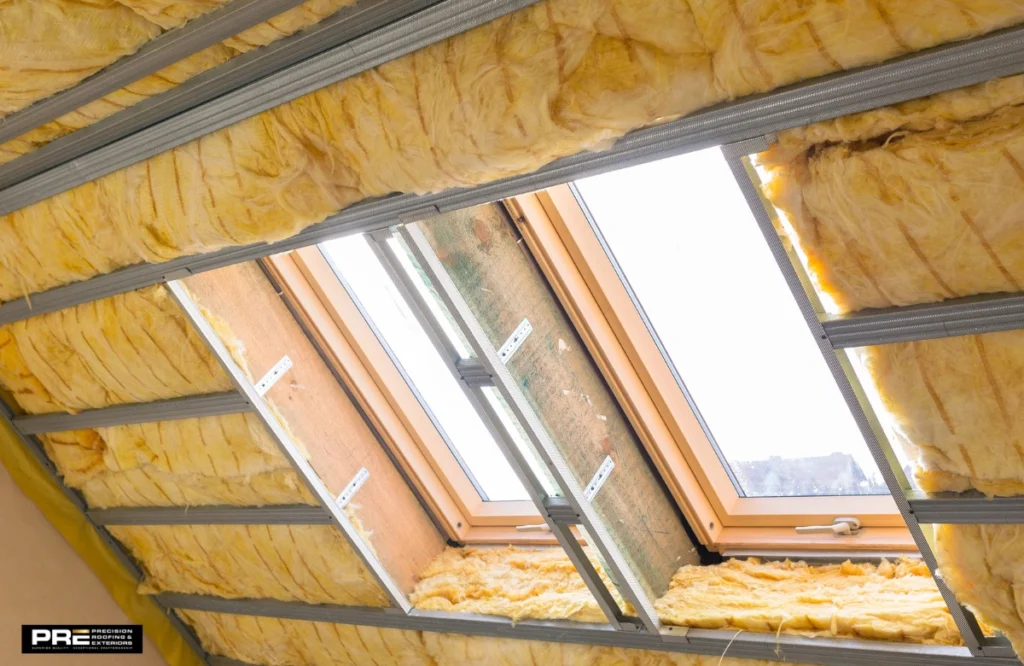
Roof insulation is just a thick layer of shielding material. Workers put it flat on your attic floorboards or right under your roof slopes to slow down the movement of heat. Think of it like a giant, fluffy winter coat wrapped over the very top of your house. Without this protective shield, the comfortable air that you pay your utility provider to heat or cool leaks right out into the open sky.
When your house has zero protection up top, it acts like an open fireplace chimney during the winter months. Warm air from your living room heaters rises up naturally because it is lighter than cold air. It moves right through your ceiling drywall, fills up the attic space, & escapes outside. This means your furnace has to run non-stop to replace the lost warmth.
The exact same problem happens during hot summer months but in reverse. The sun beats down on your dark asphalt roof all day long until the shingles get incredibly hot. That baking heat moves downward into your wooden rafters & cooks your upstairs bedrooms. Adding a thick layer of protective stuffing stops this constant movement of heat & keeps your indoor temperature steady. Putting this barrier in place draws a clear line between the air you control inside & the wild weather outside. Your home stays comfortable for much longer periods, even if a bad storm hits your neighborhood.
How Roof Insulation Works
To understand this process, you only need to know one simple rule of nature: heat always moves toward cold spots. If your bedroom is warm & your attic is freezing, the warmth will automatically rush toward the cold attic. If the outdoor air is blazing hot, that heat will try to force its way inside your cool, air-conditioned rooms.
Blocking Heat Transfer Through Conduction
Conduction is the transfer of heat through solid objects. Think of a metal spoon getting hot when you leave it in a cup of boiling water. In your home, heat travels through solid parts like wooden beams, metal nails & ceiling drywall. When the sun bakes your roof, the energy travels down through the solid wood framework. Adding a thick, insulation layer blocks this direct path. It acts as a roadblock, preventing energy from passing through and keeping your ceilings cool.
Stopping Heat Loss Through Convection
Convection is the natural way warm air rises up and cool air sinks down inside an enclosed room. In the winter, your home heaters pump warm air into your rooms & it drifts straight up toward the roofline. If your attic floor is bare, that expensive air leaks out through tiny gaps around your light fixtures & wires. Your furnace then has to work twice as hard to replace it which burns extra fuel. A solid barrier stops this by sealing off all the hidden holes on your attic floor.
Minimizing Radiant Heat Transfer
Radiant heat moves through the open air in a straight line, just like the heat you feel on your face from a campfire. A hot roof deck acts like a giant radiator panel, beaming heat downward onto your attic floorboards. Modern reflective shields look like aluminum foil & bounce that invisible energy away from your living spaces. They send the heat back out through your roof vents so your bedrooms stay cool even during August heatwaves.
Types of Roof Insulation Materials
Roofing crews use a few common types of thick fibers or engineered foams to build this protective shield. The right choice depends on your home layout & budget.
- Fiberglass batts are those thick, pink blankets made from spun glass that you see at the hardware store. They are cheap, easy to cut with a utility knife & fit perfectly into standard attic floors.
- Cellulose loose-fill is made from shredded recycled newspapers treated with special minerals so it cannot catch fire or attract bugs. A machine breaks it up & blows it through a long hose to cover every single nook & cranny.
- Spray polyurethane foam starts as a liquid oil blend & hardens into a dense plastic layer. It expands instantly to fill tiny cracks around pipes, creating an airtight seal that blocks both drafts & moisture.
- Mineral wool panels are heavy blankets made from spun stone & slag that offer amazing fire defense. They are completely waterproof, do not sag over time & block loud outside noises like traffic & airplanes.
Picking the best material requires a quick look at your roof structure. If you have a flat roof with no attic space, rigid foam boards work best because they lay flat under the rubber roof membrane. If your attic is filled with old wires, pipes & awkward wooden braces, blown-in cellulose is much easier to install evenly. A professional roofing team can measure your rafters & tell you exactly how thick your material needs to be.
Benefits of Roof Insulation
Upgrading your home protection offers many practical advantages that help your wallet & your comfort level every single day. It is one of the few home improvements that actually pays you back over time.
- Drops monthly utility bills by stopping your heaters & coolers from running double shifts just to keep up with air leaks.
- Prevents dangerous ice dams from forming on your roof edges by keeping your shingles at a steady, cold temperature all winter.
- Reduces wear on HVAC units which extends the lifespan of your expensive equipment by cutting down its daily running time.
- Controls indoor moisture levels by stopping humid air from hitting cold wooden rafters & causing mold, mildew or wood rot.
Another major benefit is peace & quiet. Thick layers of fiber act like giant sound blankets that absorb outside noises. You will notice that loud thunder, heavy rain & barking neighborhood dogs sound much quieter inside your house. It also increases the market value of your property because modern home buyers always look for houses that use less energy.
Conclusion
Protecting your living space from changing seasonal weather means paying close attention to the setup of your building. Once you understand what roof insulation is, you can clearly see why it is so important for keeping your utility bills low all year long. If you want a team of local professionals who take these attic upgrades seriously & treat your home with care, reach out to trusted roofing contractors like Precision Roofing.
FAQ
What does the R-value number mean on a package of insulation?
The R-value measures how well a material resists heat flow through it. A higher number means the product is thicker & stronger. Colder states require higher R-value materials to keep homes warm.
Can I install new layers directly over my old attic materials?
Yes, you can add fresh roll blankets right over your old material as long as it is completely dry. If the old stuff is moldy, wet or full of animal droppings, you must pay a crew to vacuum it all out first.
How do I know if my house needs more insulation up in the attic?
The easiest signs are uneven temperatures between rooms, drafty ceilings & giant icicles on your gutters. You can also peek into your attic floor. If you can see the wooden floor beams clearly, you need to add more material.
Will adding thick blankets up there cause my roof wood to rot?
No, it will not cause any damage as long as your regular roof vents stay completely open & clear. Air needs to flow naturally through your soffit & ridge vents to keep the attic dry while the insulation keeps the house warm.