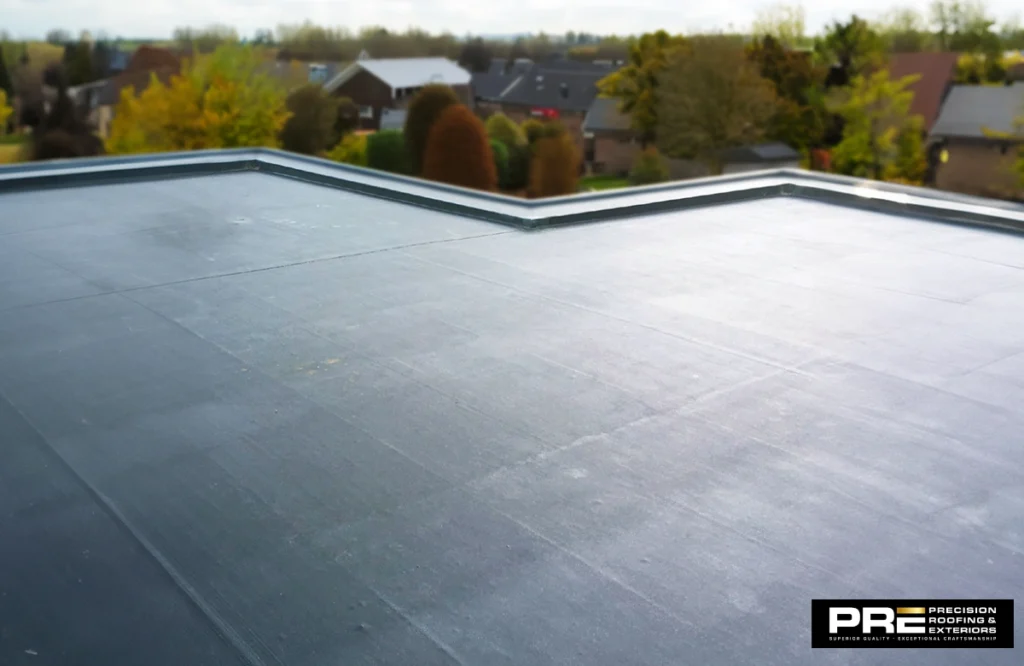
EPDM is a proven roofing material for flat and low-slope roofing for both residential and commercial buildings. It is a waterproofing membrane made from synthetic rubber that stays flexible, withstands temperature changes, and provides a tight seal that protects against water. Its low maintenance, long service life and competitive installed cost are welcomed by owners.
The system can be matched to each project through a range of thickness options, color choices, and installation methods. It is also resistant to weather elements and can be easily repaired in many climates, adding to its appeal. Having a good understanding of the different compositions, their benefits and drawbacks helps property owners make informed decisions for dependable roof performance.
Key Takeaways
- EPDM roofing is a synthetic rubber membrane for flat and low-slope roof applications.
- The most popular thicknesses are 45 mil, 60 mil and 90 mil, depending on the specific application.
- There are installation options such as fully adhered, mechanically fastened, and ballasted.
- EPDM typically lasts 25 to 30 years, and 40 to 50 years or more when well cared for and sealed properly.
- An installation cost of $4–$12 per sq. ft. is common, depending on project requirements.
What Is EPDM Roofing?
EPDM roofing uses large sheets of flexible synthetic rubber to create a continuous waterproofing layer. The material remains flexible across a wide temperature range and resists cracking caused by normal temperature changes. It is well suited for low-slope and flat roof structures in both residential and commercial applications.
Installers lay out the sheets and tape or glue all the seams. This procedure will provide consistent protection from weather and water infiltration. The system has been successfully tested for over 60 years in actual buildings in diverse climates and in a wide range of applications.
How Does EPDM Roofing Work?
The membrane is supported by a rigid insulation layer and a cover board on the structural deck. The sheets are seamed together tightly with primer and tape to create a long-lasting, watertight bond with adjacent sheets. The rubber is flexible and returns to its normal shape with every temperature change and movement of the building. Proper attachment methods prevent wind uplift and keep moisture out of the building throughout the service life.
Where Is EPDM Roofing Commonly Used?
This system is chosen by the property owner for flat commercial buildings, low-slope residential roofs and green roof bases. It is a durable, easy-to-repair choice for warehouses and light industrial facilities. The material is well-suited for use in cold climates due to its ability to withstand low temperatures and remain flexible. Many projects also use it successfully as a recovery layer over existing sound roofing.
What Is EPDM Roofing Made Of?
EPDM roofing starts with ethylene propylene diene monomer rubber, carbon black fillers and curing agents. The mix results in an elastomeric sheet that is UV- and ozone-resistant and tough in all weather conditions. The material is produced in large, wide rolls in factories to provide easy job-site coverage.
The finished rubber stays flexible across a broad temperature range, from extreme cold to extreme heat. These material properties give the membrane its long track record, strong weather resistance and simple field repair options on flat roof systems.
EPDM Roofing Material and Composition
EPDM rubber is the primary component of the membrane, while carbon black, fillers, curing agents, and other additives enhance its performance. Carbon black supplies ultraviolet protection and tensile strength in standard black versions. Additional fillers and vulcanizing agents complete the durable cured rubber compound. The finished product meets strict industry standards for single-ply membrane performance and longevity under outdoor exposure.
EPDM Membrane Thickness Options
Membrane thickness directly influences puncture resistance and expected service life. Thicker sheets generally last longer and handle more foot traffic or impact.
- 45 Mil EPDM: Forty-five mil provides an economical choice for low-traffic roofs and simple repair projects. It delivers basic waterproofing at the lowest material cost. Many residential flat sections and sheds use this thickness successfully when budgets are tight.
- 60 Mil EPDM: Sixty-mil EPDM is a widely used thickness for many residential and commercial roofing applications. It offers a strong balance of cost and puncture resistance. Contractors recommend this thickness for everyday projects that need reliable long-term performance.
- 90 Mil EPDM: Ninety-mil EPDM provides increased thickness and durability for applications requiring greater resistance to punctures, impact, or foot traffic. The added thickness improves resistance to hail and repeated foot traffic. Commercial buildings with rooftop units often specify this heavier membrane for extra protection.
Black vs. White EPDM Roofing
Black EPDM absorbs solar heat and performs well in colder, heating-dominated climates. It provides proven longevity at a lower material price. White EPDM reflects sunlight and lowers cooling loads in hot regions. Reflective versions help meet energy codes yet cost more and may collect visible dirt faster over time.
What Are the Different Types of EPDM Roofing?
Below is a comparison table of various types of EPDM roofing:
| Type of EPDM Roofing | Thickness Options | Color Options | Key Features | Typical Lifespan |
| Standard EPDM | 45, 60, 90 mils | Black | Durable, cost-effective, and UV-resistant. | 20–30 years |
| White EPDM | 45, 60 mils | White | Reflects sunlight, energy-efficient. | 20–30 years |
| Reinforced EPDM Membrane | 45, 60, 75 mils | Black, White | Enhanced strength with internal fabric reinforcement. | 25–35 years |
| Pre-Taped EPDM Membrane | 45, 60 mils | Black, White | Factory-applied seam tape for faster and more reliable installation. | 20–30 years |
| Non-Reinforced EPDM Membrane | 45, 60 mils | Black | Highly flexible and suitable for complex roof shapes. | 20–25 years |
| Fleece-Backed EPDM | 60, 90 mils | Black, White | Increased puncture resistance, better insulation, and re-roofing use. | 30–40 years |
What Are the Different EPDM Roofing Installation Methods?
Three primary attachment methods secure the membrane while balancing cost, wind resistance and structural load. Project designers make their choices based on the building structure, local wind codes, and the total budget. Each method keeps the core waterproofing benefits of the roof membrane under different site conditions.
1. Fully Adhered EPDM Roofing
Fully adhered EPDM uses adhesive to bond the membrane across the substrate according to the manufacturer’s installation requirements. This approach can provide strong wind-uplift performance and a smooth finished appearance when properly designed and installed. Labor costs increase, yet long-term performance remains excellent even in high-wind locations.
2. Mechanically Fastened EPDM Roofing
Screws and stress plates secure the membrane along seams or in a patterned grid. Installation proceeds quickly on large open commercial decks. Reinforced sheets handle point loads from fasteners without tearing or excessive elongation.
3. Ballasted EPDM Roofing
The membrane lies loose over the insulation, then receives a layer of river stone or pavers. No fasteners penetrate the sheet itself. Structurally capable decks handle that extra load and the system remains one of the most cost-effective large-area systems.
What Are the Advantages of EPDM Roofing?
This system is selected by building owners due to its long-term benefits, affordability and durability. The rubber membrane provides protection for decades and requires very little maintenance. Flexibility and weather resistance, along with ease of repair, are prominent in both residential and commercial applications.
- Long Lifespan: Quality installations provide reliable service for 25 to 30 years, and 40 to 50 years or more with good maintenance. A properly installed roof continues to perform for decades. Thicker membranes and good seaming further increase service life in moderate climates.
- Weather and UV Resistance: Strong ozone and UV resistance helps EPDM outlast many competing membranes in harsh outdoor conditions. Dark sheets contain carbon black for additional ultraviolet protection for outdoor applications.
- Flexibility and Temperature Resistance: The membrane expands and contracts freely without cracking or splitting at the seams. It remains pliable in extreme cold and high heat conditions. Building movement and thermal cycling cause fewer stress-related failures over time.
- Cost-Effective Installation: Material and labor prices stay lower than many other single-ply systems. Ballasted applications can offer relatively low installation costs on suitable large commercial roofs. Recovering installations over existing roofs further reduces total project expense.
- Low Maintenance Requirements: The system stays in good condition with regular visual inspections and occasional seam checks. The main ongoing tasks are debris removal and drain cleaning. Major repairs are uncommon if the original installation is of high quality.
- Easy Repair Options: Punctures and seam problems are easily repaired with patch kits and primer. Many minor punctures and seam issues can be repaired without replacing the entire membrane. This ease of repair can greatly decrease the overall maintenance expenses for building managers.
How Much Does EPDM Roofing Cost?
EPDM roofing membrane typically costs $1.50 to $4.50 per square foot for materials, depending on its thickness and type. Fully installed EPDM roofing generally costs $4 to $12 per square foot. Ballasted systems are typically at the lower end of the price range, while thicker membranes and more complex installation methods can increase costs.
Additional expenses, such as insulation, removal of the existing roof, and local labor rates, can also raise the total project price. For a typical 1,500-square-foot residential flat roof, the total cost of EPDM roofing may range from approximately $6,000 to $15,000, depending on the materials and installation requirements.
Factors That Affect EPDM Roofing Costs
Multiple project variables influence the final quoted price for any installation.
- Roof Size and Accessibility: Larger, continuous roofs improve labor efficiency, which can decrease the cost per sq. ft. Multi-story buildings, limited staging areas, and difficult access can increase equipment and crew time.
- Membrane Thickness and Type: Thicker 90-mil sheets and fleece-backed or reinforced versions generally increase material costs. For medium-sized projects, standard 60-mil non-reinforced membrane can be a cost-effective option.
- Roof Complexity: Many penetrations, roof curbs and odd shapes increase flashing detail and labor. Simple rectangular open areas install faster and keep overall costs lower.
- Removal of Existing Roofing: Removal and disposal can cost $1 to $2 or more per sq. ft., depending on the roofing system and local disposal rates. If the existing roof is structurally sound and dry, a recovery installation may avoid these additional costs.
- Labor and Location: Local wage rates, permitting requirements, and market demand affect labor pricing. High-cost urban markets or remote job sites can increase the total project cost.
Is EPDM Roofing Right for Your Home or Commercial Building?
EPDM roofing fits many low-slope applications yet other membrane systems serve certain needs better. Owners should evaluate climate, building use, foot traffic and energy goals before last selection. The material performs especially well in cold regions and budget-sensitive projects with moderate rooftop activity.
Best Applications for EPDM Roofing
The system’s strengths are matched with flat commercial roofs, residential low-slope sections and recovery projects. The excellent cold-temperature flexibility is an advantage in cold climates. This membrane is chosen by owners who value and look for proven longevity and easy field repairs.
When Another Roofing System May Be a Better Option
TPO or PVC membranes may be worth considering in hot climates when a highly reflective roof surface and reduced solar heat gain are priorities. Materials that are more resistant to the effects of heavy chemical use, grease or oil exposure are required for sites that may be exposed to these conditions. Typically, other roofing products are needed for steep-slope roofs or other visible areas of the building.
Conclusion
The EPDM roofing system provides a dependable, flexible and economical solution for flat or low-slope roofs. The synthetic rubber membrane resists weather, offers a long service life, and is easy to repair. Different thicknesses, installation techniques and colors give flexibility for use in various buildings and climates.
Knowing the composition, benefits and realistic pricing helps owners to make informed decisions over the long term. When it is properly installed and maintained, an EPDM roof can deliver decades of reliable protection. Call Precision Roofing today to get advice and a comprehensive estimate for your next roofing job.