
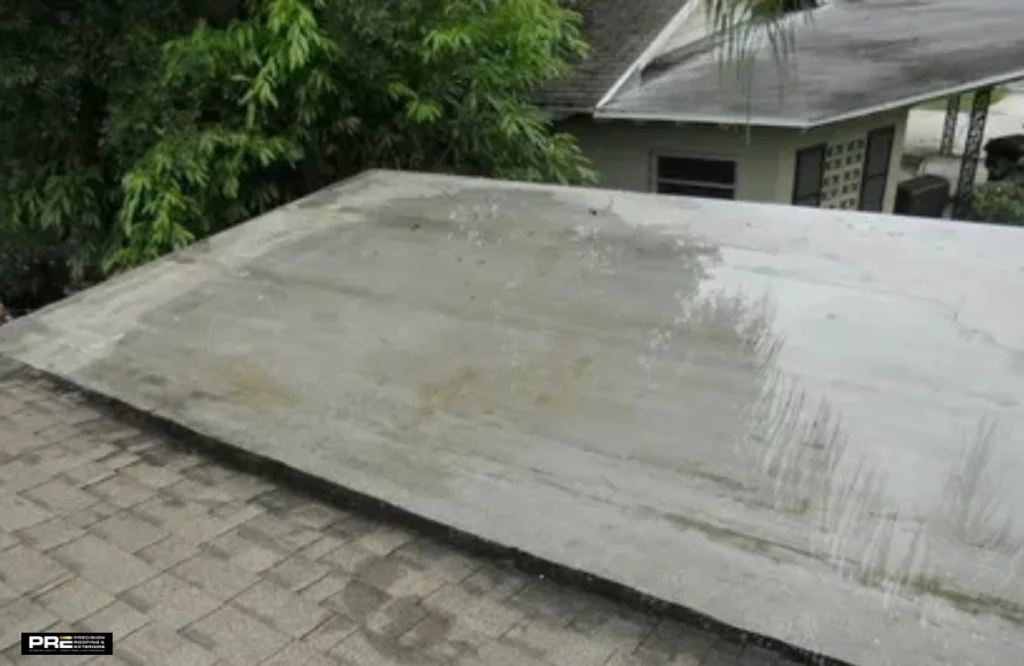
Low-slope roof leaks happen frequently because flat surfaces shed rainwater much more slowly than steep roofs do. Water stays behind long after a storm ends. It pools in place and pushes continuously against seams or edges until a small gap opens up. Rain then creeps right down into your home. Spotting these weak points early stops small drips from turning into huge repair bills.
Key Takeaways
- Minimal roof slope slows down drainage and leads to low slope roof leaks from heavy puddles sitting after storms.
- Clogged drains and accumulated debris contribute to water buildup and leaks.
- Temperature swings stretch and shrink roof materials continuously until seams pop open.
- Regular visual checks and simple patches stop small drips before they wreck your interior walls.
Why Do Low-Slope Roof Leaks Happen More Often?
Rainwater moves at a crawl across a flat surface. It has all the time in the world to test every single joint and seal on your roof. Here are the main reasons these roof sections end up leaking more often than traditional angled roof peaks.
1. Persistent Standing Water
Rain sitting on your roof for extended periods creates standing water. Persistent standing water places additional stress on roofing materials. It contributes to deterioration over time. It exposes weak seams and damaged areas while drainage problems that increase the risk of leaks.
2. Seams Splitting Open Over Time
Low slope roof sections are built by laying down broad sheets or specialized materials joined at the edges. Constant sunlight and big daily temperature swings make those seams stretch and shrink without stopping. Adhesives break down or edges peel back just enough for wind driven rain to slide underneath your protective barrier.
3. Gaps Around Vents and Flashing
Exhaust pipes and skylights and chimneys and roof vents stick straight out of your main roof deck. The metal or rubber flashing surrounding these openings is supposed to seal out water completely. As your house naturally settles or severe weather hits those seals loosen up and leave open gaps for water entry.
4. Clogged Drains and Wall Outlets
Leaves and dirt and windblown debris gather in the lowest points on your roof. When debris covers drain grates or side scuppers rainwater has nowhere to go. Water backs up fast. It rises until it climbs right over your protective wall seals and pours into your building insulation.
5. Temperature Extremes and Thermal Strain
Roofing materials expand when the hot sun beats down on them all afternoon. They contract fast when temperatures plunge at night. This repeated stretching puts massive strain on fasteners and adhesives holding your roof down. Years of constant shifting weaken the whole setup until small tears pop open near fixed structural joints.
6. Rooftop Foot Traffic and Maintenance Impact
People walking across your roof to clean gutters or install equipment can cause damage without realizing it. Dropping a heavy tool or walking with sharp gravel stuck under shoes punctures thin roof membranes. Simple foot traffic during maintenance visits leaves behind hidden holes.
7. Sun Damage and Aging Materials
Sunlight carries strong rays that slowly dry out roofing compounds over time. Materials lose their stretchiness as they age. They turn stiff and brittle. Old roofing sheets can no longer flex when the building naturally shifts. This causes long cracks to open up across the surface during hard storms.
8. Sloppy Original Workmanship
Top quality roofing materials fail fast if the original crew rushed the job. Missing a spot with seam adhesive or failing to fasten the edges tightly leaves your whole structure vulnerable to wind uplift and early leaks. Working with inexperienced installers means dealing with water trouble long before your roof should wear out.
How to Prevent Low Slope Leaks
Stopping water from getting inside takes a mix of targeted fixes and simple long term habits. Following these practical steps will protect your interior walls. It helps your low slope roof last for many years to come.
- Clear Away Dirt and Leaves Monthly: Check your roof drains and downspouts monthly so you can sweep away leaves and trash before rain backs up.
- Use Designated Walkways: Use appropriate walk pads or designated walkways recommended for your specific roofing system when rooftop access is necessary to reduce accidental damage.
- Reseal Around Vents and Pipes Every Spring: Inspect the seals around air vents and skylights closely so you can apply fresh sealant before gaps open up.
- Fix Low Spots That Hold Water: Have a qualified roofing professional evaluate areas where water repeatedly collects to determine whether drainage improvements or tapered insulation or another repair is appropriate.
- Consider a Compatible Roof Coating: Apply a compatible reflective coating if the existing roofing system is suitable for restoration. It extends service life and protects the surface. A roofing professional can determine whether coating is appropriate.
- Schedule Routine Professional Checkups: Have a trusted local roof team inspect your entire roof twice a year so they can catch loose seams long before water drips onto your floor.
- Check Your Roof After Huge Storms: Look around your property after heavy hail or strong winds to check for standing water or loose edge metal before another storm rolls in.
- Keep Nearby Tree Branches Trimmed: Cut back long tree limbs hanging over your roof so leaves do not drop into your gutters and branches cannot scrape the surface during high winds.
Conclusion
Low slope roof leaks can become serious if they are left unaddressed. Finding warning signs like lingering puddles or peeling edges allows you to fix small troubles before they ruin your drywalls or ceiling tiles. Giving your roof a little regular attention goes a long way toward keeping your entire building safe and dry.
If you are dealing with stubborn low slope roof leaks or want to understand the condition of your roof contact Precision Roofing and Exteriors to schedule a free inspection and estimate.
FAQs
How long should water stay on a low slope roof after rain stops?
Water should drain properly after rainfall rather than remaining in persistent pools. The roof drainage system and surface should be inspected if standing water remains for an extended period or repeatedly collects in the same areas.
Does a leaky roof mean I have to replace the whole thing?
Not at all. Many low slope leaks can be fixed using simple patches or new seals around pipes if your underlying insulation or decking is still dry and sturdy.
Why do low slope roofs leak more than steep roofs?
Low slope roofs shed water much slower because of their shallow shape. That gives sitting water plenty of time to search for tiny gaps along seams and edges.