
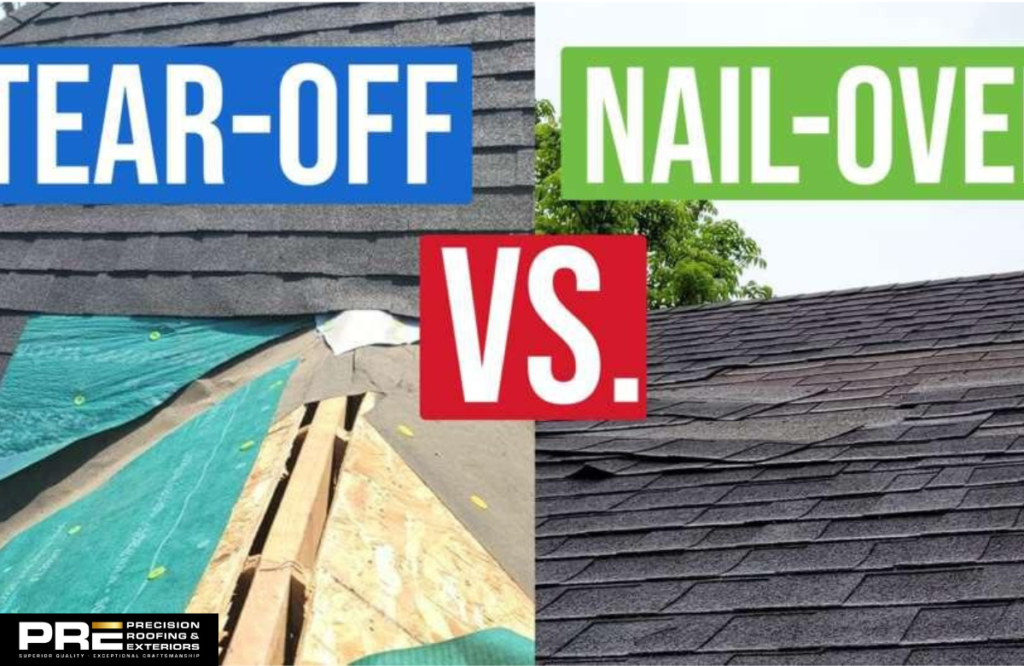
If you are looking up at your house and realize your roof has seen better days, you are probably starting to look at your options. Most homeowners think you have to rip everything off to get a new roof but there is actually a shortcut called an overlay. Choosing between a fresh start and a “roof on a roof” is a big decision that affects your wallet and how long your home stays dry. To make the right call, you need to understand the differences between roof overlay and tear off before the first shingle is even delivered.
Key Takeaways
- A tear off means removing everything down to the wood; an overlay just adds a second layer.
- Overlays are cheaper and faster but can hide rot underneath.
- Most building codes only allow two layers of shingles total.
- A full tear off usually lasts longer and comes with better warranties.
- Adding a second layer makes the roof much heavier which can stress your house.
Understanding Roofing Overlay
An overlay is basically a “skin” job for your house. Instead of spending days pulling off old nails and dusty shingles, the crew just nails a brand-new layer of shingles right on top of the old ones. It is a popular choice for folks who want a quick face-lift for their home without the massive mess of a full construction site in their driveway.
Roof Tear Off Explained
A tear off is like a total reset button. The crew takes the roof down to the bare wooden boards. This lets them see whether there is any hidden water damage or wood rot. While an overlay looks great from the street, it doesn’t actually fix any problems hiding in the “bones” of your roof. It just covers them up. Choosing between them usually comes down to how much you want to spend right now versus how long you want the roof to last.
Comparing the Two Methods
A tear off is like a total reset button. The crew takes the roof down to the bare wooden boards (the decking). This lets them see if there is any water damage or wood rot that was hidden. An overlay skips that part. While an overlay looks great from the street, it doesn’t actually fix any problems hiding in the “bones” of your roof. It just covers them up.
Choosing between them usually comes down to how much you want to spend right now versus how long you want the roof to last.
| Feature | Roof Overlay | Full Tear Off |
| Cost | Cheaper (less labor) | More expensive |
| Time | 1 day usually | 2–3 days |
| Lifespan | Shorter (holds more heat) | (20-30+ years) |
| Warranty | Limited | Full manufacturer coverage |
Differences Between Roof Overlay and Tear Off
When you dig into the differences between the two, you start to see that the “cheaper” option has some hidden drawbacks Here is how they stack up in the real world.
The Weight Factor
Shingles are heavy. When you put a second layer on, you are adding thousands of pounds to your home’s structure. If your house is older, that extra weight can make the roof sag. A tear off keeps the weight low and safe.
Heat and Longevity
A roof with two layers of shingles gets much hotter in the summer. That extra layer traps heat like a blanket which can actually “bake” the shingles from the inside out. This usually means an overlay won’t last as long as a single layer would.
Finding the Rot
This is the big one. If you have a soft spot in your roof, an overlay just hides it. A tear off is the only way to find leaky spots or moldy wood that needs to be swapped out before it spreads to your ceiling.
Conclusion
At the end of the day, a roof overlay is a decent “band-aid” fix if you are on a tight budget and your roof boards are in perfect shape. But for most people, a full tear off is the way to go because it gives you a clean slate and a much longer life for your home. Understanding the differences between roof overlay and tear off helps you spend your money wisely. If you aren’t sure which one your house needs, the roofing experts team at Precision Roofing can take a look and give you an honest answer.
Frequently Asked Questions
Can I do a third layer of shingles?
In almost every town, the answer is no. Most building laws say you can only have two layers. If you already have two, you have no choice but to do a full tear off next time.
Does an overlay look different?
Sometimes. Because you are nailing shingles over an uneven surface, you might see some bumps or ridges that wouldn’t be there on a flat, new wooden deck.
Is an overlay way cheaper?
It saves you money on labor and dump fees. You aren’t paying guys to rip things off and you aren’t paying for the big trash bin. It usually saves about 25% of the total cost.
Which one is better for selling a house?
A full tear off is much better for resale. Home inspectors always check the number of layers. If they see an overlay, the buyer might worry about what is hidden underneath and ask for a lower price.