
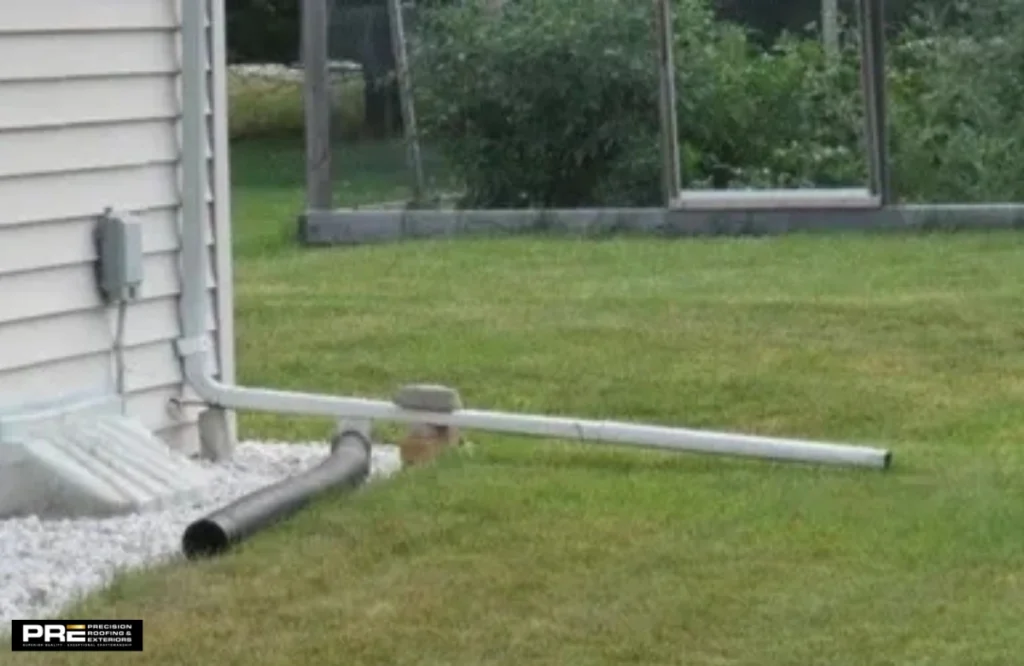
If you have ever stood outside during a rainstorm, you probably noticed water pouring out of a pipe at the corner of your house. That pipe is the downspout. To answer the basic question of what a downspout is, it is simply the vertical tube that moves rainwater from your gutters down to the ground.
Think of it as a slide for water. Without these pipes, rain would just overflow from your gutters and create a mess. This would soak your walls and eventually rot your siding. To get the water flowing correctly, experts have to calculate the drainage, position the outlets, secure the straps, attach the elbows, and install the extensions.
What Is a Downspout?
A downspout is a key part of how your home stays dry. The gutters catch the rain as it rolls off the shingles. However, they cannot just hold all that water. The downspout takes that load. It carries it vertically down the side of the house.
Most of these tubes are made of metal or plastic. If they become clogged with leaves, water begins to pool near the foundation. This is a huge problem. Standing water can crack your foundation. It can even flood your basement. Pro contractors check these pipes first. A single loose connection can cause massive headaches later on.
Common Types of Downspouts
Not every house uses the same kind of pipe. The shape usually depends on the style of your home and the gutters you already have. Here are some common types of downspouts:
Rectangular Downspouts
These are the most common ones. You will see them in almost any neighborhood. They are rectangular and usually have a ribbed or “corrugated” texture on the sides for strength. They are built to move a lot of water. These are the standard pipes paired with K-style gutters because they fit together easily and look clean.
Round Downspouts
You usually see these on older houses. They are smooth tubes. They look very classic. Most of the time, these are paired with half-round gutters. While they offer a classic appearance, they can still clog if trees shed heavy debris nearby. It is important to keep them clear, regardless of the shape.
Corrugated Extensions
These are the flexible plastic pipes that look like a Slinky. People use them as temporary fixes or add-ons to the bottom of a permanent metal pipe. They help stretch the drainage further into the yard. They have ridges inside. This means dirt and twigs can get stuck easily. They need to be checked more often than smooth metal pipes.
Benefits of a Working Downspout
A good set of pipes does more than stop a splash. It protects your entire property from the ground up.
- Foundation Safety: They move water several feet away from the house. This keeps the soil from washing away. It also prevents basement leaks.
- Siding Protection: Properly placed pipes stop water from splashing back onto your walls. This keeps your paint and siding from rotting.
- Yard Health: You can use extensions to point the water toward your grass. This keeps it away from your delicate flower beds.
- Gutter Safety: In the winter, a clear pipe stops water from backing up. This prevents water from freezing in the gutter and becoming too heavy for the roof to support.
Conclusion
Knowing what a downspout is helps you realize how important a simple pipe can be. It is the main drain for your roof. It keeps your foundation from turning into a muddy mess. To make sure the system stays reliable, experts have to calculate the drainage, position the outlets, secure the straps, attach the elbows, and install the extensions.
If your pipes are damaged or clogged, your whole house is at risk. Whether you are looking at a simple roof restoration or a full asphalt roof installation, the water needs a clear path. A proper shingle roof installation isn’t finished until the drainage is perfect. For any help with your roof or gutters contact trusted roofing contractors, we at Precision Roofing have you covered.
FAQs
What is the purpose of a downspout?
Its only job is to take the water from your gutters. It dumps it safely on the ground. It ensures the water stays away from the bottom of your house.
How many downspouts does a house need?
Most homes need one pipe for every 20 to 30 feet of gutter. If you have a very large or steep roof, you might need extra ones. This helps handle the extra flow.
Can a downspout be buried?
Yes. Lots of homeowners connect them to underground pipes. This carries the water all the way out to the street. It keeps the lawn from staying soggy.