
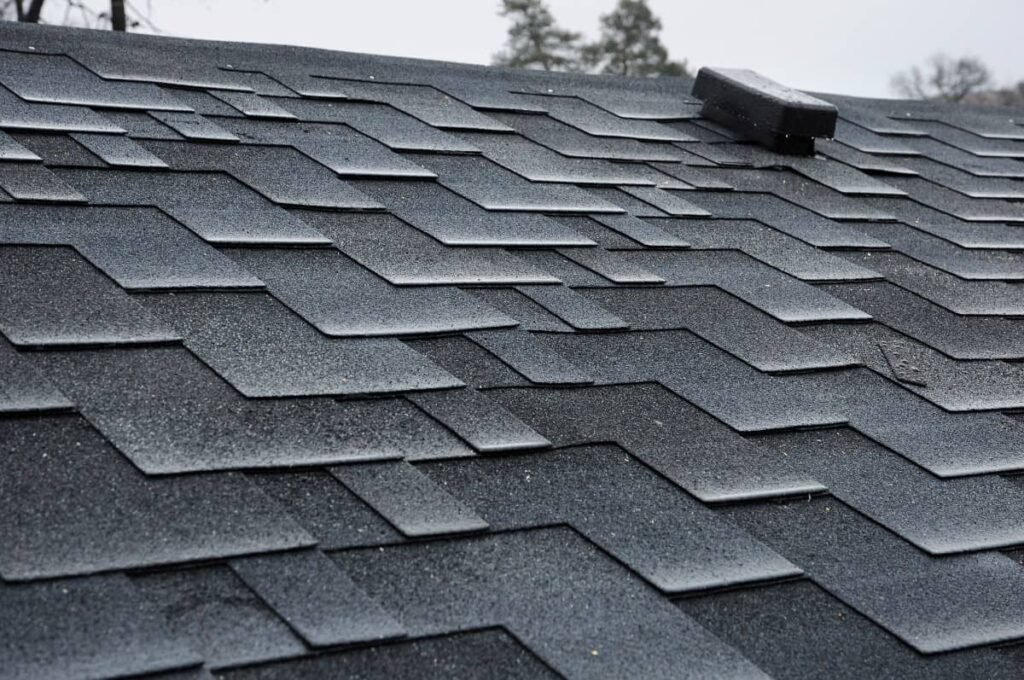
When you look up at your roof on a clear morning, you’re seeing shingles carefully designed to protect your home from rain, wind, and heat. You’ve probably wondered what are roof shingles made of. These include asphalt shingles made with fiberglass or felt and topped with ceramic granules, as well as metal shingles crafted from steel, aluminum, copper, or zinc. You’ll also find clay and concrete tiles, natural wood like cedar or redwood, slate, and engineered synthetic or composite blends that mimic wood, slate, or tile while staying lightweight and impact-resistant.
Types of Materials Used in Manufacturing Roof Shingles
Next, we’ll examine the most common materials used in roof shingles:
Asphalt Shingles (Most Common Residential Option)
When we imagine the roof most of us think about asphalt shingles. You see them everywhere because they’re practical and are the go-to choice for many houses.
Core Layers of Asphalt Shingles:
- Fiberglass or Organic Felt Base Mat
This is the backbone. Today’s shingles are usually fiberglass because it’s lighter and more fire-resistant than the old felt versions.
- Asphalt Coating
This waterproof layer is what makes the shingle shed water and stay flexible through heat and cold.
- Ceramic Granules
Sprinkled on top like tiny stones, these granules block harmful UV rays and give you a range of colors; from deep charcoal to warm terra cotta.
Why They’re So Widely Used
You’ve probably walked past a dozen asphalt roofs today. That’s because of its benefits also they strike a sweet balance between cost, durability, and style. They match almost any home design and installers know them like the back of their hand. The repairs are normally simple and also cost little.
Metal Roofing Shingles and Panels
You’ve likely noticed metal roofs on cabins, modern homes, and even city houses. They’ve come a long way from the barn‑shed look.
Common Metals Used:
- Steel: strong and often coated for rust resistance.
- Aluminum: naturally corrosion resistant and lighter.
- Copper: premium, with a patina that develops over years.
- Zinc: long‑lasting and self‑healing in small scratches.
Protective Coatings and Finishes
These aren’t bare metal sheets. They are typically covered or sprayed to retain color, resist corrosion and reflect heat.
Shingle‑Style vs. Standing Seam
Here’s a comparison table the two metal roofing styles:
| Feature | Shingle‑Style Metal | Standing Seam |
| Look | Mimics traditional shingles with a classic roof feel. | Sleek vertical panels with raised seams and hidden fasteners. |
| Style | Traditional visual appeal. | Modern, clean lines. |
| Installation | Easier. | More technical. |
Benefits
The metal roofs are very tough, reflect the sunlight and therefore keep the homes cooler and resistant to fire and wind. They last for decades and are more durable than traditional shingles.
Tile Roofing Materials
Tile roofs have a certain presence. They feel like they’ve always belonged on the house, aging into their surroundings beautifully.
- Clay Tile Composition and Firing Process
Clay tiles start as earth, reddish or tan clay shaped and fired in a kiln until rock‑hard. That firing is what gives them that rugged, weather‑ready shell.
- Concrete Tile Structure
Concrete tiles are a mix of sand, cement, and water, then molded into shapes that can mimic clay or slate.
- Weight Considerations
Tiles are heavy. Your roof framing needs to be up to the task before you even think about installing them.
- Longevity and Suitability
In dry, sunny climates they can outlast the house itself, and their curves help with ventilation by making little pockets of shaded air under the roof.
Wood Shingles and Wood Shakes
There’s something deeply comforting about a wood roof. It smells faintly of cedar after rain and ages into soft silver-gray tones over time.
Common wood types
- Cedar (most popular)
- Redwood
- Pine (less common)
Shingles vs. shakes
This table captures the key visual and structural differences:
| Feature | Wood Shingles | Wood Shakes |
| Texture & Look | Smooth and uniform, machine‑cut | Rougher, rustic, hand‑split |
| Thickness | Thinner, consistent | Thicker, irregular |
| Style Suitability | Clean, classic roofs | Rustic, textured homes |
Protective treatments include
- Moisture resistance coatings
- Insect repellents
- Fire-retardant treatments
Maintenance reality
Wood roofs require frequent inspection and maintenance in order to avoid the presence of mold, moss, and rot. However, to most homeowners, it is a worthwhile maintenance to the natural beauty and coziness that wood provides.
Slate Roofing Shingles
Slate roofing is composed of natural rock which is broken into thin sheets and then molded into shingles. Each piece carries subtle variations in color and texture, making every roof completely unique.
How slate is prepared
- Large stone slabs are quarried
- Split by hand or machine into thin tiles
- Trimmed and drilled for installation
Why slate stands apart
- Lifespan of 75–150+ years
- Fireproof and waterproof
- Resist mold, rot, and insects
What to know before installing
Slate is heavy and requires skilled installation. But once it’s up, it’s one of the most “install it and forget it” roofing materials available.
Synthetic and Composite Roofing Shingles
Modern roofing has come a long way. Synthetic shingles are designed to resemble the appearance of slate, wood or tile but without the weight, price, and stability.
Common materials used
- Recycled rubber
- Plastic polymers
- Composite blends
Why homeowners like them
- Lightweight and impact-resistant
- Fade-resistant colors
- Easier installation than natural materials
These shingles are especially popular in storm-prone areas where hail resistance matters. They’re also ideal for homes with structural limits that rule out heavier materials
Comparison of Roofing Materials
Here is a quick table comparing common roofing materials:
| Material | Average Lifespan | Durability | Maintenance Needs | Cost Range | Best For |
| Asphalt Shingles | 15–30 years | Medium | Low–Moderate | Low–Medium | Standard homes |
| Metal Roofing | 40–70+ years | High | Low | Medium–High | Long-lasting & weather resistance |
| Clay Tile | 50–100 years | High | Low | High | Hot, dry climates |
| Concrete Tile | 40–75 years | High | Low | Medium–High | Durable yet classic look |
| Wood Shingles/Shakes | 20–40 years | Medium | High | Medium | Rustic homes |
| Slate | 75–200+ years | Very High | Low | Very High | Premium, long life |
| Synthetic/Composite | 40–50 years | High | Low | Medium–High | Premium look, lightweight |
Conclusion
Roof shingles are more than just rooftop decoration. So, what are roof shingles made of? They come in a wide mix of materials, from everyday asphalt to strong metal panels, warm clay or concrete tile, and classic wood shakes. You’ve got slate for a long‑lasting, stone look, and modern synthetic or composite options that mimic premium materials without the weight. Each one brings its own feel and performance to your home. Contact Precision Roofing and let them install the perfect shingles on your roof.
Frequently Asked Questions
How long do shingles last on a roof?
It depends on the material, but most last 20 to 70 years.
What are the signs of shingle roof damage?
Curling, missing pieces, leaks, and granular loss on gutters.
- Is it hard to replace shingles on a roof?
No, it’s not usually hard to replace shingles, but it takes careful work and the right tools.