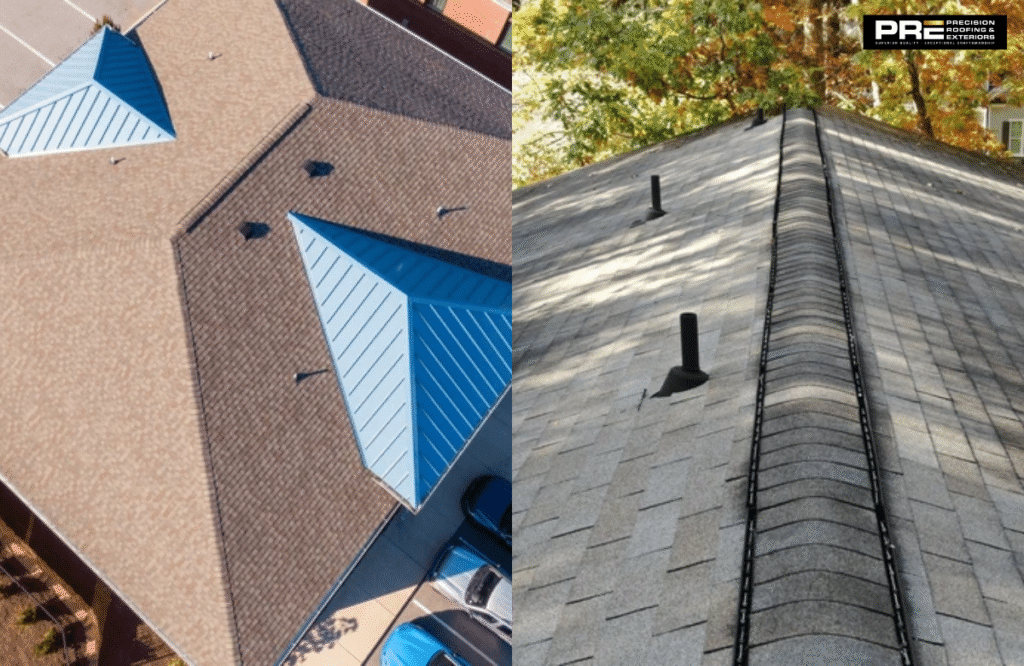
If you’ve ever compared roofs and noticed that some look layered while others lie flat like a single sheet, you’ve already spotted the core difference between architectural shingles and 3-tab shingles. These two options dominate the residential roofing market. Both come from asphalt, but they function very differently over time.
Understanding the difference matters more than most homeowners think when it’s time to replace a roof. The primary difference is that architectural shingles are thicker and constructed in layers. 3-tab shingles are flat, lightweight, and made in a single-sheet style. From there, everything changes: lifespan, weather resistance, looks, and long-term cost.
What Are Architectural Shingles?
Architectural shingles are made by bonding multiple layers together. Because of that, they feel heavier in hand and look more detailed once installed. The added thickness isn’t just for show. It helps them hold up better against wind, storms, and daily wear.
Many homeowners opt for these shingles because they provide the appearance of wood shake or slate without the high price tag or ongoing maintenance. They just feel more solid once they’re up there.
Pros
- Built with layers for extra strength
- Handle wind and rough weather better.
- Last longer in most climates
- Add depth and texture to the roof.
Cons
- Higher price at the start
- Added weight may not suit very old decking
What Are 3-Tab Shingles?
3-tab shingles are the more traditional option. They’re flat, light, and simple. Each strip has three uniform tabs that create a neat repeating pattern across the roof. One layer of asphalt does all the work. No stacking and no added bulk.
Because they’re lightweight and easy to handle, installation tends to proceed more quickly. Cost is their biggest attraction. For many property owners, that’s the deciding factor right there.
Pros
- Most affordable asphalt shingle option
- Simple to install
- Clean appearance
- Uniform texture
Cons
- Shorter lifespan
- Weaker against storms and strong winds
Main Differences Between Architectural Shingles and 3-Tab Shingles
Both types will cover your roof. Both will keep out the rain. However, once weather, time, and wear are factored in, the gap between them becomes easier to spot. These are the differences that usually matter most.
Durability
- Architectural shingles are layered, which gives them a sturdier grip and better protection against impact and curling. They stay put better.
- 3-tab shingles rely on a single thin layer. Wind can lift them more easily. Damage shows up faster, especially during storm seasons.
Physical Composition
- Architectural shingles are multi-layered, with each layer increasing thickness, boosting durability, and providing insulation benefits.
- 3-tab shingles have one uniform layer with pre-cut tabs, making them thinner and lighter.
Lifespan
- Architectural shingles often push past 25 years with regular care. Some last longer.
- 3-tab shingles usually last closer to 15 to 20 years and less if the weather is not suitable.
Cost
- Architectural shingles cost more on day one due to their thicker build and heavier materials.
- 3-tab shingles stay popular because they keep the initial price low.
Appearance
- Architectural shingles look layered. Shadowed, textured, and they give the roof depth.
- 3-tab shingles stay flat and symmetrical. Clean, simple, and no extra dimension.
Long-Term Value
- Architectural shingles usually need fewer early repairs. Fewer replacements can save money over time.
- 3-tab shingles may need patching sooner. Over the years, those small fixes add up.
ROI and Resale
- Architectural shingles are considered an upgrade, often adding curb appeal and slightly improving resale value.
- 3-tab shingles are functional but not typically seen as a value-adding feature for home buyers.
Wind Resistance
- Architectural shingles are heavier and tend to stay anchored better during strong winds.
- 3-tab shingles, being lighter, can lift or tear more easily once the wind picks up.
Maintenance
- Architectural shingles retain their shape well and resist warping for a longer period.
- 3-tab shingles are more likely to curl, crack, or lose granules as they age.
Which Shingles Should You Choose?
There isn’t a universal winner here. It depends. If you care most about longevity, appearance, and stronger weather protection, architectural shingles are usually the better choice. If your focus is staying within a tight budget, finishing a quick project, or roofing a rental property, 3-tab shingles can still do the job.
Climate matters. So does how long you plan to own the home. And of course, what you’re comfortable spending upfront. Both have a place. The “better” choice ultimately comes down to what your home needs right now and what you expect from it in the years to come. Once you understand those priorities, the decision becomes far easier.
Conclusion
Architectural shingles bring strength, visual depth, and longer service life. 3-tab shingles keep things simple, light, and affordable. Both shingle types offer practical benefits, and the better fit comes down to what matters most for your home, your weather conditions, and your long-term plans. Architectural shingles deliver stronger durability and visual depth, while 3-tab shingles offer a clean, simple, and cost-friendly solution. Understanding these differences makes the decision easier, especially when comparing architectural shingles and 3-tab shingles.
If you want to install top-notch quality architectural shingles or 3-tab shingles, you can contact Precision Roofing for high-quality shingles.