
Do the heavy work in October and November. Clear the gutters and valleys. Check the flashing and shingles. Look in the attic. Trim the branches. From December through February, you mostly watch. Walk the yard after each storm and peek into the attic once or twice. That’s the whole calendar. Tri-Cities winters are drier than those on the coast. Still, nights drop into the 20s, and gusts can reach 50 mph. A shingle that lifted in October is usually a leak by January. Most people only look at the roof when a brown ring shows up on the bedroom ceiling. By then the water has been sneaking in for weeks.
Key Takeaways
- Finish your winter roof maintenance Tri Cities checklist before the first hard freeze. A frosty roof is no place for a ladder.
- Check from the ground after every storm. Binoculars beat a climb.
- Look in the attic twice. Once in November and once in January.
- Call a pro for flashing repairs and missing shingles. Call one for any ceiling stain too.
- Skip rock salt. Skip metal tools on the roof.
What Roof Maintenance Should Tri-Cities Homeowners Do Before and During Winter?
Six jobs belong in October and November. Pick a dry calm day. Ask a friend to hold the ladder.
Clear Leaves and Debris From Roof Valleys and Gutters
By late October the cottonwoods and maples around Richland and Kennewick have dumped everything onto the roof. Leaves pile up in the valleys. Wet leaves hold water against the shingles. Water that can’t drain backs up under the edge and rots the fascia board.
Use a plastic scoop or a gloved hand. Then run a hose and watch each downspout. A slow dribble means a clog. Downspouts should empty four to six feet away from the foundation.
Inspect Shingles, Flashing, and Roof Penetrations
Walk the yard with binoculars. Look for curled shingles and cracked ones. Look for bare patches where the granules wore off. Then check the metal flashing around chimneys and skylights. It should lie flat. Gaps are bad.
Pay attention to the rubber boots around plumbing vents. Sun cracks them. A split boot is one of the most common leaks on older roofs. Old sealant that has shrunk needs a fresh bead before the cold arrives.
Check Attic Ventilation and Insulation Before Cold Weather
Take a flashlight into the attic. Do you see daylight at the vents? You should. Soffit vents get blocked when insulation is shoved against the eaves. Airflow stops. Moist air then turns to frost on the underside of the roof deck.
Insulation matters too. Many attics in this region are advised to have around R-38 or more. Check your local code since homes vary. Thin spots let warm air leak up. That heat melts snow unevenly and sets up ice dams.
Check Roof Edges and Drip Edges for Damage
The drip edge is the thin metal strip along the roof edge. It sends water into the gutter instead of behind it. Look for bends or rust. Look for sections that pulled away. Press a screwdriver tip into the fascia board. Soft wood means water has been getting in. Fix this before winter. Wet wood that freezes and thaws all season falls apart fast.
Trim Overhanging Branches Near the Roof
Branches that rub the roof wear off granules every windy day. Heavy limbs can snap under ice and land on the shingles. Cut anything within about six feet of the roof. A pole saw handles small stuff from the ground. Hire an arborist for big limbs. Never cut near a power line yourself.
Inspect Chimney Caps and Vent Covers for Damage
A missing chimney cap lets rain into the flue. Birds come in too. Check the cap for rust and dents. On a brick chimney look at the mortar crown on top. Small cracks there let water in and freeze it. Bath fan and dryer vent covers matter as well. A loose cover can blow off in one storm. A broken one invites nesting pests.
How Can Homeowners Keep Their Roof in Good Condition From October Through February?
Think of each month as a short routine. Most take under an hour. Here’s the rough schedule:
- October: clean gutters and valleys and trim branches
- November: second gutter cleaning and first attic check
- December: monthly binocular walk and storm checks
- January: second attic check and ice watch
- February: final walk-around before spring rain
The pattern is simple. Work early and look often. Fix small things before they grow.
Check Gutters and Downspouts for Blockages
Clean them again in late November after the last leaves fall. Check once more in January if a storm blew debris up there. Frozen clogs are heavy and can pull a gutter right off the fascia. If water still sits in the gutter a day after rain the slope is off. Never chip ice out with a hammer. You’ll dent the metal or crack a seam.
Look for Missing, Loose, or Damaged Shingles
Once a month, take a slow lap around the house with binoculars. Look for lifted tabs and dark patches. Check the lawn for shingle pieces too. After a windstorm start with the ridge and corners because they take the most wind. One missing shingle is a small repair. Leave it for a month and water reaches the underlayment.
Inspect the Attic for Moisture and Water Stains
Check the attic in November and again in January. Shine the light on the underside of the roof deck. Dark spots and damp insulation point to a leak or condensation. Touch the nail tips. Frost on them means warm, moist air is hitting a cold surface. That’s a ventilation problem. Bath fans should vent outdoors and never into the attic.
Snap photos each time. Comparing pictures from month to month shows slow changes your eyes miss.
Watch for Ice Buildup and Drainage Problems
Snowfall here is modest and melts fast. Freeze and thaw cycles still happen on cold nights followed by sunny afternoons. Small icicles on the eaves are normal. Long, thick ones mean heat is escaping through the roof.
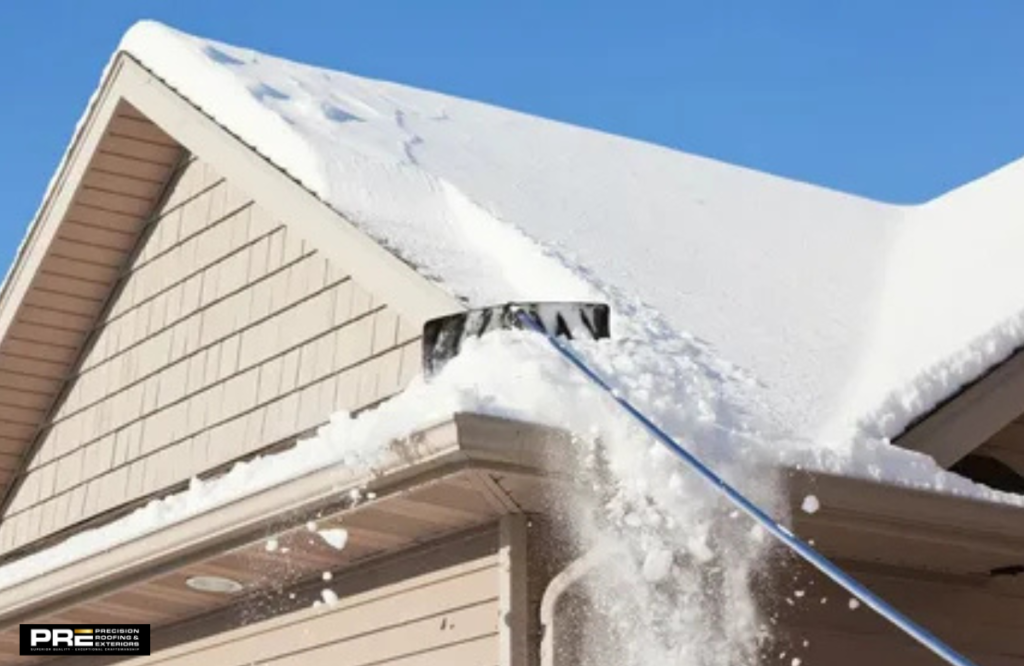
Never climb up to knock ice off. You can wreck the shingles and hurt yourself. If snow gets deeper than about six inches, use a roof rake from the ground.
Check for Roof Damage After Strong Winds or Storms
Gusts over 40 mph aren’t rare here in winter. Walk the yard right after one. Shingles on the lawn tell the story. So do sagging gutters and fresh stains on the ceiling inside. Photograph everything with the date. Insurance claims move faster with proof. Cover an open spot with a tarp only if you can reach it safely from the ground. Otherwise, call a roofer.
What Roof Problems Should Tri-Cities Homeowners Watch for During Winter?
Four problems cause most of the winter calls. All of them start small.
Leaks Around Vents, Skylights, and Chimneys
Leaks show up wherever the roof has a hole. Check the ceiling near vents and skylights and the fireplace wall. A brown ring that grows after rain is the classic sign. Bubbling paint is another one. Water often runs along a rafter before it drips. The stain can sit several feet from the real leak. Put a bucket under the drip. Then call a roofer. Don’t just paint over it.
Water Stains and Damp Insulation in the Attic
Wet insulation stops working. Mold can follow within weeks. Press a handful with a gloved hand. Cold and soggy or musty means trouble. Rusty nail tips and dark plywood point to repeated moisture. Find the source first. Then replace the insulation.
Loose Roofing Materials and Damaged Flashing
Wind loosens whatever was already weak. Flashing that lifted a bit in October can peel off in January. Look for gaps along walls and chimneys. Exposed nails and cracked sealant are warning signs. Metal roofs can have backed-out screws as well. A pro can reseal or refasten these quickly. Waiting just lets water in with every storm.
Ice Dams and Blocked Drainage Paths
An ice dam forms when house heat melts the snow on the roof. The water runs to the cold eave and refreezes. Meltwater then backs up under the shingles. The real fix takes time. Add insulation and seal the gaps where warm air leaks into the attic. Improve the ventilation too.
For now, you can pull snow off the first few feet of roof with a rake. Never use a torch. Never pour hot water on it.
Conclusion
Winter roof care is mostly about timing. Clean and inspect in October and November. Watch from the ground in December and January. Do a final check in February before the spring rains arrive. Keep a few photos so you can spot changes. Treat any stain or loose flashing as urgent. If you want a plan built around winter roof maintenance Tri Cities homeowners can follow, pick a few checks from each month and stick with them.
Precision Roofing & Exteriors can inspect your roof, flashing, attic and drainage before the cold sets in. Their team will flag small problems early and give you a clear written quote for repairs. Call today to schedule your winter roof inspection.