Choosing the right flat roofing system is important It helps ensure lasting protection and durability. Hot mop and torch down roofs are two common options for low-slope buildings. Each system comes with different benefits in terms of cost, strength, and maintenance.
A proper flat roofing system, careful roof installation method, and durable waterproof roofing solution are key factors. Understanding how these systems work helps homeowners make better decisions. With the right choice, you can improve roof performance and reduce future repair costs.
What Is a Hot Mop Roof?
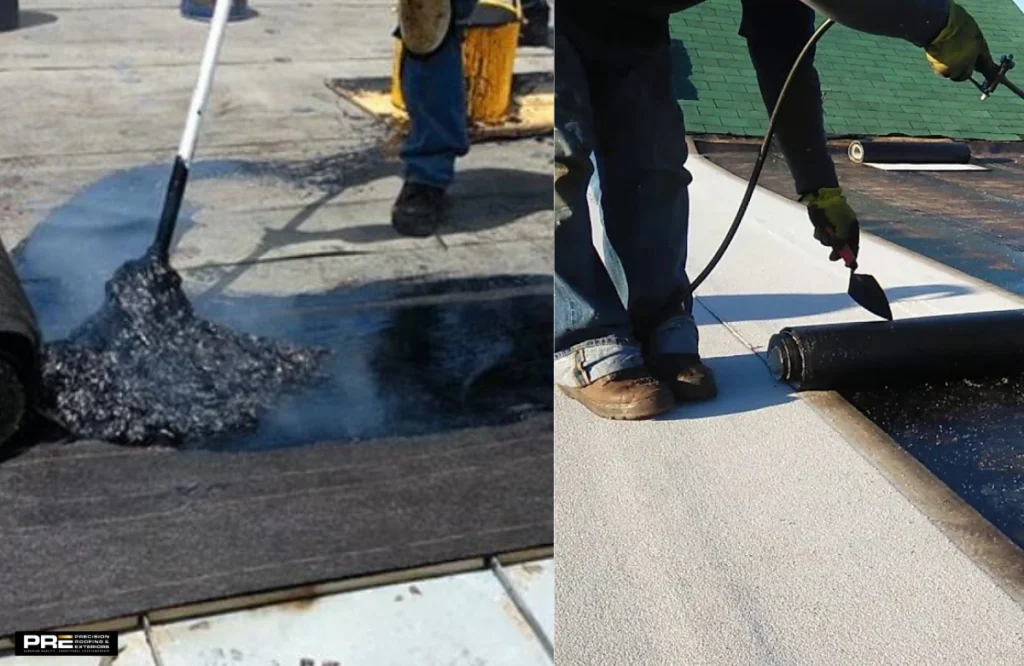
A hot mop roof is a traditional flat roofing system made with layers of felt and hot asphalt. Manufacturers heat the asphalt and spread it over the surface to create a waterproof barrier. This layered system forms a thick and durable roofing structure.
This effective method is widely used because of its reliability and strong protection. It works well on flat or low-slope roofs where water resistance is essential.
- Uses multiple layers of roofing felt and hot asphalt
- Creates a thick and strong waterproof surface
- Common for residential and commercial flat roofs
What Is a Torch Down Roof?
A torch down roof is a modern roofing system that uses modified bitumen sheets. These sheets are applied using heat from a torch to bond them to the surface. This creates a smooth and sealed waterproof layer.
This system is known for flexibility and strong weather resistance. Understanding torch down roofing, modified bitumen membranes, and heat-applied roofing systems helps homeowners see its benefits. It is suitable for flat roofs that need reliable waterproof protection.
- Uses modified bitumen sheets for coverage
- Installed using heat to seal layers securely
- Provides a smooth and seamless finish
- Works well in different weather conditions
Key Differences Between Hot Mop and Torch Down Roofs
Hot mop and torch down roofs differ in materials, installation methods, and performance. Hot mop uses asphalt and layered felt while torch down uses heat-applied membranes. These differences affect durability and maintenance needs.
Hot mop roofs use multiple layers of asphalt and felt which create a thicker surface. Torch down roofs use fewer layers but provide a seamless and flexible membrane. This makes torch down more resistant to movement and temperature changes.
The installation process also differs significantly. Hot mop involves spreading heated asphalt across layers while torch down uses an open flame to bond materials. Both methods require skilled labor for safe and proper application.
Pros and Cons of Hot Mop Roofs
Understanding hot mop roofing benefits, built-up roof durability, and asphalt roofing systems helps evaluate this option clearly.
Advantages:
- Strong and thick waterproof layers
- Cost-effective for larger roof areas
- Reliable performance over many years
Limitations:
- Installation process can be messy
- Strong odor during application
- Requires experienced workers for safety
Pros and Cons of Torch Down Roofs
Torch down roofs are known for flexibility and modern performance. They provide strong protection and a clean finish. This system is popular for residential and commercial flat roofs.
Understanding torch down roofing benefits, modified bitumen durability, and flexible roofing systems helps in making a clear decision.
Advantages:
- Flexible material handles temperature changes well
- Smooth and sealed surface reduces leaks
- Better resistance to UV exposure
Limitations:
- Higher installation cost compared to hot mop
- Requires flame safety during installation
- Needs professional handling for proper results
Which Roofing Option is Right for You?
Choosing between hot mop and torch down depends on budget, climate, and roof usage. Each system offers unique benefits based on specific needs.
Knowing about different roofing options, flat roof solutions, and roof performance factors helps homeowners decide wisely. Hot mop is suitable for cost-sensitive projects. Torch down is better for durability and flexibility. Consulting professionals ensures the best choice for your property.
Conclusion
Hot mop and torch down roofs are both effective solutions for flat roofing systems. Each offers unique advantages in cost and durability. A proper flat roofing system and correct installation method are essential for success.
Choosing the right system depends on your needs and budget. Careful planning and expert installation ensure long-lasting performance. For reliable roofing services and expert guidance, contact roofing experts like Precision Roofing today and protect your property with confidence.
FAQs
How long do hot mop and torch down roofs last?
Both systems can last many years with proper care. Torch down roofs may last longer due to flexible materials. Proper maintenance plays an important role in lifespan.
Which roofing option is easier to maintain?
Torch down roofs are generally easier to maintain because of their smooth surface. Hot mop roofs may need more frequent inspection due to layered construction.