
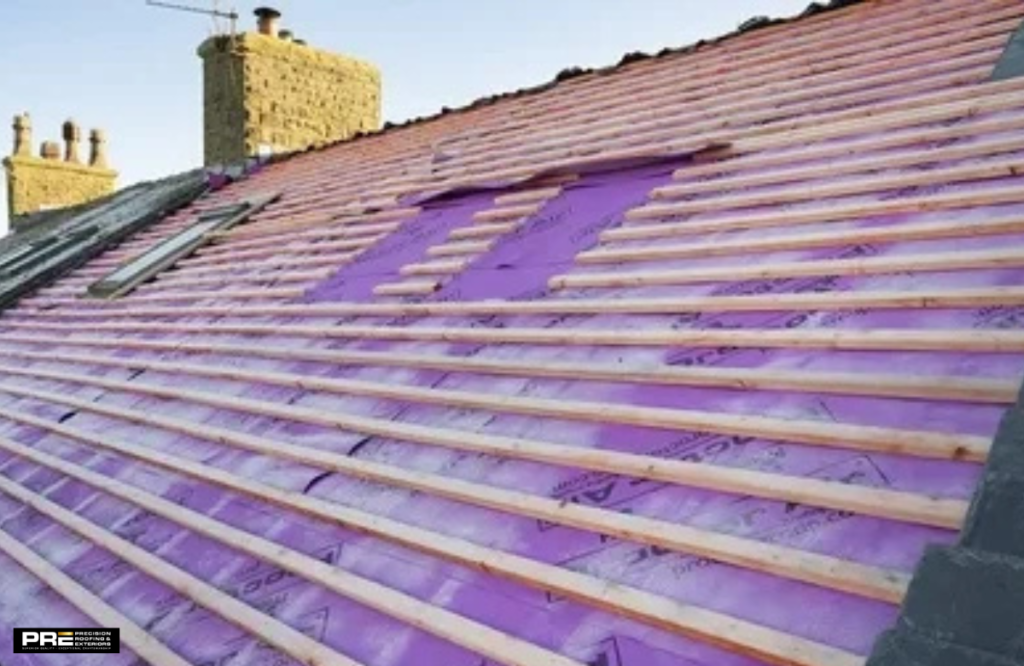
Wind-driven rain penetrates gaps in the shingles, constantly reaching the decks underneath. Ice dams push water back, quickly rotting roof structures. That’s where roof underlayment provides critical protection to stop leaks before damage starts.
People often ask what roof underlayment is and what role it plays in protecting roofs. The waterproof membrane sits beneath the shingles, effectively blocking moisture penetration. Four types of materials cater to various climates and budgets. Deck protection prevents rot, while energy savings help reduce cooling costs. Fire-resistant properties protect homes during wildfire seasons.
Understanding Roof Underlayment
Roof underlayment serves as an essential moisture barrier, consistently safeguarding wooden decks against leaks. Felt paper absorbs water while synthetics breathe, releasing trapped humidity underneath.
Self-sealing membranes seal fastener punctures, completely blocking wind entry. Code-mandated coverage spans entire roof surfaces, protecting homes nationwide. Premium shields defend against ice dams, hurricanes, and heavy storms.
Types of Roof Underlayment
Roof underlayment comes in four main types serving different climates and budgets. Contractors choose materials based on weather exposure and roof pitch requirements.
1. Felt Underlayment
Felt underlayment uses asphalt-saturated paper to provide economical leak protection everywhere. #15 felt weighs 15 pounds per roofing square, covering roofs affordably. #30 felt double the thickness, working better on steep slopes than lighter options.
Workers overlap seams by 3 inches, effectively creating water barriers. Traditional material serves homeowners reliably across generations of roofs nationwide. This economic choice fits most re-roofing budgets perfectly.
2. Synthetic Underlayment
Synthetic underlayment weaves polypropylene, creating tear-resistant protection exceeding felt durability. Lightweight rolls install faster than heavy asphalt paper, saving labor costs. UV resistance lasts 6 months of exposure before the shingles cover completely.
High-traction surface prevents workers from slipping during steep installations everywhere. Vapor-resistant design allows moisture vapor to escape, helping prevent deck condensation. Recycled content appeals to eco-conscious homeowners building sustainably.
3. Rubberized Asphalt Underlayment
Rubberized asphalt forms self-sealing membranes that grip nails permanently after installation. Peel-and-stick design covers eaves, valleys, and leak-prone zones first. 50-mil-thick blocks prevent wind-driven rain from completely penetrating the shingle layers.
Ice dam protection channels water sideways, preventing winter backups underneath roofs. The premium warranty lasts 20 years, significantly outlasting basic materials. High-performance choice serves luxury homes and coastal properties demanding maximum protection.
Benefits of Roof Underlayment
Quality roof underlayment protects homes far beyond basic shingle coverage alone. Five major benefits save homeowners money and prevent water damage.
1. Provides Additional Waterproofing
Roof underlayment catches shingle leaks before water reaches plywood decks underneath. The secondary barrier prevents wind-driven rain from blowing through gaps around nails. Self-sealing membranes close fastener holes, gripping tightly once installation is complete. Ice and water shields channel melting snow sideways, completely blocking winter backups. Multi-layer defense creates fail-safe protection serving roofs for decades.
2. Protects the Roof Deck
Plywood roof decks rot quickly when moisture constantly sits beneath the shingles. Underlayment barrier blocks humidity, preventing it from attacking wood fibers before damage starts. Synthetic materials release trapped moisture, preventing cupping and warping issues. Metal shields eliminate condensation dripping onto structural supports below decks. Long-term preservation avoids costly tear-off replacements, saving thousands in repairs.
3. Adds Insulation and Energy Efficiency
Reflective underlayment bounces summer sunlight away, noticeably lowering attic temperatures. Radiant barrier coatings cut air conditioning costs during hot months everywhere. Winter vapor control keeps attics dry, preserving insulation effectiveness year-round. Thicker membranes consistently slow seasonal heat transfer through roof surfaces. Utility savings recover premium material costs within just a few years.
4. Extends Roof Life
Underlayment protection prevents premature shingle granule loss caused by moisture wicking. A stable deck surface maintains a flat nailing plane, avoiding shingle blow-offs during storms.
UV-blocking shields shingles before installation is complete. Manufacturer warranties require proper underlayment coverage everywhere, or claims get denied. 20-30% longer service life results from quality secondary protection layers.
5. Increases Fire Resistance
Class A fire-rated underlayments effectively resist the landing of burning embers during wildfires. Rubberized asphalt chars rather than flames when exposed to extreme heat.
Synthetic materials meet the strict UL 790 burn test standards across the nation. Metal panels conduct heat away, preventing ignition beneath the shingles. Neighborhood defense stops flying embers from spreading between homes safely.
Conclusion
Understanding what roof underlayment is reveals an essential layer that constantly safeguards plywood decks from moisture. Asphalt-saturated felt provides economical protection, while rubberized shields perfectly defend ice-prone eaves. Synthetic weaves resist tears, and metal panels withstand hurricanes everywhere. Energy savings from radiant barrier coatings quickly pay for premium costs. Fire-rated materials prevent ember spread, protecting entire neighborhoods.
If you want to protect your home for decades, Roofing experts like Precision Roofing installs leak-proof roof underlayment. Call us today for a free roof inspection and prevent thousands in water damage before leaks start!
FAQs
What is the most common roof underlayment?
Asphalt-saturated #15 felt remains contractors’ top choice for re-roofing projects nationwide. A 15-pound weight per square makes installation fast and affordable everywhere. Three-inch overlaps seal shingle gaps, completely blocking wind-driven rain.
What is the use of roof underlay?
Roof underlayment blocks water from reaching the plywood decks beneath the shingles. Secondary protection catches shingle leaks, preventing interior damage. Building code requires coverage everywhere to protect structural supports.
Is roof underlayment necessary?
Building codes mandate underlayment everywhere, constantly protecting roof decks from leaks. Warranty compliance requires proper installation to avoid claim denials. Premium membranes prevent ice dams, saving thousands in water damage.