
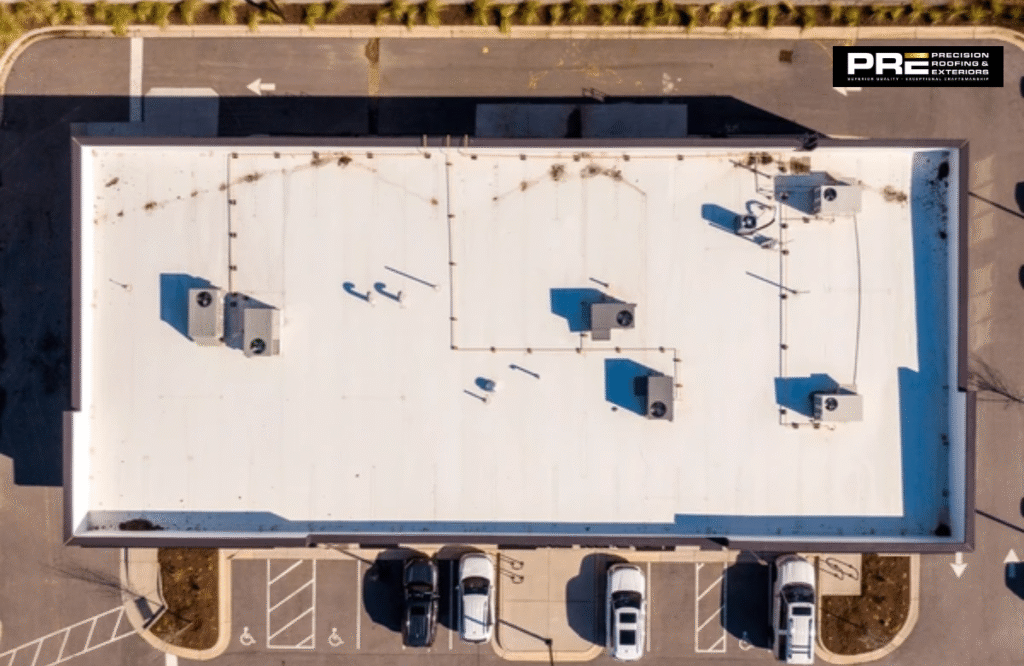
When people start asking how long TPO roofing lasts, it’s usually because something small has caught their eye. A surface that looks a bit chalky. A seam that doesn’t sit quite as flat as it used to. A warm patch that feels different from the rest. TPO has a reputation for holding up, and it generally does. Most systems run a solid twenty to thirty years when they’re installed properly and maintained along the way. But that number isn’t automatic. The climate, the drainage, the roof traffic, and the membrane thickness all influence how long the system really lasts. Understanding those pieces upfront makes it much easier to know where your roof stands and how long you can expect it to keep performing.
Average Lifespan of TPO Roofing
Most TPO roofs land in a predictable window. If the material is quality and the install was done correctly, you’re looking at 20 to 30 years. That’s the general industry expectation. In some cases, thicker membranes paired with consistent maintenance stretch the life toward 30 to 35 years.
Here’s how thickness affects longevity:
- 45 mil roofs tend to age sooner because the membrane is thinner.
- 60 mil is the standard choice and usually hits that 20 to 30 year mark.
- 80 mil membranes hold up to heat movement, heavy foot traffic, and long-term UV much better.
There’s no single countdown clock for TPO. It doesn’t suddenly fail. It slowly changes. The surface loses its brightness. Seam edges expand and contract. Sometimes a small puncture appears where debris landed during a storm. Those small signals are what determine whether it reaches the long end of the lifespan or not.
Factors That Affect TPO Roofing Lifespan
Roof longevity isn’t luck. These conditions are what push TPO to last decades or cut years off its life.
1. Sun and Heat Exposure
TPO reflects UV rays, but sunlight still works on it every day. Roofs in hotter climates show:
- Gradual surface oxidation
- Slight fading
- Minor membrane dryness over time
It doesn’t ruin the roof, but continuous heat speeds up aging. Buildings surrounded by reflective glass or wide-open sky experience stronger sun loads, which is something owners often overlook.
2. Installation Quality
A great membrane won’t compensate for poor workmanship. TPO seams have to be heat welded, and that requires a certain level of finesse. If the weld is too weak, the seam pulls. Too hot, and it becomes brittle. Flashings also need careful work around vents, drains, and rooftop HVAC equipment.
Signs the installation wasn’t ideal include:
- Wrinkles that never settled
- Raised corners
- Uneven heat lines
- Loose edges during the first year
A well-installed TPO roof sets the foundation for long-term performance.
3. Drainage and Ponding Water
Flat roofs always have a slope, but even a slight miscalculation or a roof that settles over time can create depressions. Water sitting longer than 48 hours increases stress on the membrane.
Common contributors to ponding include:
- Clogged scuppers
- Blocked internal drains
- Debris buildup
- Heavy snow loads causing temporary sag
Keeping water moving is one of the simplest ways to extend a TPO roof’s life.
4. Membrane Thickness and Material Quality
Not all TPOs are equal. Higher-grade sheets resist punctures and handle expansion cycles better.
Thicker membranes offer:
- Better durability
- More UV resistance
- Improved puncture protection
- Slower overall aging
If a building sees rooftop activity or sits in a region with dramatic temperature shifts, going thicker is worth it.
5. Climate and Seasonal Movement
TPO expands during heat and contracts when temperatures drop. Buildings in areas with freeze-thaw cycles see more movement in the membrane. That movement affects seams over time.
Maintenance teams watch for:
- Tiny separations
- Areas of stress around corners
- Flashing pulling away
Climate doesn’t doom a roof. It just determines how often someone should take a closer look.
6. Foot Traffic and Rooftop Equipment
If people use the roof often or if equipment requires regular servicing, the membrane naturally takes more hits. Every step wears the surface a little.
Protective walkway pads help extend the roof’s life, especially around:
- HVAC units
- Satellite equipment
- Access ladders
- Rooftop vents
Without pads, light damage builds up slowly and shortens lifespan.
7. Regular Maintenance and Repairs
The healthiest TPO roofs share one thing: steady upkeep.
Good maintenance includes:
- Clearing drains
- Checking seams
- Repairing punctures early
- Removing debris
- Inspecting after storms
Skipping maintenance doesn’t destroy a roof overnight, but it reduces its lifespan year by year.
Conclusion
So how long does TPO roofing last in the real world? Most roofs land in that twenty to thirty-year window, and some stretch longer when the drainage is good, the seams stay tight, and the membrane gets checked routinely. TPO doesn’t decline all at once. It ages in small hints. A bit of fading. A seam that needs touching up. A soft spot near a drain. Catching those early keeps the roof healthy and extends its lifespan toward the higher end of that range. And if you want a clear read on how many good years your TPO system might still have, experienced roofing company like Precision Roofing can inspect the membrane, evaluate the installation, and help you plan for repairs or replacement on your own timeline.