
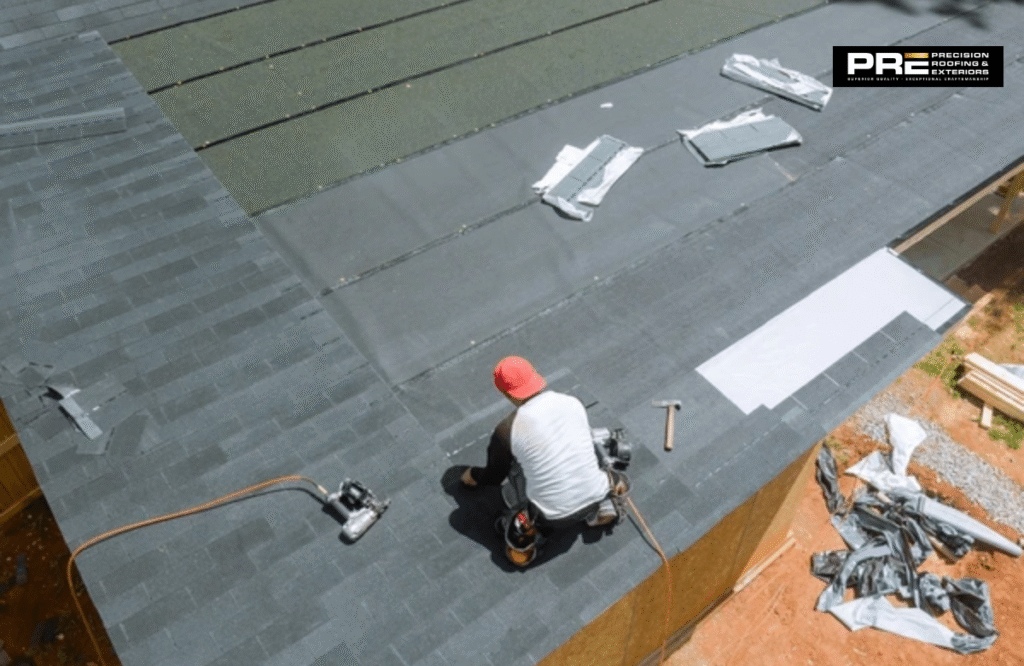
Roof longevity improves when minor issues are found early and resolved without delay. Environmental conditions, heat, wind, rain, snow, and temperature swings, place different pressures on roofing systems throughout the year. A structured maintenance routine divided by season reduces the risk of leaks, reinforces structural integrity, and stabilizes long-term energy costs.
To practice the best roof maintenance tips, start by inspecting for loose or absent shingles, removing lodged debris, and verifying that gutters are directing water away from your home. Examine flashing around transitions, prune nearby tree limbs, and confirm that attic spaces remain dry with adequate airflow. Taking dated photographs helps you track evolving patterns over time. Steep roofs and complex repairs should be handled by a licensed roofing professional.
Tips for Seasonal Roof Maintenance
Here are some of the most common maintenance tips for a seasonal roof:
Shingle Check
Use binoculars to scan each roof slope initially. Only approach shingles up close if it can be done safely. Search for absent tabs, raised corners, cracking surfaces, blistering, or nail pops. Curled edges usually indicate heat stress or wear; impact dents from hail can soften areas under light pressure. Replace missing components promptly and secure small lifts using roofing cement pressed firmly under the shingle edge.
Debris Clearing
Accumulated leaves, needles, and twigs trap moisture and block runoff paths. Clear debris with a soft broom. Avoid power washing asphalt shingles, as this strips protective granules from their surface. Focus first on roof valleys, the channels that handle the majority of runoff. After severe weather, remove fresh piles so damp mats do not persist, stain surfaces, or promote moss growth.
Gutter Cleaning
Ensure that gutters and downspouts remain unobstructed so water flows freely off the roof. Remove debris by hand, then confirm drainage with a garden hose. Use gutter-rated sealant on any leaking joints. Extend downspouts away from the foundation or into drainage piping. In areas with heavy foliage, consider installing debris guards that stop large material while permitting easier maintenance.
Flashing Inspection
Flashing consists of thin metal pieces placed at joints where roof planes meet walls, chimneys, skylights, and vents. Inspect for lifted edges, gaps, dents, and failed sealant. On chimneys, examine the reglet cut where counter-flashing sits; loose seams warrant prompt correction. Replace damaged flashing before wind-driven rain finds a path beneath cladding or roofing materials.
Branch Trimming
The trees that come into contact with roofing surfaces can not only wear off shingle granules but also open new ways for pests to come in. It is best to cut the branches back to a point where they are a safe distance away and create more space for the storm to move with the extra clearance. In case of major cutting or when cutting of limbs near power lines is involved, it is best to contact an arborist. The multiple benefits of improved airflow and sunlight, such as quick drying of roof surfaces after water or rain has fallen over them, add to their longevity.
Attic Moisture Check
Access the attic in cool morning conditions. Look for dark stains, wet or saggy insulation, and rusty nail tips under the roof deck, all signs of condensation or leaks. The presence of a musty smell usually indicates moisture that is difficult to remove. Make sure that bathroom exhaust fans are venting outside and not into the attic. If the insulation is not evenly distributed, add more to reach the recommended thermal resistance (R-value) levels for your region.
Ventilation Check
Good ventilation not only controls temperatures but also prolongs the life of the roofing system. Check that the soffit vents are open and that there is no insulation blocking them. Also, there should be no barriers to the ridge or box vents from inside. The lack of proper ventilation during the summer makes shingles age quickly; similarly, the lack of airflow during the winter leads to the formation of ice dams. It is important to have a balanced intake and exhaust that is in accordance with the local building codes and the manufacturer’s recommendations.
Sealant Check
Sealants used for roofs don’t last as long as roofing materials. Vent pipes, satellite mounts, skylights, and flashing overlaps are common places where the inspection can be done. It is important to remove all the loose or cracked materials, clean the surfaces, and then apply the roof-rated sealant as per the manufacturer’s guidelines. Old pipe boots should be replaced. The application of biannual touch-ups makes it impossible for small openings to turn into water-intrusion routes.
Pest Signs Check
Look for wasp nests beneath eaves, bird movements around vent openings, or trails made by rodents on the fascia. In the attic, look for droppings, torn wires, and insulation with tunnels. Close small gaps with hardware cloth or pest screens and fix areas around soffits that have been breached. For large infestations, work together with professional pest control agents who are licensed.
Ice Dam Watch
In snowy areas, check after snowstorms at the edges of the roof. Very large icicles, gutters filled with ice, and stains on the ceiling near the external walls are signs of heat loss and water refreezing at eaves. From the ground, use a roof rake to safely clear the first few feet of snow. Amongst other things, sealing air leaks in the attic, increasing the insulation layer, and applying ice-and-water shield at eaves during re-roofing are the long-term measures.
Granule Wear Check
Shingle granules defend asphalt from sun exposure. Some loss is normal early in a roof’s life, but visible granule piles in gutters or bald spots on shingle surfaces suggest accelerated wear or hail damage. After storms, assess bruising patterns on slopes. Widespread granule loss warrants consultation with a qualified roofing contractor about repair or replacement options.
Drainage Check
Water should progress smoothly from the roof surfaces into the gutters and away from the structure. Confirm that valleys are clear, kick-out flashing diverts flow into gutters, and downspouts remain intact. During steady rain, observe runoff paths: any water tracking behind fascia or onto walls requires immediate attention. Adjust downspout extensions and slope soil away from the foundation to safeguard against moisture intrusion.
Conclusion
Regular inspection, cleaning, and documentation prevent minor issues from escalating into costly repairs. Inspect shingles and flashing, clear debris, and maintain open gutters. Monitor attic moisture, ensure balanced ventilation, refresh sealants, and address pests promptly. In colder regions, act early on ice dam risks and plan insulation improvements. Use dated photos and logs to compare conditions over time. Engage professionals for steep or complex work. A disciplined seasonal maintenance plan extends roof life and reduces unexpected problems.
If you are looking for trustworthy and professional tips for seasonal roof maintenance the reach out to trusted roofing company like Precision Roofing.