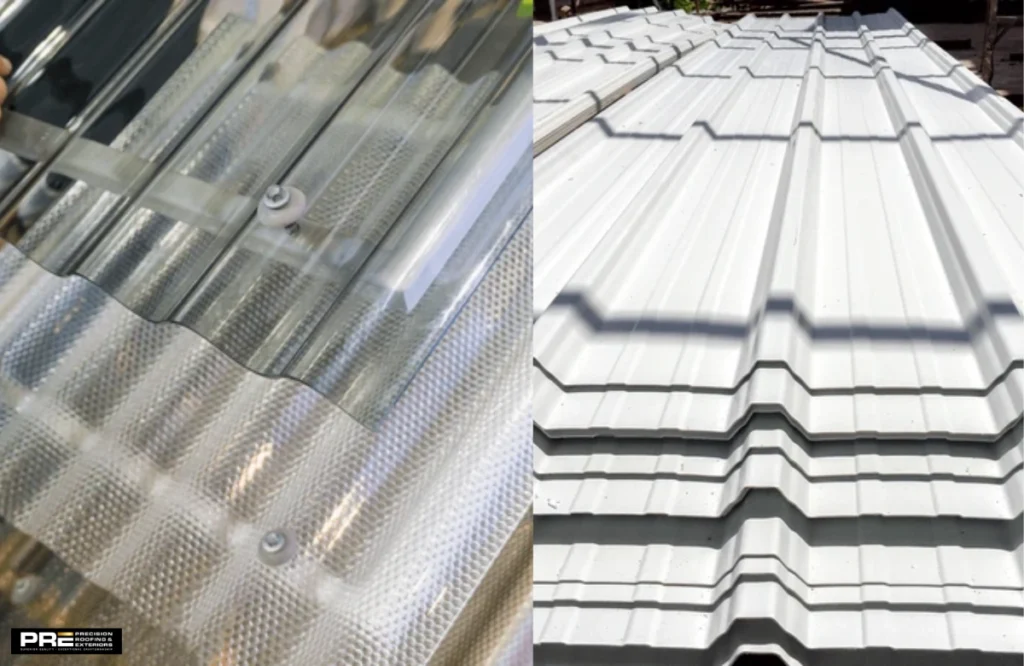
Selecting the right material for outdoor covers requires clear facts on strength and cost. Polycarbonate roofing and PVC both serve patios, greenhouses and carports effectively. One leads in impact strength and light quality.
The other wins on lower price and chemical resistance. This guide compares the performance and limits of each option. Climate, budget and expected life shape the best choice. Matching features to real needs creates durable weather protection that lasts.
Key Takeaways
- Polycarbonate roofing provides superior impact strength and higher light transmission.
- PVC roofing costs less and handles many chemicals well.
- Polycarbonate resists UV damage longer in sunny conditions.
- PVC works for simple budget projects with lighter loads.
- Climate, needs and lifespan goals help you determine the best option overall.
What Is Polycarbonate Roofing?
Polycarbonate roofing uses tough plastic sheets that let in natural light while blocking harmful UV rays. The material remains lighter than glass yet withstands heavy impact. A special UV layer on the outer face slows yellowing and surface wear. Panels come in solid, corrugated or multiwall styles for varied projects.
High clarity and strength suit many outdoor living spaces. The correct choice and installation unlock reliable long-term service in different climates. These panels are formed through careful manufacturing steps that build strength and weather protection. Understanding the process and available styles helps match them to specific site needs.
How Polycarbonate Roof Panels Are Made
Makers extrude polycarbonate resin into flat or shaped sheets. A UV coating bonds to the top surface during the process. This creates clear panels with high impact ratings. Tight quality checks keep thickness even and outdoor performance consistent.
Types of Polycarbonate Roofing Panels
Different profiles meet distinct strength, light and insulation goals. Each style keeps the core benefits while adding targeted features for outdoor use.
- Solid Polycarbonate Panels: Solid sheets deliver top clarity and maximum impact strength. They outperform glass and most plastics under hard blows. These panels are well-suited to projects that demand bright light and high durability. Thickness choices range from thin glazing to heavier structural options.
- Corrugated Polycarbonate Panels: Corrugated shapes add stiffness and smooth water runoff. The profile increases the span strength between frame supports. These panels install fast on basic frames for covers and canopies. UV protection keeps the surface clear through years of sun exposure.
- Multiwall Polycarbonate Panels: Multiwall sheets hold internal ribs that trap air for better insulation. The design cuts heat flow while maintaining solid light levels. These panels suit greenhouses and energy-aware structures well. Wall count options balance strength and thermal results.
Common Uses of Polycarbonate Roofing
Homeowners pick these panels for patio covers, carports and pool enclosures. Greenhouses and garden rooms gain from strong light passage. Walkway canopies and light-commercial skylights often use the material. High-impact strength supports areas that face hail or falling debris.
What Is PVC Roofing?
PVC roofing starts with polyvinyl chloride plastic shaped into panels or sheets. The material stays flexible and fights many chemicals effectively. Added stabilizers and UV blockers improve outdoor life over time. Corrugated panels and flat membranes fill different roofing roles. Lower prices draw budget projects that still need solid weather cover.
The right formulation and careful installation give dependable protection for lighter structures. The production process and available forms shape how PVC performs on the job. Reviewing these details shows where the material fits best.
How PVC Roofing Materials Are Made
Producers mix PVC resin with stabilizers and fillers. The blend is extruded or pressed into sheets of set thickness. UV blockers and impact helpers raise outdoor durability. Finished sheets get surface treatments that boost weather resistance.
Types of PVC Roofing
PVC appears in profiled panels and flat membrane systems. Each form serves different slopes, loads and budget levels on outdoor roofs.
- PVC Corrugated Roofing Panels: Corrugated PVC panels add stiffness and easy drainage. The shape spans modest gaps between supports. These sheets fit sheds, carports and temporary covers well. The lightweight design makes handling simple during installation.
- PVC Roofing Sheets and Membranes: Flat PVC sheets or membranes are used for single-ply, low-slope roofs. Heat-welded seams form strong watertight joints. These systems work on commercial buildings with insulation underneath. Thickness and fabric reinforcement change with expected traffic and loads.
Common Uses of PVC Roofing
PVC panels cover garden sheds, carports and basic patio roofs. Membrane versions protect commercial flat roofs and industrial sites. Some greenhouse walls use the material to cut costs. Chemical resistance supports spots near certain farm or shop processes.
Polycarbonate vs. PVC Roofing: How Do They Compare?
Side-by-side review shows clear differences in strength, weather behavior and price. Each material leads in certain areas based on project priorities. Knowing these points helps match the right sheet to real-world site demands. Key factors from impact to total cost guide the final selection for outdoor roofs.
Durability and Impact Resistance
Polycarbonate roofing handles impact far better than standard PVC. It resists hail, branches and accidental hits without cracking easily. PVC offers fair strength yet grows more brittle with age. High-risk impact zones favor polycarbonate for fewer early replacements.
Weather and UV Resistance
Quality polycarbonate carries strong UV layers that keep panels clear. The coating slows yellowing and surface breakdown under full sun. PVC depends on additives that can fade or wear faster. Both need proper grades for reliable outdoor service years.
Heat and Thermal Performance
Multiwall polycarbonate traps air and cuts heat transfer well. Solid sheets pass more heat yet still beat basic PVC. Standard PVC panels give limited insulation value. Climate and comfort needs decide which material fits better here.
Fire and Chemical Resistance
PVC can offer favorable fire performance in some formulations, but ratings vary by product and should be verified with the manufacturer’s specifications. It also resists a wider list of chemicals and solvents. Polycarbonate can provide suitable fire performance in some formulations, but its chemical compatibility varies by the specific substance and product. Site hazards should guide the material pick carefully.
Weight and Ease of Installation
Both stay much lighter than glass or metal choices. Polycarbonate cuts and drills easily with common tools. PVC panels also install simply yet need extra care in cold weather. Lightweight lowers frame demands for either material.
Maintenance Requirements
Polycarbonate needs gentle cleaning to maintain high light passage. Skip harsh scrubbers that can scratch the UV layer. PVC surfaces clean with mild soap and water. Both gain from debris removal and regular fastener checks.
Lifespan and Long-Term Performance
Polycarbonate roofing often serves 10 to 20 years or more with good UV protection. Careful installation and upkeep extend life in tough weather. PVC roofing usually lasts 5 to 15 years, depending on grade and climate. Better grades improve results for both materials over time.
Cost Comparison
PVC panels cost less per square foot than polycarbonate in most markets. Lower material prices fit tight budgets and simple covers. Polycarbonate needs higher upfront spend yet can save through longer service. Full ownership cost includes installation work and later replacements.
Advantages and Disadvantages of Polycarbonate Roofing
Polycarbonate roofing offers clear gains in light and strength. It also shows limits that matter on some projects. Looking at both sides sets realistic expectations before buying.
Advantages of Polycarbonate Roofing
High-impact strength guards against weather damage well. Excellent light passage creates bright covered areas. Strong UV layers keep clarity for many seasons. Light sheets ease handling and cut structural loads.
Disadvantages of Polycarbonate Roofing
Higher material prices raise the starting project cost. Surface scratches can show without gentle cleaning. Some chemicals may affect the plastic over the years. Thermal movement needs careful fastener details at installation.
Advantages and Disadvantages of PVC Roofing
PVC roofing offers practical benefits for cost-focused projects. It also carries limits in strength and long-term clarity. Knowing these points helps avoid a poor match with project needs.
Advantages of PVC Roofing
Lower cost makes the material suitable for many budget jobs. Solid chemical resistance fits certain industrial or farm uses. Flexible sheets handle modest movement without cracks. Simple installation works for DIY and light commercial tasks.
Disadvantages of PVC Roofing
Lower impact strength increases the risk of cracking under hail or debris. UV resistance often lags behind that of quality polycarbonate over time. Brittle feel can appear in cold temperatures. A shorter average life may mean more frequent replacements.
How to Choose Between Polycarbonate and PVC Roofing
Project goals, climate and money decide the better material. Review each factor with care before the final pick. Matching real strengths to site conditions creates the most reliable long-term roof.
- Consider Your Budget: Tight budgets often favor PVC for lower material costs. Higher spending on polycarbonate can return value through a longer life. Figure total ownership cost that includes later upkeep and replacement.
- Consider Durability and Expected Lifespan: High-traffic or hail-prone sites benefit from polycarbonate strength. Milder conditions let PVC perform well enough. Expected years of service shape the true value of each choice.
- Consider Light Transmission: Spaces that need bright natural light favor polycarbonate clarity. Lower light demands can accept PVC performance. Greenhouses and living covers usually prefer higher transmission levels.
- Consider Your Climate and Weather Conditions: Strong sun and impact risk support polycarbonate with UV layers. Mild climates with chemical exposure may fit PVC better. Local snow, wind and temperature ranges guide the selection.
- Consider Installation and Maintenance Requirements: Both materials install with basic tools and skills. Polycarbonate needs room for expansion and gentle cleaning. PVC allows simpler fastening yet still requires correct support spacing.
Polycarbonate vs. PVC Roofing: Which One Should You Choose?
Polycarbonate roofing is often the stronger choice for projects that prioritize impact resistance, high light transmission and long service life. Its UV resistance and toughness outperform standard PVC in demanding weather conditions. PVC stays a solid lower-cost choice for simple covers with moderate needs. Final selection rests on budget, climate and expected years of use. Matching material strengths to project goals delivers the best overall result.
Conclusion
Polycarbonate roofing and PVC each protect outdoor structures with different strengths. Polycarbonate leads in impact resistance, light quality and durability for many uses. PVC offers lower cost and good chemical resistance for simpler needs.
Careful review of climate, budget and performance goals guides the right pick. Proper installation and basic care extend the service life of either material. Contact Precision Roofing today for expert advice and professional installation of your preferred roofing panels.
Frequently Asked Questions
- Is Polycarbonate Stronger Than PVC?
Yes, polycarbonate shows much higher impact resistance in standard tests. It handles hail and debris better without easy cracks. PVC provides fair strength for lighter loads and milder sites.
- Which Roofing Material Lasts Longer?
Quality polycarbonate with UV protection often lasts 10 to 20 years or more. PVC typically serves 5 to 15 years, depending on grade and climate. Proper installation and care improve results for both materials.
- Which Material Is Better for a Greenhouse?
Polycarbonate usually works better due to higher light passage and impact strength. Multiwall versions also add useful insulation. PVC can serve lower-budget or temporary greenhouse needs.
- Can Polycarbonate or PVC Roofing Be Installed on a Patio or Pergola?
Yes, both materials suit patio covers and pergolas when supports meet spacing rules. Polycarbonate creates brighter spaces and greater durability. PVC offers a more economical option for simple shade structures.